

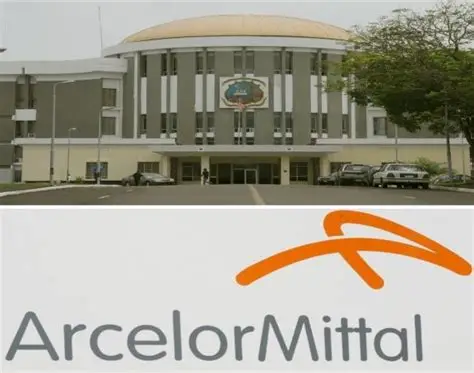
Liberia keeps signing the same bargain-our land, ore, rubber, and forests traded away for the promise of “jobs,” “growth,” and “community development.” Two decades on, the scoreboard in too many concession towns still looks bleak.
So, when ArcelorMittal Liberia (AML) cut the ribbon on a massive new concentrator and trumpeted billions in new investment, Liberians, clapped but also asked; are we true partners in development, or mere props in a well-oiled PR machine?
To AML credit, it has doubled down on iron ore with a state-of-the-art concentrator, one of Africa’s largest, aimed at raising production to nearly 20 million tons a year. On paper, this is a national win, modern beneficiation, more royalties, more jobs.
But development is not measured by brochures. Communities judge progress by clean water, functioning clinics, durable roads, and jobs that actually absorb their restless youth. Across Nimba, residents complain of delayed or diluted social benefits, suspicious accounting, and the wide gap between AML’s balance sheet milestones and their reality.
When Senators descend on Yekepa for “inspections,” the only thing that convinces locals is evidence, transparent accounts, independent audits, and projects selected by the people who endure the dust and dynamite. Anything less smells of window dressing.
AML is not alone. The failure to transform resources into real community impact has been repeated across Liberia’s concessions.
- Bea Mountain (Grand Cape Mount): Protests over poor conditions and unfulfilled promises have turned deadly in the past two years. When grievances escalate to funerals, something has collapsed in both corporate practice and state oversight. No nation should bury its citizens over issues that should have been solved at the negotiating table.
- China Union (Bong Mines): In 2024, the EPA shut the company down for operating without a discharge license, dumping waste into wetlands, and building without permits, before granting a conditional reprieve. That entire community had carried the environmental risk for years while promised benefits remained vapor. A system that waits for disasters before enforcing rules is not development, it is negligence disguised as governance.
- Western Cluster (Bomi): Lawmakers and locals accuse the company of breaching obligations and failing social commitments even as it touts road projects and renewed promises. Communities have learned the hard way that words are cheap; what they demand now are deadlines, budgets, and independent monitoring.
- Golden Veroleum (Sinoe/Grand Kru): Repeated RSPO complaints have exposed land rights violations and the destruction of sacred sites. Even with restrictions lifted, civil society insists the root issues of trust and consent remain unresolved. A certificate of compliance does not erase a history of betrayal.
Certainly, Liberia does not need another groundbreaking ceremony. It needs tangibles that measure change. For AML and every concession, the real test should be:
- Community-Chosen Projects, Publicly Costed. County Social Development Funds must be co-designed with communities, not dictated from company offices. Publish project lists, budgets, contractors, and timelines—online, in plain sight.
- Independent Environmental & Social Audits. Annual third-party reviews with raw data shared with universities, journalists, and local monitors. If the EPA can shut one mine, the next should learn—not repeat the same violations.
- Jobs with Skills Transfer. Hiring quotas are hollow without training ladders. Tie tax incentives to measurable skills transfer and promotion of Liberians into core technical roles.
- Roads, Water, Health—Measured Quarterly. Don’t just tell us how much you “spent.” Show the results: kilometers of road maintained, boreholes still pumping, clinics staffed, school attendance tracked every quarter.
- Transparency in Royalty & Social Payments. Publish what the company says it paid, what counties received, and what was procured. Any missing cent should be visible to the public.
It is time that Liberia’s experience of development goes beyond mere ribbon cuttings.
A genuine partner accepts scrutiny and opens its books. An imposter thrives on ceremony, backdoor inspection MOUs, and “honorable visits” that end without a single public report. AML insists it is here for the long haul. If so, let that commitment be seen not in press releases but in ledgers, audits, and community transformation from Yekepa to Buchanan.
Because Liberians have seen too many promises without delivery. Our people know the difference between a ground-breaking and a breakthrough. If AML wants the badge of “partner,” it must earn it openly, measurably, and with communities in the driver’s seat.
And to every other concessionaire: your license is not just a paper from Monrovia; it is a social contract with the villages that carry your trucks, your waste, and your burden. Break that contract and you forfeit your welcome, no matter how impressive your investment headlines may look.
Liberia cannot afford another cycle of extraction where wealth leaves on ships while poverty deepens at home. If concessionaires want to be seen as partners, the burden is put communities first, prove it with numbers, and let the public verify every claim. Anything less is not development, it is exploitation.

