

By George S. Tengbeh
A Night of Water and Fear
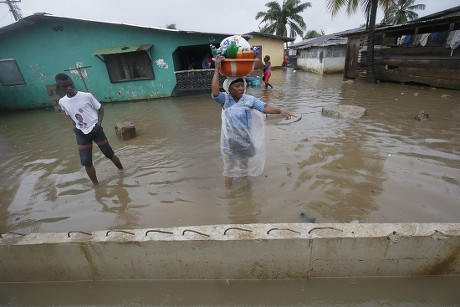
It was midnight in Clara Town when the water broke through the front door of the Kollie family’s home. The youngest child screamed as mattresses floated in the living room. “The sound was like the house itself was crying,” recalled Mrs. Kollie. By dawn, the family had lost everything: schoolbooks, clothes, even their rice stockpile.
The father, a mechanic, wept quietly as he tried to salvage his tools from the mud. “This is not the first time,” he whispered. “But this one… this one broke us.” Across Monrovia, thousands of families have lived this nightmare. Year after year, Liberia’s capital city drowns, not just in floodwaters, but in neglect, mismanagement, and the growing force of climate change.
Monrovia: A Capital on the Edge
Monrovia sits on a narrow strip of land between the Atlantic Ocean and the Mesurado River. Poor drainage, rapid urbanization, and unregulated construction have made the city dangerously flood-prone. According to the World Bank’s Climate Risk Profile (2023), Liberia faces increasing sea-level rise and extreme rainfall events, placing Monrovia among West Africa’s most climate-vulnerable capitals.
In 2024, the Liberian Senate debated relocating the capital, citing repeated flooding, traffic congestion, and the impossibility of sustainable expansion. “Monrovia has outlived its capacity,” said one senator. “It is drowning in water, waste, and people.”
Floods as Silent Disasters
For the poor, every flood is a catastrophe.
- In West Point, families lose makeshift homes as tides sweep through narrow alleys.
- In Paynesville, traders watch goods rot in stagnant water.
- In New Kru Town, schoolchildren wade through knee-deep mud to attend classes, if the schools haven’t collapsed.
At Redemption Hospital, nurses say floods delay emergency patients. “When the road is covered with water, the ambulance cannot come,” explained a midwife. Floods also carry disease. After each heavy rain, cholera, malaria, and diarrhea cases spike, especially among children. A Ministry of Health report (2023) linked flooding to rising hospital admissions during the rainy season.
The Human Face of Climate Neglect
In Duala Market, I met Esther, a single mother who sells fish. She pointed to the stagnant water under her stall. “Sometimes I sell more mosquitoes than fish,” she said with bitter humor. When floods destroy her goods, she takes small loans to restock. Debt piles up, and hunger grows in her household. “We are drowning slowly, not only in water but in poverty,” she said. Her words capture the injustice: those who contribute least to global emissions suffer most from climate disasters.
Why Monrovia Floods Keep Worsening
- Unplanned Urban Growth
Monrovia’s population has exploded to over 1.5 million, with most people settling in informal communities without drainage systems. - Blocked Drainage
Plastic waste clogs the city’s few functional drains. With no consistent waste management system, residents burn or dump garbage — which ends up choking waterways. - Sea-Level Rise
The Atlantic is rising steadily, pushing water into already fragile communities like West Point. Scientific projections warn that parts of Monrovia may become permanently uninhabitable within decades. - Political Inertia
Government promises of new drainage projects and coastal defense walls are often stalled by corruption, mismanagement, or lack of funds.
Relocating the Capital: Real Solution or Political Mirage?
The debate about moving Liberia’s capital inland is not new. Some argue for Bong or Nimba counties as safer, more central locations. Proponents say relocation would reduce congestion, create economic opportunities up-country, and avoid billions in future flood damage.
But critics ask: if the government cannot manage Monrovia, how can it build a whole new capital? Relocation could become another expensive white-elephant project, enriching contractors while leaving current residents in misery. As urban planner Josephine Toe told me: “We cannot abandon Monrovia like a sinking ship while people are still inside. We need both long-term relocation discussions and urgent short-term flood relief.”
Lessons from Other Countries
- Nigeria moved its capital from Lagos to Abuja in the 1990s, citing overpopulation and flooding, though Lagos remains vital.
- Tanzania shifted many government offices from Dar es Salaam to Dodoma, partly for disaster and congestion reasons.
- Indonesia is building a new capital in Borneo to escape Jakarta’s flooding.
But in each case, relocation required billions in investment and decades of planning. Liberia, with a fragile economy, must weigh carefully whether such a move is realistic or merely aspirational.
The Cost of Doing Nothing
If floods continue unchecked, the cost will be staggering:
- Thousands of families will lose homes annually.
- Public health crises will deepen.
- Investors will avoid Monrovia, citing infrastructure risks.
- Social unrest could rise as urban poor communities lose patience.
The World Bank estimates that climate-related disasters could shave 10% off Liberia’s GDP by 2030 if unaddressed.
Seeds of Hope: Community Action
Amid despair, communities are fighting back.
- In West Point, youth groups build makeshift wooden walkways to keep alleys passable.
- NGOs run community clean-ups, teaching residents to reduce plastic dumping.
- Climate activists lobby government and donors for investment in green infrastructure like mangrove restoration.
“We cannot wait for government,” said Amos, a youth leader in Slipway. “If we wait, the water will kill us first.”
What Must Be Done
Liberia needs a two-track approach:
- Short-Term Flood Relief
- Repair drainage systems in high-risk communities.
- Invest in waste collection to prevent blockages.
- Provide emergency shelters and medical support during floods.
- Long-Term Climate Adaptation
- Develop a master plan for gradual relocation of government buildings to safer areas.
- Protect Monrovia’s coastline with seawalls and mangrove restoration.
- Mainstream climate risk into all urban planning and housing policies.
- Secure climate finance from global funds (Green Climate Fund, World Bank, etc.).
The Action Needed
The Kollie family, Esther the fish-seller, and thousands like them cannot wait for endless debates. They need action today. Climate change is not knocking on Liberia’s door, it has already flooded the living room. Each year of delay means more ruined homes, more hungry children, more preventable deaths.
As a labor and environmental justice advocate, I say clearly: we cannot keep treating floods as “natural disasters.” They are man-made disasters, made worse by corruption, poor planning, and global injustice.
Closing Reflection
Back in Clara Town, the Kollies now sleep with their belongings stacked high, ready for the next flood. The children dream uneasy dreams on damp mattresses. “The water always comes back,” Mrs. Kollie said, staring at the horizon. “It is like a thief that owns the key to our house.” Her words are both warning and prophecy. Unless Liberia acts boldly, Monrovia will keep drowning, and with it, the hope of millions.
About the author:
George S. Tengbeh is a Labour & Environmental Justice Advocate, researcher on climate change, and expert in Public Sector Management, Labour Economics & Policy, Governance, and Water Resource Management. He is the founder of the Liberia Labour and Governance Alliance (LILGA), a non-political civil society organization dedicated to exposing unfair labour practices and promoting good governance.
Contact me: Email: gstengbeh@gmail.com | 📞 Tel WhatsApp: +231 880 767 070

