

Abstract
The State of the Nation Address (SONA) is a constitutional and democratic tradition by which the Liberian president reports on the condition of the state, outlines government achievements, and articulates the policy and legislative agenda for the coming year. As an annual articulation of national governance, the address functions as a mechanism of accountability, democratic communication, political direction, and public consensus-building.
This article explores the legal foundations of the State of the Nation Address in Liberia, its historical evolution, its political and social significance, and its implications for governance, nation-building, and democratic consolidation in Liberia. Drawing on Liberian constitutional provisions, scholarly literature, and multiple instances of Liberian SONA speeches, this analysis situates the address within the broader democratic practices of presidential systems and underscores its relevance in the Liberian context.
Introduction
The State of the Nation Address (SONA) is a pivotal political ritual in many democratic states, providing an avenue for executive accountability and a forward-looking roadmap for governance. In Liberia, this annual address embodies the intersection of constitutional obligations, executive leadership, and citizen engagement.
Anchored in Article 58 of the 1986 Constitution of the Republic of Liberia, the address mandates that the President report to the National Legislature on the state of the Republic and present the administration’s legislative program for the ensuing session, including economic conditions covering both revenue and expenditure.
Historically, Liberia’s political journey, shaped by challenges such as civil war, economic instability, and post-conflict reconstruction, positions the SONA as more than a constitutional requirement; it is a vehicle for national cohesion, strategic planning, and democratic legitimacy. This article critically examines the significance of the SONA from a Liberian perspective, highlighting its constitutional foundations, democratic functions, and practical implications in nation-building.
Constitutional and Legal Foundations
Article 58: Legal Mandate
The constitutional basis for Liberia’s State of the Nation Address is foundational to its significance. Article 58 of the 1986 Liberian Constitution stipulates:
“The President shall, on the fourth working Monday in January of each year, present the administration’s legislative program for the ensuing session, and shall once a year report to the Legislature on the state of the Republic. In presenting the economic condition of the Republic the report shall cover expenditure as well as income.
This provision mirrors constitutional practices in other presidential democracies where annual executive reports to the legislature are mandated. For example, in the United States, the President’s State of the Union Address is constitutionally required and functions similarly as a report on national conditions and legislative priorities.
The legal requirements for the Liberian SONA not only prescribe timing and content but also reflect the constitutional principles of separation of powers, executive accountability, and democratic transparency—essential elements for healthy governance.
Historical Overview of State of the Nation Addresses in Liberia
While Liberia’s Constitution has mandated the State of the Nation Address since 1986, the practice itself has evolved significantly over time, shaped by the political context of each administration and national circumstances. Historically, Liberia’s democratic institutions have undergone transitions, including periods of suspension during civil war (1989–2003), post-war rebuilding, and efforts to strengthen governance mechanisms.
The addresses delivered by President George Weah in past years illustrate how the SONA functions in practice—each speech reporting on national progress and challenges. In 2023, President Weah highlighted peace, stability, and democratic consolidation as central achievements, noting Liberia’s resilience in overcoming internal conflict and celebrating historical milestones such as the nation’s bicentennial. Pp
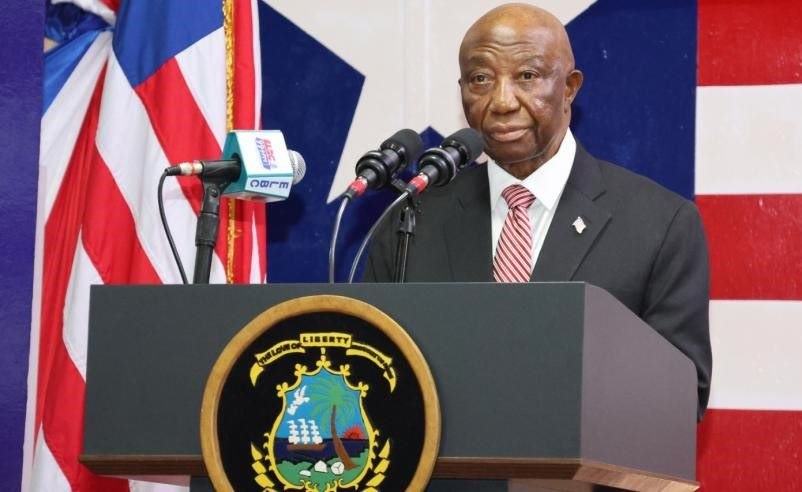
Under President Joseph Nyumah Boakai’s administration, recent SONAs have foregrounded economic challenges and the need for structural reforms. For instance, in his first address in 2024, President Boakai acknowledged the state of the nation as less than ideal and called for unity and renewed efforts to tackle pressing socio-economic issues.
The evolution of the address reflects Liberia’s ongoing democratic consolidation and the role of presidential communication in unifying citizens around shared goals and governance priorities.
Political Significance of the State of the Nation Address
Executive Accountability
At its core, the SONA serves as a national report card on governance. By detailing achievements, failures, and future legislative priorities, the president is held accountable to both the National Legislature and the Liberian people. This function reinforces transparency and builds public trust in the executive’s stewardship.
SONA speeches invariably include assessments of macroeconomic indicators, security concerns, social services delivery, and governance reforms. For example, President Boakai’s 2025 address emphasized the need for structural reforms in sectors such as agriculture, manufacturing, and education to stimulate economic growth and reduce unemployment.
Legislative Agenda Setting
Article 58 explicitly requires that the SONA outline the administration’s legislative program for the ensuing session. This transforms the speech into a policy blueprint, guiding the National Legislature and stakeholders in prioritizing legislative action.
The strategic articulation of a legislative agenda enhances coordination between the executive and legislative branches, reducing policy fragmentation and strengthening governance coherence.
Democratic Communication and Citizen Engagement
The SONA transcends internal government communication to reach the Liberian populace. Delivered publicly, it fosters informed citizen engagement and encourages public discourse on national priorities. Effective SONAs inspire civic participation and deepen democratic engagement beyond election cycles.
Public responses to SONAs—whether through civil society commentary or media analysis—demonstrate how these addresses help shape national debates on key policy issues and societal expectations.
Social and Symbolic Functions
Nation-Building and Unity
Liberia’s history is marked by periods of deep division and civil conflict. In this context, the SONA plays a symbolic role in nation-building. By regularly recounting collective challenges and shared achievements, the address reinforces a narrative of unity, resilience, and common purpose.
Presidents often invoke historical milestones and national values in SONAs to bridge social divides and strengthen social cohesion. For example, commemorative references to national struggles and triumphs often appear in speeches to underscore collective identity.
Legitimacy and Authority
The regular delivery of SONAs accords legitimacy to the governing order. It symbolizes democratic continuity, especially crucial in post-conflict or transitional settings where institutional legitimacy might be fragile. By formally reporting to the legislature and, by extension, to the people, the address reinforces democratic legitimacy.
Comparative Perspectives
Comparative analysis shows that many democracies institutionalize similar addresses, albeit with local adaptations. For example, Ghana’s State of the Nation address reports economic, social, and political conditions to Parliament and reinforces executive accountability.
Likewise, in the Philippines, the State of the Nation Address serves as an annual report summarizing accomplishments and outlining future plans.
While the constitutional contexts differ, the overarching purposes—accountability, communication, and policy direction—remain consistent across systems.
Challenges and Critiques
Despite its importance, the State of the Nation Address in Liberia is not without challenges:
Accessibility and Public Perception
If SONAs remain confined to political elites and civil society actors without wide public engagement, their impact may be limited. Ensuring accessible coverage and public education about SONA contents is crucial for broader democratic engagement.
Implementation Gaps
Critics argue that SONAs can become rhetorical if not paired with measurable action. Calls for transparency and performance metrics, particularly concerning anti-corruption and economic reform, have featured in civil society commentary, urging presidents to use the address to demonstrate concrete outcomes and not just intentions.
Political Polarization
In politically polarized environments, the address may be interpreted through partisan lenses, diluting its unifying potential. Political leaders and stakeholders have a role in framing the address as a national dialogue rather than a source of political contestation.
Implications for Governance and Policy
The State of the Nation Address has practical implications for governance:
Strategic Policy Alignment
By articulating clear policy priorities, the SONA aligns national development goals with legislative and budgetary processes, enhancing strategic coherence.
Performance Monitoring
Regular annual addresses create opportunities for tracking progress over time, benchmarking government performance, and identifying areas for improvement.
Strengthening Democratic Institutions
Beyond immediate policy effects, the practice of delivering SONAs reinforces democratic norms, institutional accountability, and civic consciousness.
Conclusion
The State of the Nation Address is more than a ceremonial speech; it embodies constitutional mandates, democratic accountability, policy planning, national unity, and public engagement. In the Liberian context—shaped by historical struggles and ongoing democratic consolidation—SONAs serve as essential mechanisms for reinforcing governance, fostering inclusive dialogue, and charting the nation’s future trajectory.
As Liberia continues to evolve politically and socio-economically, the State of the Nation Address will remain a vital instrument for articulating national ambitions, confronting collective challenges, and reinforcing the bonds between the state and its citizens.
About the Author
Apostle Dr. Tarpeh L. U-sayee, Jr. is a highly accomplished Liberian law enforcement professional, criminal justice scholar, police training expert, and ordained Apostolic minister with over two decades of combined experience in security services, higher education, leadership training, and ministry.
He currently serves as an Instructor with the Executive Protection Service (EPS) and the Liberia National Police Training Academy, while lecturing in Criminal Justice, Forensic Science, and Physical Education at several private universities in Liberia.
His professional career is distinguished by extensive international exposure, including advanced police and counter-terrorism training in the United States and Nigeria.
Dr. U-sayee holds a Doctor of Ministry (DMin) in Church Growth, a Master’s Degree in Foreign Service Leadership (International Relations), a Master of Divinity, dual Bachelor’s Degrees in Sociology and Criminal Justice, and an Associate Degree in Management.
As an Apostle, academic, and security practitioner, he integrates ethical leadership, faith-based values, and practical expertise to advance peacebuilding, institutional development, and the rule of law in Liberia.
References
Constitution of the Republic of Liberia, Article 58.
Judiciary of Liberia
Weah, George M. SONA, 2023.
Executive Mansion
Boakai, Joseph N. SONA, 2024 & 2025.
Liberian Embassy USA

