

By Prof. Kettehkumuehn E. Murray, Ph.D.
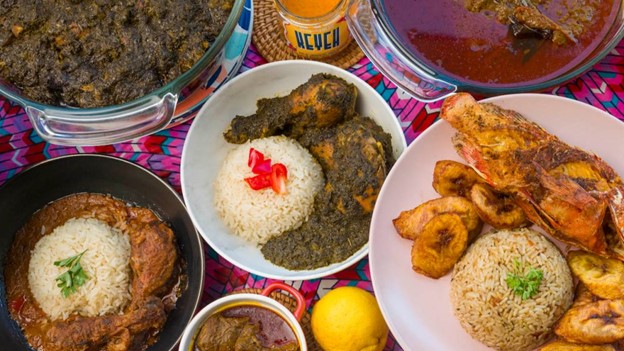
WHILE CONDUCTING RESEARCH FOR THE Liberia Philosophy Guide, I once again encountered the widely circulated praise—particularly online—celebrating the exquisite taste of Liberian cuisine.
Across digital spaces, voices ranging from African diaspora commentators to Asian food bloggers have offered effusive descriptions of Liberian meals as delicious, delectable, and unforgettable, whether prepared by homemakers or served by restaurateurs.
As a Liberian, I naturally concur.
Liberian food is among the most desirable in the world. Not necessarily the healthiest—we may graciously leave that distinction to certain East Asian cuisines—but once one tastes Liberian food, one is hooked.
From collard greens, cassava leaves, potato greens, palm butter, palava sauce, toborgee, fever leaves, kidney beans, and many more, our culinary repertoire is vast, layered, and deeply satisfying. Few cuisines rival its richness, depth, and emotional resonance.
But the question remains: why?
The answer lies in history—specifically, in a rare and profound culinary convergence.
Liberian cuisine is the result of a fusion between indigenous West African foodways and the culinary genius of the Americo-Liberians, who returned from the Americas in the early and mid-nineteenth century. This fusion did not occur by accident; it was forged through centuries of survival, adaptation, and creative necessity.
Between three hundred and six hundred distinct West African ethnic groups were violently uprooted and transported to the Americas. Forced into conditions of subservience, these peoples survived on scraps, discards, and ingredients deemed unfit for human consumption. Yet from this deprivation emerged culinary brilliance. What was thrown away became nourishment; what was despised became delicacy.
Out of hog intestines came chitterlings.
From coarse corn remnants emerged cornbread and grits.
And with bits and scraps of vegetables, we got “pot-liquor!”
These cast-offs fashioned meals fit for kings!
This was not merely cooking—it was philosophy in practice, an act of cultural defiance, memory, and genius.
When the repatriates arrived on the shores of what would later become Liberia, they encountered an abundance of organic produce, indigenous vegetables, and authentic spices, including country spices and malagueta (grains-of-paradise) pepper—ingredients that had never been lost to memory, only separated by force.
The reunion was transformative.
American survival techniques met African abundance.
Diasporic ingenuity met ancestral soil.
Proportions were perfected. Flavors layered. Techniques refined.
The result was something altogether new: Liberian cuisine—a feast so rich in taste, history, and meaning that it feels almost otherworldly: an emperor’s banquet born of suffering, resilience, and reunion.
Liberian food, therefore, is not merely delicious.
It is history made edible.
Asè.
Ju-aà-naan.
Zee-ma-neen.

