

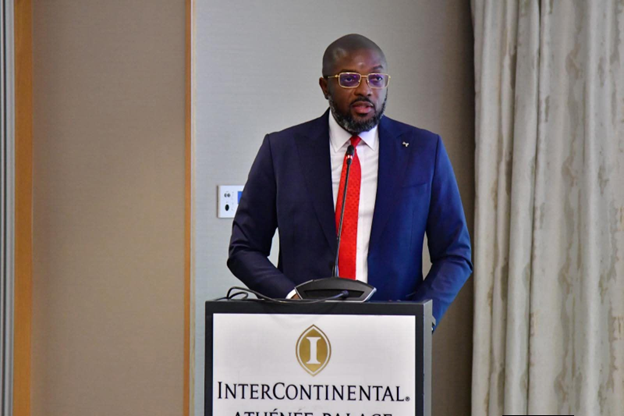
In a landmark move to strengthen accountability across government, Auditor General Garswa Jackson has announced that the General Auditing Commission (GAC) has, for the first time in its history, conducted an audit of the Office of the President. Jackson described the step as “unprecedented,” underscoring its significance in Liberia’s governance landscape.
The disclosure came Tuesday during the launch of the GAC’s Strategic Plan, where Jackson framed the audit as a milestone in the commission’s renewed drive to enforce transparency and financial discipline across all public institutions. “No office, regardless of its status, should be beyond scrutiny,” he said, emphasizing that the presidency must adhere to the same standards of accountability as other branches of government.
The GAC’s audit of the presidency was accompanied by reviews of several other high‑profile institutions, marking a broad expansion of oversight. For the first time, the commission has audited the Judiciary, the Liberian Senate, and the Ministry of State for Presidential Affairs. These audits, Jackson noted, represent a deliberate effort to ensure that the nation’s most powerful offices are held to the same financial standards as ministries and agencies.
The commission also extended its scrutiny to critical financial systems, including the Civil Service payroll, the Central Bank of Liberia through its Compliance Audit Department, and the Domestic Debt Department of the Ministry of Finance and Development Planning. By targeting these areas, the GAC aims to address systemic weaknesses that have long undermined fiscal management and public trust.
The announcement coincided with the unveiling of the GAC’s Strategic Plan, which outlines reforms designed to modernize auditing practices and expand institutional reach.
Jackson said the plan reflects a commitment to proactive oversight, moving beyond routine audits to tackle areas historically considered untouchable. “This is about building a culture of accountability,” he explained, adding that the commission’s work is intended to reinforce confidence in public institutions.
Observers note that auditing the presidency carries symbolic weight, signaling that Liberia’s highest office is not exempt from financial scrutiny. Analysts argue that such measures could set a precedent for deeper reforms, particularly in a country where governance challenges have often been linked to weak oversight and opaque financial practices.
The GAC’s move is expected to resonate across Liberia’s political and institutional landscape. By auditing the presidency and other top offices, the commission is sending a clear message that accountability must be universal. The audits could also strengthen Liberia’s standing with international partners, who have long emphasized transparency as a cornerstone of development assistance.
While details of the audit findings have not yet been disclosed, Jackson’s announcement has already sparked debate about the future of public sector accountability. Civil society groups welcomed the initiative, urging the GAC to publish results promptly to ensure that the exercise translates into tangible reforms.
The GAC’s unprecedented audit of the presidency represents more than a technical review; it is a statement of intent. By extending its reach to the nation’s most powerful offices, the commission is reshaping expectations of governance in Liberia. Whether this bold step leads to lasting reforms will depend on how the findings are acted upon—but for now, the message is clear: accountability begins at the top.

