

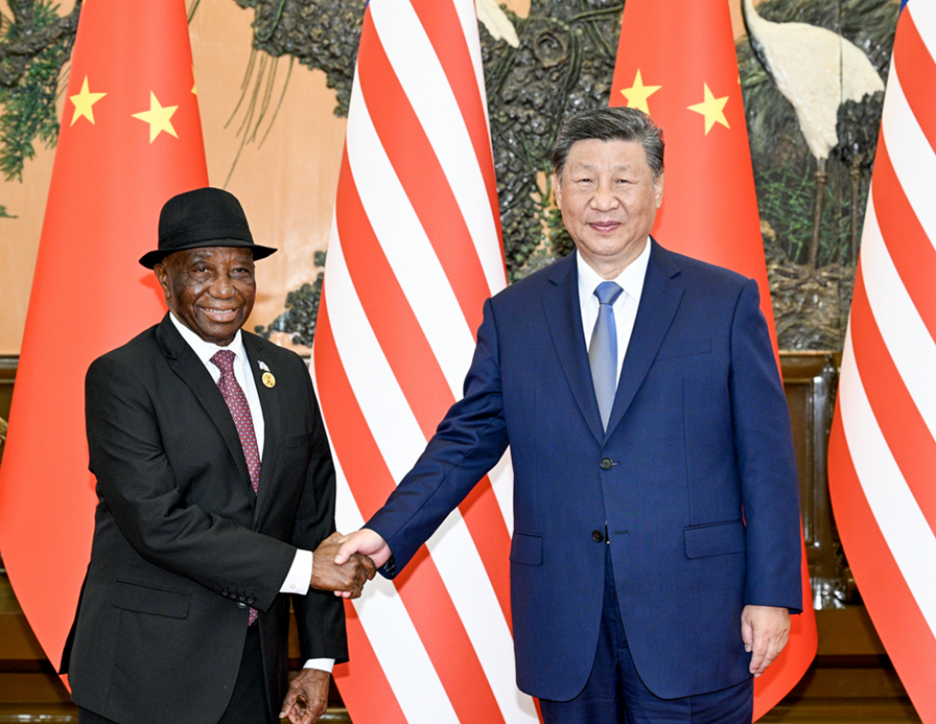
President Joseph Boakai’s recent declarations, that Liberia has empowered over 260,000 women and youth, that US$8.3 billion over five years will be invested in equality, education, healthcare, jobs, and security, and that 160,000 more people will be reached by 2031, make for inspiring headlines.
But among Liberians who queue in public hospitals without privacy, pregnant women giving birth on streets, students waiting for their university to open, and graduates with degrees but no usable laboratories or research support, those numbers feel less like hope and more like salt rubbed into wounds. The gap between high promises and everyday suffering is not just large, it’s morally and politically dangerous.
In what follows, I confront these claims with the data and the lived experience, and ask President Boakai some hard but necessary questions. Because if the empowerment he speaks of is going to be real, and not just rhetorical, ordinary people must see clear, unmistakable signs of progress in education, jobs, health care, and security.
Education: Classrooms, Universities, and Broken Infrastructure
What the data says:
Liberia’s “Education Sector Analysis” shows that while enrollment (especially in basic and secondary school) has increased since 2006, completion rates remain low, particularly for children from poor households and in rural areas. Roughly 47.3% of the population has not attended school at all, which is much higher than regional averages. Literacy among younger cohorts has improved, especially among women, but there remains a large gender, wealth, and rural-urban gap in both literacy and educational attainment.
What people are experiencing:
Reports are emerging of pregnant women forced to give birth in the streets because they cannot afford registration fees or transportation. (Unverified independently; widely circulated in civil society and social media.) Women admitted to JFK Medical Center have shared stories of being on hospital beds with no privacy, curtains missing, shared wards overcrowded, and dignity compromised. (There is controversy; JFK hospital issued a statement “clarifying social media reports and affirms care for mother and child, condemns policy violations.”)
At the University of Liberia, students report that it remains closed or partially non-functional due to budgetary neglect, lack of funding from the Ministry of Finance causes delays in opening, no chairs, no properly equipped laboratories, and no research institutes to support practical or scientific education. (These claims are in several media reports and student advocacy; I did not find a fully credible source in the statistical data to confirm all details.)
Questions for the president & government:
If billions are budgeted for education and “empowerment,” why is the University of Liberia not fully open and functioning? Why are students not learning in properly equipped labs, and why are classrooms empty of basic furniture?
Why has so little been done to ensure that public schools, especially in rural areas, have adequate facilities, teachers, and support to prevent children from dropping out or never enrolling? Will there be transparency around how much of the projected US$8.3 billion is allocated specifically to higher education infrastructure, research, teacher pay, laboratories, and rural schools vs. administrative overhead or donor reporting?
Jobs & Health Care: Promises vs. Painful Gaps
What the data says:
Liberia’s World Bank overview shows that extreme poverty rose from ~24.8% in 2019 to ~40.9% by 2022, though more recent estimates show some decline to ~26.4% in 2024. Unemployment is high, especially youth unemployment. The data from ILO‐modeled estimates show a large share of young people out of work. Liberia’s Human Capital Index is low, meaning many children and youth are not achieving the learning, health, and survival outcomes that correspond to their potential.
What people are experiencing:
Pregnant women are reportedly being denied safe delivery services in state facilities due to a lack of funds for registration, transport, or medical supplies, pushing them into risky street births. In hospitals, not just JFK but other public health facilities, reports of no privacy and lack of essential supplies (e.g., gloves, medicines) are common. Patients often buy their own drugs or supplies.
Many youth who complete secondary or tertiary education find no real job opportunities, skills are mismatched with what the private sector or public sector demands, jobs are few, and many decent scientific or technical labs are nonexistent, making skills training theoretical rather than practical.
Questions for the president & government:
How do you justify claiming “over 260,000 empowered” when health facilities cannot provide basic services, mothers deliver on the road, and patients lack dignity or privacy?
What part of the budgeted $8.3B will go into strengthening health facilities, ensuring essential drug availability, births are safe, and that mothers don’t die or give birth in unsafe conditions?
What programs are in place to convert empowerment into sustainable jobs, not just temporary stipends, especially for female youth, science, and technical fields, given that there is no proper laboratory or research support in many universities?
Security: Global Profile, Local Fear
What the data says:
Liberia is still dealing with large informal employment, vulnerable livelihoods, and significant portions of the population living below the poverty line, all conditions that exacerbate crime, unrest, and insecurity.
While Liberia’s economic growth has recently improved, and inflation has eased somewhat, many households are not yet protected from shocks; food, health, and education costs remain large burdens.
What people are experiencing:
In Monrovia and elsewhere, many youth feel unable to find dignified work; some resort to petty crime, others to informal or dangerous paths (e.g., gangs, illicit trade). Women and girls continue to be especially vulnerable to gender-based violence, including in healthcare settings, in public spaces, and even in their homes, when the institutions supposed to protect them are under-resourced or indifferent.
Security in the sense of “feeling safe in your home, neighborhood, hospital, or school” is too often absent, despite high-level promises.
Questions for the president & government:
If Liberia is speaking from the United Nations Security Council about amplifying youth and women’s voices in peace and security, when will those voices be truly heard in local communities, where insecurity, fear, and injustice are part of daily life?
What measures are in place to ensure that laws against violence (gender-based, street crime, etc.) are enforced, with victims protected, perpetrators punished, and institutions (police, judiciary) held accountable?
How will the massive budgeted investment translate into real security on the streets, courts delivering justice, and hospitals being spaces of safety rather than fear?
Truth-Telling, Transparency, and Pathways toward Real Empowerment is the way to go. Promises must correspond with results. Inflated numbers, intentional or not, erode trust, especially when citizens keep seeing the same failures in hospitals, schools, and governmental institutions. Liberia needs a leadership committed to accountability, where budgets are public, expenditures audited, beneficiaries identifiable, and outcomes measurable in terms of lives lived better, not just people “reached.”
Here are some suggestions:
Independent monitoring & civil society reporting of education facilities (chairs, labs), university operations (are lectures happening, are labs functioning, are universities open with staff paid?), health facilities (availability of essential medicines, privacy, readiness for births), and security incidents (response times, convictions, protection for victims).
Budget disaggregation so we know how much of that alleged US$8.3B is going to higher education vs basic education; to rural vs urban areas; to healthcare vs administrative overhead; to infrastructure vs salaries.
‘‘Those who live with the struggle know best what is broken. Engaging them in planning, budgeting, and monitoring will help avoid misallocation.’’ – George S Tengbeh
Between Hope and Hypocrisy
President Boakai’s Beijing+30 speech offered hope: women and youth programs, billions in investments, a bold plan to reach more people by 2031. But unless there is real transformation, that hospitals become places of healing and dignity; schools and universities become functioning institutions; jobs become real livelihoods; and security is guaranteed both in word and action, then these numbers will remain symbols rather than substance.
Liberians deserve more than lofty pledges; they deserve usable laboratories, safe childbirths, open universities, protective laws upheld, and public services that respect their dignity. If the government cannot deliver these essentials, then the rhetoric not only fails, it betrays those who trusted it. ‘‘Because numbers without change are just noise because people deserve the real thing.’’-George S Tengbeh
About the author:
George S. Tengbeh is a Labour & Environmental Justice Advocate, researcher on climate change, and expert in Public Sector Management, Labour Economics & Policy, Governance, and Water Resource Management. He is the founder of the Liberia Labour and Governance Alliance (LILGA), a non-political civil society organization dedicated to exposing unfair labour practices and promoting good governance.
Contact me: Email: gstengbeh@gmail.com | 📞 Tel WhatsApp: +231 880 767 070

