

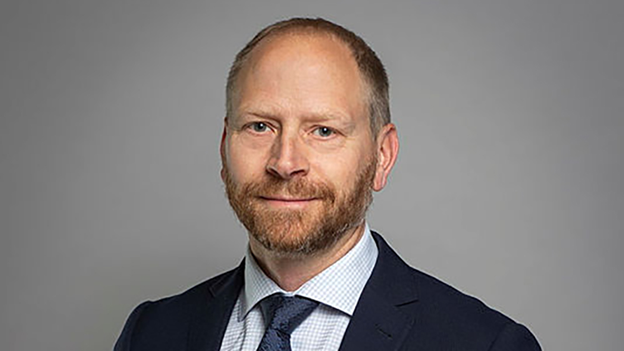
By George Werner (former education minister)
Class, welcome. Take your seats.
When Sweden announced today that it would end all bilateral cooperation with Liberia by 2026 and close its embassy in Monrovia, many Liberians reacted with disbelief. How could a partner so deeply woven into our peacebuilding, governance, civil society, and development fabric simply walk away?
But the truth is uncomfortable: this did not happen overnight. Liberia simply failed to see it coming. The consequences will be felt not only in our infrastructure and institutions, but also in our fragile democratic ecosystem.
My understanding of Liberia’s partnership with Sweden began years ago, long before aid agreements entered my consciousness. It began during a visit I made with President Ellen Johnson Sirleaf to the Dag Hammarskjöld Center in Sweden — a space steeped in the values of one of the world’s most respected diplomats. That visit revealed to me why Sweden commands a moral voice far beyond its size.
Later, Ellen and I spent nearly a week in Sweden as part of the United Nations High-Level Advisory Board on Effective Multilateralism, at a retreat hosted by the Dag Hammarskjöld Foundation in Uppsala. There, immersed in discussions on peace, justice, and global governance, I witnessed firsthand Sweden’s principled leadership and deep commitment to international cooperation. The experience reflected the quiet but firm ethos of Dag Hammarskjöld himself.
There was hardly a visit to New York when President Sirleaf and I did not pay a courtesy call on the Swedes. It was almost a diplomatic instinct for her — an understanding that Sweden was not just another development partner but a country whose moral voice carried weight in Liberia’s recovery.
For years, Sweden was Liberia’s second-largest bilateral donor, behind only the United States government before USAID wound down its governance and civil-society programs. Those meetings with Swedish leaders were never perfunctory. They were part of a deliberate effort to nurture a relationship built on trust, peacebuilding, and shared democratic values.
That partnership deepened in the most fundamental areas of state-building. When we sought to reform the Liberian civil service after the war, it was Sweden we turned to. They responded immediately and decisively, providing approximately five million dollars in grant support to strengthen Liberia’s Civil Service Agency. I was serving as Director-General at the time, and I witnessed firsthand how Swedish support helped us clean the payroll, reform recruitment, rebuild professional standards, and lay the groundwork for a modern public administration.
Sweden did not just fund projects; they invested in Liberia’s ability to govern itself. Their commitment to strengthening our institutions — at a moment when we were emerging from conflict and uncertainty — is something this country should never forget. That is why Sweden’s decision to step back today feels so weighty. Under Ellen, we tended that relationship carefully. Somewhere along the way, that discipline faded.
The first sign of what was coming appeared nearly a month ago, when the Folke Bernadotte Academy (FBA) — Sweden’s premier peace and security institution — officially closed its Liberia program. The head of FBA came to Monrovia to mark the end of two decades of engagement, and respected civil society leader, now Presidential Advisor, Koffi Woods, attended the ceremony. This event should have been our alarm.
FBA had quietly strengthened Liberia’s post-war recovery through support to mediation structures, justice institutions, transitional justice mechanisms, and community peace infrastructures. When the agency responsible for Sweden’s global peacebuilding footprint chooses to withdraw from a country, it is rarely a routine bureaucratic decision. It is almost always the first tremor before a larger strategic shift. Liberia missed that tremor entirely.
To understand Sweden’s withdrawal, one must also understand the political realities unfolding in Stockholm. Over the past two years, Sweden has undergone a major reorientation of its foreign aid priorities. A new center-right coalition, propelled by domestic political pressures and budget constraints, argued for fewer bilateral partners, reduced aid spending, stronger ties between aid and migration policy, and greater focus on European security.
These debates were public, consistent, and increasingly pointed. They signaled clearly that countries like Liberia were vulnerable to being phased out. Sweden’s exit is therefore not a reflection of Liberia’s failure, but a product of Sweden’s domestic political transformation. The real failure lies in Liberia’s inability to anticipate and respond strategically to these shifts.
What makes this even more troubling is that Liberia currently holds a seat on the United Nations Security Council — a rare and powerful diplomatic platform. That seat carried enormous potential for strategic engagement with Sweden, a nation that has long championed multilateralism, peacebuilding, and international cooperation. We could have articulated Liberia’s continuing relevance in West Africa’s stability.
We could have made a principled and evidence-based case for continued bilateral cooperation. We could have appealed to Sweden’s historic role in Liberia’s democracy and peace. But we did none of this. We did not use the tools available to us. And in global diplomacy, silence is not neutral. Silence is surrender.
The implications of Sweden’s departure will be felt in every corner of our development ecosystem. Infrastructure, especially roads, will suffer indirectly. Roads collapse not because of gravel but because of poor oversight. Sweden funded the governance mechanisms — procurement transparency, contract monitoring, and community oversight — that prevent mismanagement and safeguard infrastructure investments. Without these systems, even the most ambitious road-building programs become vulnerable to corruption and deterioration.
Governance institutions will also feel the loss immediately. Sweden was among the few donors willing to invest in the machinery of accountability: anti-corruption watchdogs, decentralization efforts, justice reforms, rule-of-law initiatives, and independent media. Their support helped strengthen CENTAL, NAYMOTE, and other groups that have expanded civic education, youth leadership, and public oversight. The departure of such a donor leaves a vacuum that will be difficult to fill.
Civil society — the backbone of Liberia’s democratic life — is perhaps the most at risk. Swedish support for community radios, investigative journalism, women’s organizations, and grassroots groups has helped sustain Liberia’s fragile civic space. Many of these organizations depended on Sweden not only for funding but for protection in a political landscape often wary of scrutiny. Their weakening would be a setback not just for advocacy, but for Liberia’s democratic resilience.
Yet, Sweden’s exit also offers Liberia a moment for self-reflection. It challenges us to build a serious diplomatic-intelligence system capable of anticipating international shifts. It forces us to confront the unsustainability of relying exclusively on donor funding for governance and civic space. And it invites us to rethink our engagement with partners — not merely as beneficiaries seeking aid, but as strategic actors with coherent positions and long-term plans.
Sweden’s departure is not a closing of the door, but a turning of the page. Liberia must decide what kind of chapter follows. Will we build domestic mechanisms to fund governance and transparency? Will we strengthen our diplomacy and intelligence so that no major strategic shift catches us unprepared again? Will we engage Sweden in multilateral arenas even as bilateral aid winds down? These questions demand answers — now, not later.
A quiet earthquake has shaken our partnership. Its aftershocks will depend on what Liberia chooses to do next. For two decades, Sweden offered more than resources; it offered moral clarity, stability, and a commitment to peace. Their withdrawal forces us to ask whether Liberia is ready to stand on its own feet — and whether we can preserve the democratic gains we achieved together.
Sweden’s chapter in Liberia’s history has been long and meaningful. It is up to us to ensure that what follows is not decline, but renewal.

