

By George Kronnisanyon Werner (former education minister)
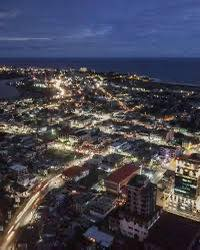
After the war, Monrovia did not sleep in silence. It slept to the sound of generators. From Sinkor Old Road to Congo Town Back Road, from Logan Town and New Kru Town to Clara Town, the night air carried the uneven roar of small diesel machines—some coughing, some screaming, all expensive.
In Paynesville, the sound rolled through Red Light, Duport Road, Soul Clinic, and ELWA Junction, stretching outward to Johnsonville, Mount Barclay, and Brewerville. In the estates—PHP, Fiamah, Neezoe, SKD, and the old Housing Authority blocks—extension cords ran from house to house, powering a single bulb, a fan, a freezer, a television. When fuel ran out, the city went dark again.
Inside government, the darkness was literal. Many offices had no reliable power even during working hours. Civil servants climbed stairwells and groped through dark hallways to reach their desks, guided more by memory than sight. At the Ministry of Foreign Affairs, the elevators were broken for years.
Diplomats, clerks, and junior officers climbed long concrete stairways—step by step—often in near-total darkness, then felt their way along corridors, counting doors from habit. Files were read by sunlight near windows. Meetings ended early, not because decisions had been made, but because daylight had faded. The state itself operated in shadows.
Hospitals rationed electricity. Businesses planned their hours around diesel deliveries. Families timed cooking, homework, and sleep to the hum of a generator that might fail at any moment. In the outskirts—Gardnersville, Chicken Soup Factory, Barnersville, and Dixville—darkness was not an interruption; it was the default. This was the soundscape and sightline of post-war Liberia: survival powered by diesel.
It was in this context that President Ellen Johnson Sirleaf offered one of the most honest development frames of Liberia’s recovery: “small light today, big light tomorrow.” It was not a slogan. It was a warning, a promise, and a discipline. Liberia would not leap from collapse to abundance. It would build—patiently and sequentially—one feeder line, one substation, one turbine, one reform at a time.
The baseline was stark. When the civil war ended in 2003, Liberia’s electricity system had collapsed almost entirely. The Mount Coffee Hydropower Plant, once the backbone of national supply, lay in ruins. Transmission lines were vandalized, technical capacity depleted, and public power virtually nonexistent.
Even more than a decade later, access remained extremely low. World Bank data shows that in 2015, only about 15 percent of Liberians had access to electricity, placing the country among the lowest-access nations globally at the time (World Bank, EG.ELC.ACCS.ZS). Darkness was not just physical; it was institutional.
The early post-war years required pragmatism. Emergency diesel generation, small grid islands, and limited distribution were inefficient and costly, but they were necessary. These were the small lights—fragile and imperfect, yet essential for restarting government, health services, water systems, and commerce. You cannot rebuild a nation in the dark.
The shift from survival to structural rebuilding gained momentum through Liberia’s partnership with the Millennium Challenge Corporation (MCC).
In 2015, Liberia secured a US$257 million MCC Compact, identifying unreliable electricity and poor road infrastructure as binding constraints to economic growth (MCC, Liberia Compact). At the heart of the energy investment was the rehabilitation of Mount Coffee, restoring Liberia’s largest renewable generation asset and significantly expanding national installed capacity (MCC Compact Close-Out Report).
Mount Coffee also tells a broader story about how post-conflict infrastructure actually gets built. It was a coalition project. Alongside the Government of Liberia and MCC, Norway, the European Investment Bank (EIB), and Germany’s KfW provided critical financing and technical support for different phases of the rehabilitation (Government of Norway; EIB project documentation; KfW development finance reports). “Big light tomorrow” was never going to be delivered by a single institution. It required alignment across governments, financiers, engineers, utilities, and regulators—over many years.
Just as important were the legal and regulatory foundations laid during President Sirleaf’s tenure. In 2015, Liberia enacted the Electricity Law, the first comprehensive legal framework governing the power sector. The law established the Liberia Electricity Regulatory Commission (LERC) as an independent regulator with authority over licensing, tariffs, service standards, and dispute resolution (Electricity Law of Liberia, 2015; LERC mandate). For a fragile, capital-intensive sector, this shift from ad hoc decision-making to rules-based governance was transformative. Infrastructure without institutions does not endure.
During this period, Liberia also advanced national electricity and rural electrification strategies, developed with partners including the World Bank, MCC, and the European Union, explicitly recognizing that grid expansion alone would not reach most Liberians and that off-grid and mini-grid solutions had to be integrated into national policy rather than treated as temporary fixes (World Bank energy sector projects; EU energy access programmes).
By the time the MCC Compact closed in 2021, Liberia’s electricity trajectory had changed meaningfully. Access rose steadily over the decade. By 2023, about 32–33 percent of Liberians had access to electricity, more than doubling the 2015 level (World Bank, EG.ELC.ACCS. ZS).
Urban access outpaced rural access, and roughly 18 percent of the population was connected to the national grid, with many others relying on off-grid solar and mini-grids (SEforALL country data; ENDEV assessments). The generators did not disappear—but their monopoly over the night was broken.
Electricity began to quietly enable progress across sectors. Clinics refrigerated vaccines. Water systems operated more reliably. Students studied after sunset without kerosene smoke. Small businesses extended hours and added machinery. Electrification did not solve Liberia’s development challenges on its own, but without it, none were solvable at scale.
This connection between electricity, institutions, and human development was powerfully reaffirmed during the 2025 United Nations General Assembly in New York, where I represented President Ellen Johnson Sirleaf at a private dinner and board engagement convened by Raymond G. Chambers and Dr. Rajiv Shah.
The discussion—anchored around the Mission 300 Accelerator and the Partnership for Digital Access in Africa—returned repeatedly to a blunt global reality: in the twenty-first century, electricity and internet connectivity together form the foundation of opportunity.
Nearly 600 million people in Sub-Saharan Africa still lack access to electricity (International Energy Agency), while hundreds of millions remain offline despite living within mobile coverage areas (International Telecommunication Union). Electricity enables connectivity; connectivity, in turn, drives demand, skills, and productive use of power.
It was the global articulation of a truth Liberia has lived for two decades.
President Sirleaf’s promise was never about speed; it was about sequence. Big light tomorrow requires discipline—credible regulation, sustained investment in transmission and distribution (not only generation), loss reduction, realistic yet humane tariff policy, and protection of utilities from political interference.
It also requires thinking beyond national borders. Liberia’s engagement with the West African Power Pool (WAPP) under her leadership positioned the country for a future of regional power trade, shared generation, and reduced reliance on diesel through cross-border interconnection (WAPP; ECOWAS energy framework).
Liberia has already proven one thing: it can climb out of darkness. The noise of generators still exists, but it no longer owns the night the way it once did. The broken elevators at the Ministry of Foreign Affairs were not just a maintenance failure; they were a metaphor for a state stuck between floors. Electrification—anchored in law, institutions, and regional integration—is how countries rise.
That is why the phrase still holds.
Small light today—uneven, imperfect, contested—was how Liberia survived and restarted.
Big light tomorrow—reliable, affordable, nationwide—is how Liberia will compete, educate, heal, and grow.

