

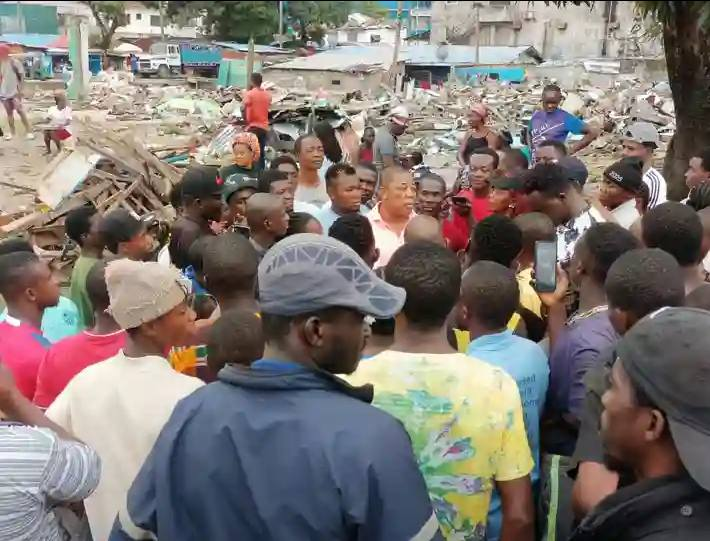
Civil society group – Solidarity and Trust for a New Day (STAND) warned Sunday Liberia risks sliding into a “new war” as the capital Monrovia faces the first mass displacement since the end of civil war more than two decades ago.
A government-led demolition campaign and forced evictions have displaced hundreds of thousands of people in slum communities across the city.
At a press conference, STAND chairman Mulbah Morlu described the demolitions, now carried out after the Commander-In-Chief of the Armed Forces of Liberia – President Joseph Nyuma Boakai backed the soldiers retake their land as a deliberate revival of the injustices that fueled Liberia’s 14-year conflict.
“History is repeating itself not by accident, but by policy, pronouncement, and deliberate state action,” Morlu said.
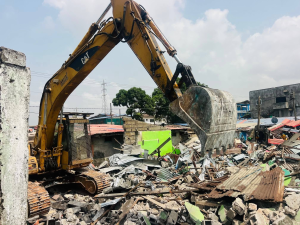
STAND says the president’s statement that “the army will come back to take their land” has effectively legitimized state violence, normalized forced displacement and announced a doctrine of land confiscation under the banner of “public land.”
The group warned that thousands of residents heard that message as a direct threat: that their homes are temporary and their lives do not matter.
The organization accused politically connected actors of exploiting a corrupt and captured judiciary — using injunctions, forged deeds and political influence — to dispossess poor Liberians while bulldozers escorted by armed police erase entire communities.
STAND listed affected areas across Monrovia and beyond, including Stockton Creek, New Port Street, Bushrod Island, Saye Town, the Catholic Community, Wroto Town, Old Road, Mat Estate, Paynesville and Somalia Drive.
Morlu outlined broader concerns about land governance in Liberia, citing incomplete and flawed land records, the wartime destruction of documentation, and the humanitarian consequences of mass evictions.
He also invoked international human rights law, saying forced evictions without due process, compensation and resettlement breach Liberia’s obligations and create a mounting humanitarian crisis.
Questioning the timing and motive for deploying troops to certain areas, Morlu alleged the militarization of sites such as the 72nd Barracks may be politically motivated, suggesting leaders are positioning security forces near key residences ahead of the 2029 election.
He framed the campaign as a struggle for economic and political power that sidelines ordinary citizens.
STAND called on Liberians across social and economic groups — market women, youth, students, trade unions, faith leaders, civil servants and the diaspora — to rise up peacefully and resist, warning the organization would mobilize displaced citizens to “make Joseph Boakai a displaced president” if the government does not halt the demolitions.
The group characterized the current approach as a moral and constitutional failure:
“A government elected on promises of rescue has chosen repression,” Morlu said, urging authorities to abandon the “land reclaim” policy and adopt measures that protect residents, respect due process and address the legacy of wartime displacement.

