

By Festus Poquie
A rapid assessment of Liberia’s mining sector released in March 2026 found that rural communities have been deprived of at least $400 million in legally required benefits while wide gaps in trade reporting and weak enforcement are draining the state of revenue, leaving villages impoverished as the country’s resources generate large export flows.
The Forest Trends assessment says companies operating under Mineral Development Agreements have shared no more than $119 million with affected communities between 2007 and 2023, plus about $12 million in in-kind contributions such as road work.
By contrast, the report calculates communities have a legal claim of roughly $454 million if gold producers were held to the same community contribution standard as iron ore firms — a shortfall of more than $335 million on that measure alone and more than $400 million by the study’s broader accounting.
The shortfalls are compounded by what the report calls systemic underreporting and likely illicit trade. Since 2011, importers have reported some $2.7 billion — about 43 percent — more in purchases of Liberian gold and iron ore than Liberia declares in exports.
For iron ore alone, reported production exceeded recorded exports by roughly 23 million tons. The assessment flags those persistent discrepancies as consistent with misreporting, transfer pricing, or smuggling, and says the government is “likely losing hundreds of millions of dollars annually.”
Community payments meant to compensate for land and resource impacts are also being siphoned away from intended recipients.
Where funds were paid after 2012, the report finds they were often directed to county governments rather than directly to affected communities, and audits by the General Auditing Commission documented gross fiscal mismanagement and insufficient oversight by the Ministry of Internal Affairs.
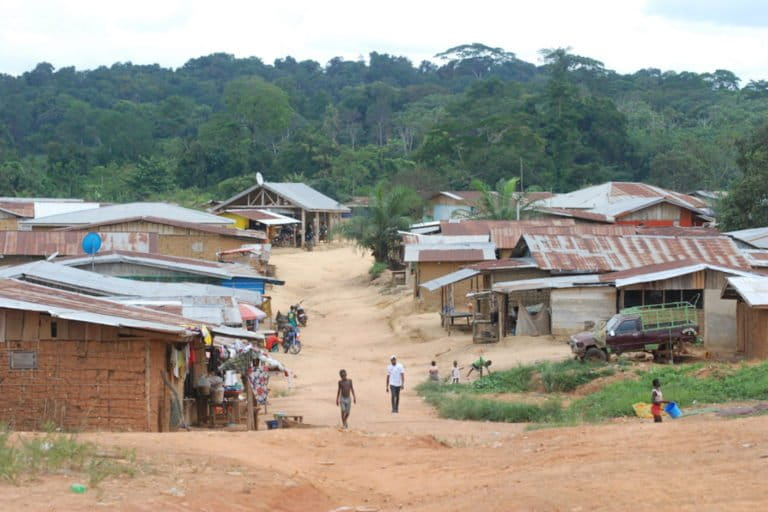
The result, the study says, is communities that remain impoverished, feel cheated, and are frequently in conflict with both companies and the state.
Environmental and social harms add to the economic grievance. Nearly half of Liberia’s forests overlap with active or applicant mining licenses, the paper notes, and pollution, deforestation and encroachment on protected areas are widespread.
The assessment urges a suite of reforms to stem fiscal leakage and restore public trust: tighter monitoring of production and exports, strengthened customs verification, enforcement of full tax and royalty compliance, direct community payment mechanisms, mandatory community equity participation, auditing of county disbursements, and a national land use plan that protects community rights and no-go ecological zones.
The findings underscore a familiar dynamic the report calls “growth without development”: mining drives GDP and export figures, but the gains are not translating into better services or higher living standards for most Liberians. Unless Liberia tightens fiscal governance and enforces transparent benefit sharing, the assessment warns, the country will continue to forfeit significant shares of its natural wealth to opaque reporting, lost royalties and displaced communities.

