

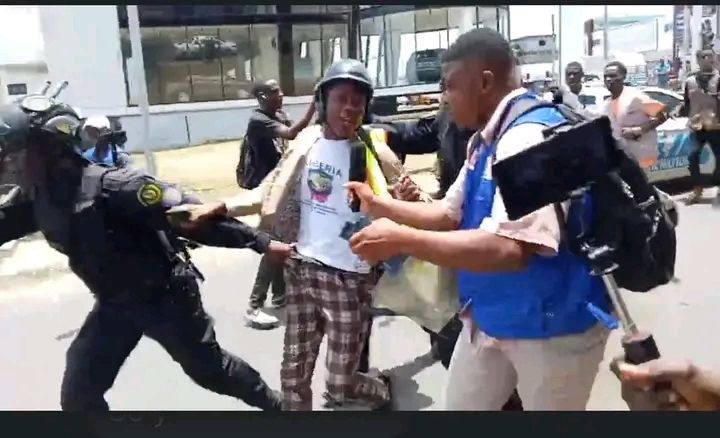
A tense confrontation unfolded on April 14 between students of the University of Liberia, organized under the Students Unification Party (SUP), and officers of the Liberia National Police’s elite Emergency Response Unit (ERU). What began as a peaceful protest quickly escalated into chaos, leaving several students arrested and sparking renewed debate over free speech, youth activism, and government accountability.
SUP had announced the demonstration under the banner “Struggle for Survival, Struggle for Jobs and Justice.” According to SUP Chairman Odecious Mulbah, the protest was not merely about the student group but represented the frustrations of ordinary Liberians. “This march is never about SUP as an entity; it is about our people who have been abandoned—those whose rights are being continuously trampled upon by this Unity Party led Government under President Joseph Boakai,” Mulbah said.
The protest began peacefully on the University of Liberia campus in the morning hours, with students chanting slogans and carrying placards demanding jobs, justice, and dignity for graduates and workers. However, as the crowd swelled, tensions mounted.
Recognizing the growing numbers, Police Inspector General Gregory Coleman, through his deputy for operations, ordered officers to clear the main Boulevard to ensure free traffic flow. Students resisted, reportedly throwing rocks at officers. The ERU responded with teargas, dispersing protesters across the campus and surrounding streets. Witnesses described scenes of panic as students fled for safety, some collapsing from the effects of the gas.
Several students were arrested during the confrontation, while a few managed to reach the nearby United States Embassy, where they attempted to present a petition outlining their grievances.
Despite the crackdown, SUP leaders vowed to continue their campaign. Mulbah emphasized that the April 14 protest was part of a broader, ongoing struggle. “The April 14 Jobs and Justice Protest remains a consistent struggle. Even after the sun sets on April 14, if the government cannot find the means to address the basic needs of the people—especially the fundamental question of jobs—SUP will continue to pursue this struggle. We will not be silenced until the dignity of the Liberian worker and the graduate is restored,” he declared.
The clash highlights the fragile balance between state security and civil liberties in Liberia. Analysts warn that heavy handed police responses risk inflaming tensions and undermining democratic freedoms. For students, the confrontation underscores their growing frustration with unemployment, economic stagnation, and what they perceive as government indifference.
Civil society groups have urged dialogue, calling on authorities to respect constitutional rights while addressing the legitimate concerns of young people. The incident also revives memories of past student protests in Liberia, which have historically played pivotal roles in shaping national discourse.

