

By Samuel T. Jabba/ Lofa County
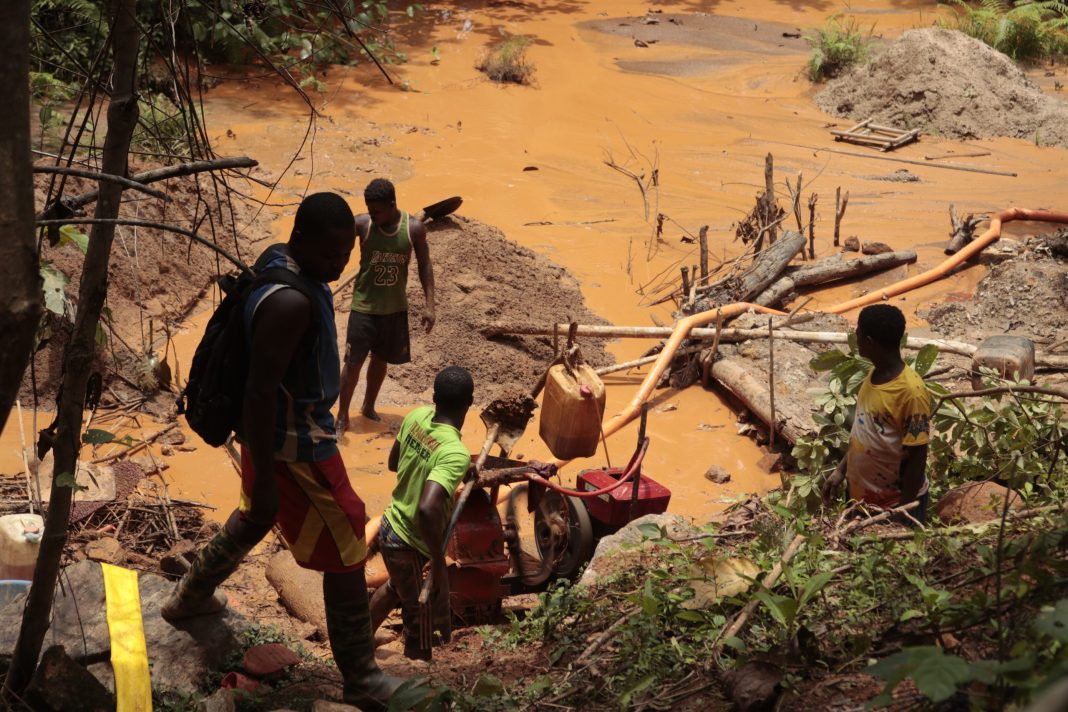
Deep in Liberia’s northern highlands, the Wologizi Proposed Protected Area — once hailed as a jewel of biodiversity — is being torn apart by a relentless gold rush. Illegal miners, locally dubbed “gold boys,” have carved vast pits into the mountains, stripped away forests, and polluted streams that sustain nearby communities. What was envisioned as a sanctuary for endangered species is fast becoming a scarred battlefield between survival and conservation.
“I’m getting my living from there,” confessed James Jallah, a 23‑year‑old miner and school dropout. “I will not sit down and be suffering. I should go to the forest that has money.” His words echo the desperation of hundreds who see Wologizi not as a protected park but as their last refuge from poverty.
The miners operate openly across Betiba, Darbu, LISCO, and Karza. To them, Wologizi is a fortress of opportunity. Some have built houses, opened businesses, and transformed Betiba into a bustling hub. “A lazy man can’t eat,” said miner Sampson Fayiah. “If I work a day, when God blesses me, I can buy you anything you want.”
Yet the cost of this prosperity is staggering. Drone footage reveals a labyrinth of “bogeyman holes” — treacherous pits gouged into the earth. Streams once clear now run murky with runoff, poisoning water sources for drinking, fishing, and farming.
Wologizi is no ordinary woodland. Spanning 99,538 hectares, it is one of nine forests designated by the Liberian government as reserves. It shelters chimpanzees, monkeys, and rare flora, forming part of a US$9 million conservation project aimed at preserving Liberia’s natural heritage.
But the forest is vanishing. In 2025 alone, Voinjama District lost 3,100 hectares of natural forest, according to Global Forest Watch. The destruction mirrors Liberia’s troubled history with resource exploitation. During the civil wars of the 1990s and early 2000s, timber and diamonds fueled conflict, earning Liberia the grim label of a “resource curse.” Today, gold threatens to replay that tragedy — not through warlords, but through unchecked desperation.
Betiba, nestled at the forest’s edge, has morphed into a frontier town. Markets brim with goods, entertainment centers buzz with music, and new houses rise — all funded by illicit mining. “We cannot have all this forest standing while people are suffering,” argued local leader Sonie Supo. “If the government wants us to protect the forest, let them give us US$50,000.”
Others disagree. Land leader Yassa Smith Kullie warns that poverty cannot justify environmental ruin. “If we continue to look at poverty and always behave this way, they will destroy all of our land. When the resources are gone, they will leave the area empty.”
Kullie’s fears are backed by law. Records from the Ministry of Mines and Energy show only four licenses issued in the region. Mining without a license is punishable by fines or prison. Yet enforcement remains weak, and illegal miners thrive.
Liberia’s struggle with resource management is deeply rooted. In the 1920s, the Firestone rubber concession transformed vast tracts of land, sparking debates about exploitation versus development. Later, iron ore from Mount Nimba and Bomi Hills fueled economic growth but left behind ghost towns when deposits ran dry. Wologizi now stands at a similar crossroads: will it be preserved as a living sanctuary or stripped bare for fleeting wealth?
The parallels are haunting. Just as timber exports once devastated rainforests, today’s gold rush threatens to erase Wologizi’s ecological legacy. Conservationists warn that if Liberia fails to protect its reserves, the nation risks losing not only biodiversity but also its chance to harness forests for sustainable tourism and climate resilience.
Community patrols have begun monitoring mining sites, but their efforts are limited. “We are appealing to the government to put a stop to the illegal mining activities here,” Kullie pleaded. Yet without stronger enforcement and viable alternatives for locals, the gold boys will keep digging.
The dilemma is stark: poverty drives miners into the forest, but their actions deepen environmental decline, which in turn worsens poverty. Breaking this cycle requires investment in jobs, education, and sustainable livelihoods. Otherwise, Wologizi may join the long list of Liberia’s lost treasures.
As dusk falls over Betiba, miners cool off by the roadside, their faces smeared with mud and fatigue. Behind them, the forest looms — wounded, yet still majestic. For now, Wologizi endures. But unless decisive action is taken, Liberia’s hidden Eden may soon be gone, swallowed by the pits of desperation and the glitter of gold.

