

By Festus Poquie
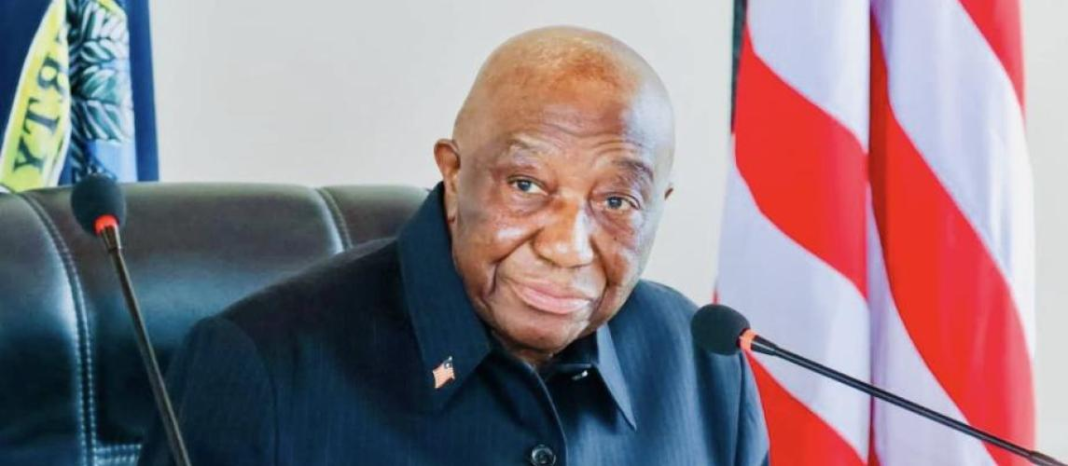
Liberian President Joseph Boakai criticized the performance of government officials overseeing his administration’s flagship development program, telling them to move beyond plans and rhetoric and deliver measurable results.
“Our promise to the Liberian people was to move beyond plans,” Boakai said Tuesday at a meeting of the National Steering Committee overseeing the ARREST Agenda for Inclusive Development.
“I have seen a lot of plans, plenty plans. We have seen and heard a lot of rhetoric. We want to deliver tangible results improving livelihoods.”
Boakai’s remarks came after the International Monetary Fund warned early this year that the government’s mega-billion development plan is unrealistic in its current form and could threaten economic stability if Liberia relies on expensive borrowing to finance it.
The ARREST Agenda calls for nearly $8.4 billion in investment between 2025 and 2029, an amount equivalent to almost twice Liberia’s 2024 gross domestic product. About 70% of the financing was expected to come from development partners and private investors, with the government contributing the rest.
The IMF said declining external support and limited prospects for a significant increase in foreign direct investment have made that financing mix less credible. Funding the plan through non-concessional borrowing could “jeopardize macroeconomic stability and external sustainability,” the Fund said in a report published on its website.
“Relatively weak implementation capacity calls for a cautious and measured approach,” the IMF said.
Boakai acknowledged progress during the first year of the program but said implementation has been uneven, citing delays, institutional bottlenecks and execution gaps. He warned that officials who fail to meet expectations could be replaced, urging the government to prioritize competence and results over personal relationships in appointments and program delivery.
The president said investments in education, health care, telecommunications, water security, infrastructure and job creation must remain priorities, while directing ministries, agencies and implementation partners to eliminate bottlenecks and submit timely, accurate reports.
“Timely reporting is non-negotiable,” Boakai said. “It’s a non-negotiable obligation for every institution implementing AAID interventions.”
The meeting, held to mark the completion of the program’s first year, was intended to assess progress, strengthen coordination and accountability, and develop guidance on development financing amid changing conditions. The committee is chaired by Boakai and supported by the United Nations resident coordinator.
An assessment by Naymote Partners for Democratic Development published in January found that only three of 378 tracked interventions had been fully completed during 2025. The report said 165 projects showed partial progress, while 76 had not started and 134 lacked sufficient data for verification.
Overall, 55.5% of the interventions were either inactive or unverifiable, according to Naymote. The group said implementation would need to accelerate more than 20-fold for the government to meet its 2029 targets.
The report identified governance, environmental sustainability and infrastructure as the strongest-performing areas, while human-capital development and economic transformation lagged because of underfunding, weak coordination and poor reporting.
Boakai also warned against the misuse of public resources, saying funds controlled by state-owned corporations and government institutions should be directed toward priority programs with the greatest development impact.
He called for closer cooperation among the government, development partners, private companies, civil-society groups and Liberians in the diaspora, saying the transformation envisioned under the ARREST Agenda cannot be achieved by government alone.

