

By George K. Werner (former education minister)
While I was a student at the University of Pennsylvania School of Social Policy & Practice, I had the privilege of spending a year as a Leadership Education in Neurodevelopmental and Related Disabilities (LEND) Fellow at the Children’s Hospital of Philadelphia.
My research focus was minority career mobility within one of America’s premier pediatric teaching hospitals. But one of the most enduring lessons I took away had little to do with my research.
We had daily classes, visited different departments, and were exposed to cutting-edge technologies, therapies and assistive devices. More importantly, we worked across disciplines. Our cohort and the professionals around us included physicians, social workers, psychiatrists, therapists, nurses, lawyers and policy specialists.
One principle was constantly reinforced: the best healthcare is delivered by teams.
No matter how gifted the pediatric surgeon, the surgeon cannot do everything. A child’s needs may require nursing, psychiatry, physical or occupational therapy, social work, law and other specialties. Each discipline sees something the others may miss.
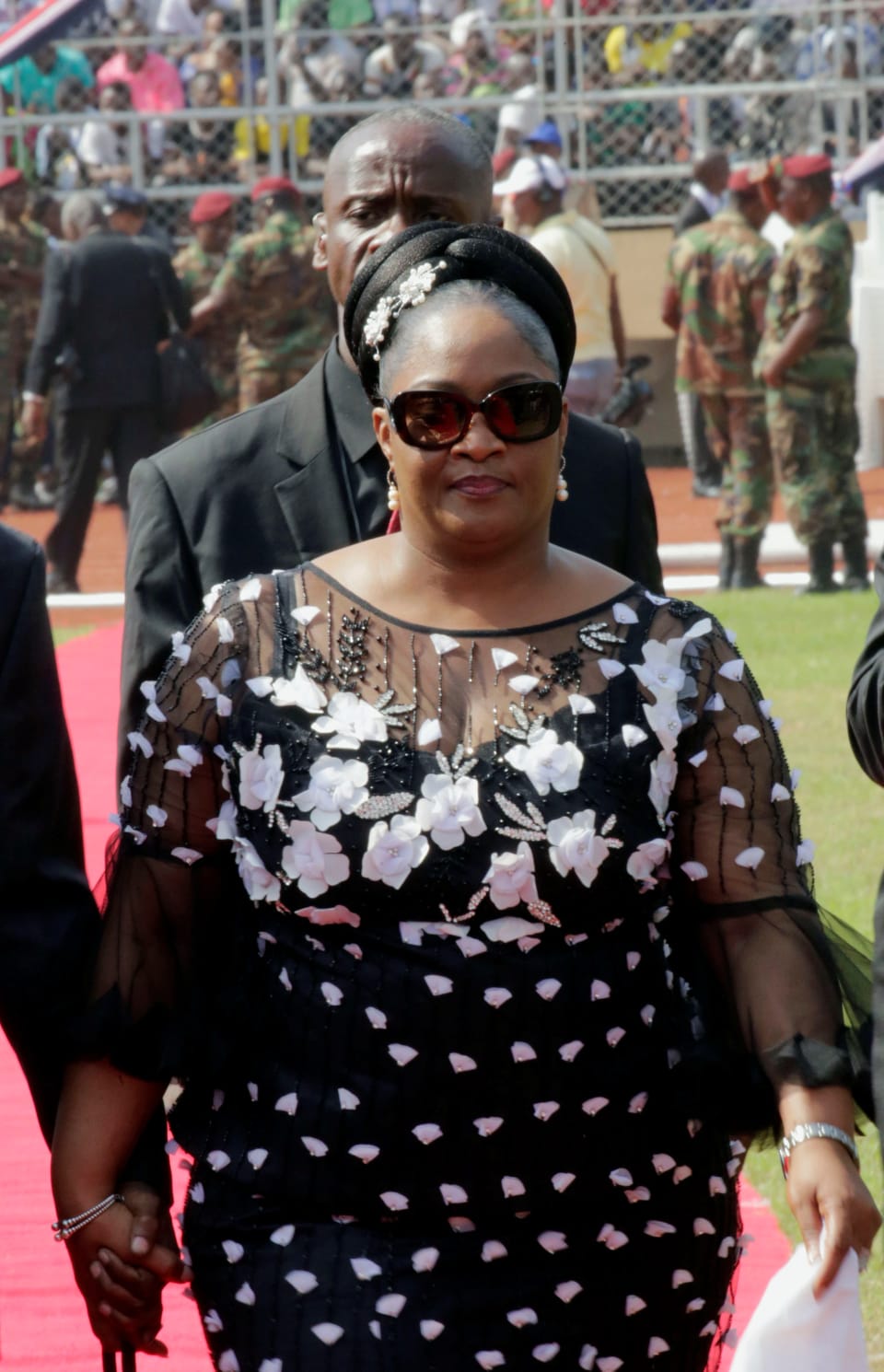
I keep thinking about that lesson as I follow the criminal proceedings involving former Vice President Jewel Howard-Taylor.
In Liberia, we tend to talk about criminal justice primarily in terms of lawyers: prosecution and defense. The State has its lawyers. The accused has hers. They argue before a judge.
But a serious criminal case—particularly one involving allegations of narcotics trafficking, conspiracy, money laundering, communications, financial transactions, international travel and multiple alleged participants—is not simply a contest between lawyers.
It is a multidisciplinary undertaking.
And before discussing the team, an important legal distinction must be made.
Being charged is not being convicted.
At the charging stage, the State does not ordinarily have to prove guilt beyond a reasonable doubt. The precise threshold depends on the procedural stage and applicable Liberian law. An arrest, charge, indictment or other preliminary judicial determination may rest on a threshold such as probable cause or legally sufficient grounds to proceed. Those preliminary standards are fundamentally different from the burden required for a criminal conviction.
At trial, the burden remains on the prosecution. The accused is presumed innocent, and the State must establish every essential element of the offenses charged beyond a reasonable doubt through admissible evidence. The defendant does not carry the burden of proving her innocence.
That distinction is particularly important in a politically charged case.
A charge sheet tells us what the State alleges. It does not tell us what the State can ultimately prove.
A press conference is not evidence at trial.
A newspaper headline is not evidence.
Political affiliation is not evidence.
Public suspicion is not evidence.
And repetition of an allegation, however widespread, does not transform that allegation into proof.
The courtroom is where allegations must encounter evidence.
That is precisely why multidisciplinary defense matters.
If the State alleges meetings occurred, a defense team may need private investigators to reconstruct them independently: Who was present? When did the meeting occur? Where? Are there witnesses, hotel records, immigration records, telephone records, photographs or other contemporaneous evidence?
If the State alleges money changed hands, the lawyers may need forensic accountants. Where did the money originate? Where did it go? What was its stated purpose? Are there bank records, organizational accounts, receipts or previous transactions that provide context?
If the prosecution relies upon telephone calls, messages, recordings or other electronic material, the defense may need digital-forensics specialists. Is the material authentic? Is it complete? Has it been altered? What does its metadata establish? What happened immediately before and after the portion being presented? Can the chain of custody be demonstrated?
If the case generates thousands of pages of documents, there is a critical role for paralegals, researchers and case managers who can organize evidence, construct timelines, compare witness statements and identify inconsistencies that even excellent lawyers can miss.
Depending upon the evidence and circumstances, there may also be roles for medical professionals, psychologists, social workers, public-policy specialists and other experts.
None replaces the lawyer.
They make the lawyer better.
There is an additional issue of fairness.
The State already operates as a team.
A prosecutor does not necessarily walk into a complex criminal case alone. Behind the prosecution may be police investigators, drug-enforcement officers, financial investigators, intelligence personnel, forensic specialists and, where lawful and appropriate, international cooperation.
That creates an obvious question for the defense: if the Government investigates through a multidisciplinary apparatus, why should the accused respond with lawyers alone?
The principle sometimes described as equality of arms does not mean that a defendant must possess resources identical to those of the State. It speaks more fundamentally to procedural fairness: an accused person must have a meaningful opportunity to know, test and challenge the case against them and to present a defense under conditions consistent with due process.
This is especially important in the Jewel Howard-Taylor case because of who she is.
She is a former Vice President of Liberia. She is a major political figure. People already have opinions about her. Some support her. Some oppose her. Others may already have decided what they believe happened.
The law cannot operate that way.
The greater the political temperature surrounding a prosecution, the greater the need for institutional discipline.
The Government should be allowed to prosecute its case vigorously. If it has evidence, it should present it. If witnesses have relevant testimony, they should testify and be subjected to the procedures required by law. If financial records establish criminal conduct, they should be authenticated and introduced. If electronic communications are relied upon, their provenance, completeness and relevance should be capable of examination.
And the defense should be equally vigorous in testing all of it.
That does not mean manufacturing alternative explanations. It means investigating.
What actually happened?
Who can independently establish it?
What does the complete financial trail show?
What do immigration and travel records establish?
What does the entire communication show rather than an excerpt?
Can a witness’s account be independently corroborated?
Has the witness previously said something different?
Does the physical or digital evidence support the allegation?
And most importantly: can the prosecution prove each element of each offense beyond a reasonable doubt?
Those are not political questions. They are evidentiary questions.
My experience at the Children’s Hospital of Philadelphia taught me something that has remained with me for years: difficult human problems rarely belong exclusively to one profession.
A sick child is not merely a surgical problem.
Likewise, a complex criminal prosecution is not merely a legal argument.
Liberia should begin developing a criminal-justice culture in which both serious prosecution and serious defense are understood as multidisciplinary enterprises. Our law schools, the Liberian National Bar Association, legal-aid organizations and justice institutions should think more deliberately about the roles of investigators, paralegals, forensic accountants, digital specialists, social workers, psychologists, medical professionals and policy experts in the administration of justice.
The Jewel Howard-Taylor case provides an opportunity to think about that larger institutional question.
The issue is not whether we like Jewel Howard-Taylor.
It is not whether we believe the Government.
It is not whether we believe the defense.
The legal question is whether the State can transform its allegations into admissible evidence sufficient to satisfy the burden the law imposes.
Until that burden is met, an accusation remains an accusation.
Years ago at CHOP, we were taught that teamwork was essential when people’s health and lives were at stake.
It should be no less important when the power of the State is being used to take away someone’s liberty.
Justice, like healthcare, is a team sport.

