

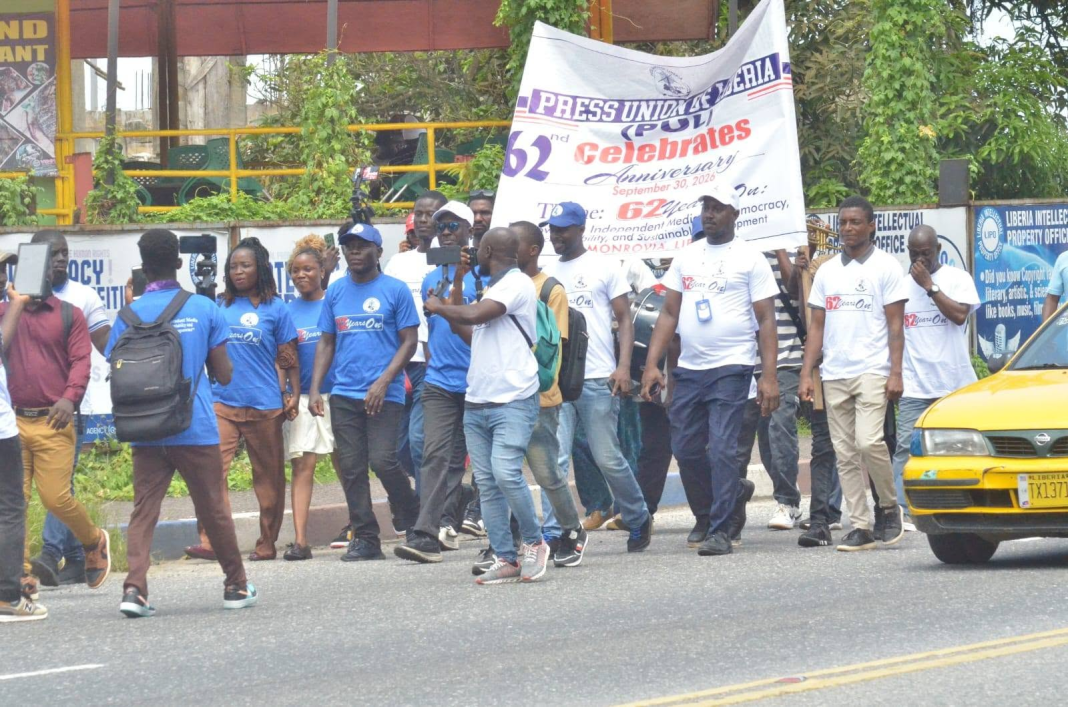
By Sherman C. Seequeh
Let me say this plainly, the way a birthday sometimes demands. The Liberian people’s long struggle for rights and rice is wasted.
It is compromised. It is dead. The activists of yesteryear have been turned — and are made — into nothing, and their successors are mere feathers in the storm.
Together they have been beaten down to rubble, robbed of every ounce of their substance, and today, God help us, they have become the cheerleaders and the errand boys of the very despots and kleptocrats they once swore to fight.
Progressivism is extinct. The cadres, the militants, the old “boys” who once made tyrants tremble are now, as a junior brother of mine put it not long ago, “buried behind laptops” — fat, quiet, and contented. The necessary noise has died.
A graveyard silence has swallowed school campuses that once roared, the pulpits that once thundered, and the union halls where working men once found their voice. And all of this — all of it — while the grand old oligarchy is reincarnated before our very eyes, its long silhouette hovering and rampaging over the land as though the years of struggle never happened at all.
ONE VOICE LEFT STANDING
And yet. In the middle of this surrender, one house has refused to kneel. The Press Union of Liberia has stood as a lone voice crying in the wilderness. Storms have come for it. They have hit it and shaken it and tried to break it open.
Ministers have scolded it, governments have courted it and threatened it by turns, and hard men have wished it quietly dead. But it stands. Battered, under-funded, and often alone — but standing. It remains the last remnant, and the cherished legacy, of the Liberian people’s long and odious march to freedom and liberty.
Sixty-two years of unbending struggle against a status quo that simply refuses to die. Sixty-two years of affront to power — of speaking when speaking cost something, of carrying the citizen’s grievance when every other institution had long traded its conscience for a per diem and a front-row seat. That, and nothing less, is the reason for celebration today. Kudos, PUL. Bravo. Happy birthday to the last conscience of a compromised republic.
BUT WHO CAME TO THE PARTY?
I was there, and I will tell you honestly how the day sat with me. As I sat pensively that Wednesday afternoon between two veterans of this trade, Raymond Zaybay and Aaron Kollie, the speeches washed over me and moved me deeply — none more than the address by the president of the Union himself.
He stood and catalogued, one after the other, the horror tales of mayhem and the uncouth tendencies this government has visited upon our people.
Every word was true. Every word should have filled that hall to its very walls. And yet, even as my colleagues nodded beside me and the room stirred, I sat half-drowned in my own cogitation, unable to shake one tragic thought — the cruel difference between the two attendances: this one on the one hand and the fortnight presidential dinner on the other.
Permit me, then, even on a birthday, one bitter word — because a friend who only flatters you is no friend at all. It grieves me, and it should grieve every honest pen in this country, that so many journalists could not find their way to the 62nd anniversary of their own Union. The chairs that should have been full stood empty. The house threw its own birthday, and too many of its own children stayed away.
Now hear this and let it burn a little.
I did not attend the presidential dinner held this same month of September; but those who were there tell me the crowd at that dinner quadrupled the turnout at our anniversary.
Quadrupled. Let that number sit on your chest. We will cross the whole town, press our finest shirts, and fill a hall to break bread with a government that tramples the rights of journalists and citizens alike — but we cannot fill our own house to honour the one institution that has bled for our freedom for sixty-two years.
What kind of profession celebrates its jailer’s table more eagerly than its own birthday? What does it say about us that the summons of power draws four times the crowd that the call of principle can muster? As I see it, a people who will not show up for their own dignity are teaching their oppressor the exact price of that dignity — that it can be bought, and cheaply, with a plate of food and a photograph.
So this is my birthday wish, and it is a hard one. May the PUL live long — longer than the oligarchy now strutting over us, longer than the silence that has swallowed our campuses and our pulpits.
And may its own children, come the sixty-third, be ashamed enough to come home. Sixty-two years, PUL. You have kept the light burning. The very least the rest of us can do is stop leaving you to hold it alone.

