

By Festus Poquie
Liberia’s largest gold producer Bea Mountain Mining Corp., has agreed to acquire the Nimba Gold Project from London-listed Hamak Strategy Ltd., giving the Liberian British partnership about $4.5 million in potential value less than two years after obtaining the exploration license.
The transaction points to the rising value of gold assets in Liberia, where the metal has overtaken rubber and iron ore as the country’s leading export earner.
Hamak’s subsidiary, 79 Resources Inc., was granted the Nimba exploration license on Jan. 23, 2025, for an initial three-year term by Liberia’s Ministry of Mines and Energy.
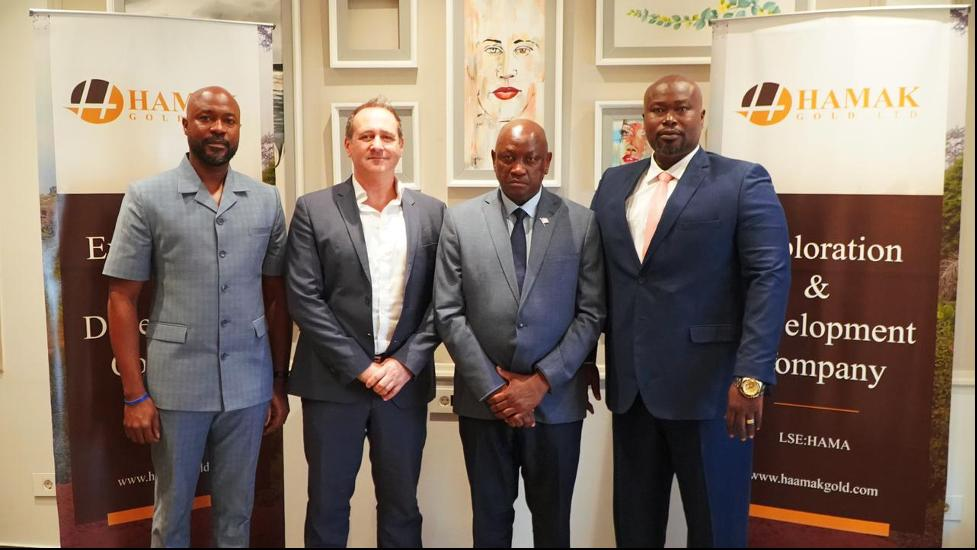
Hamak, led by Executive Director, Nicholas Karl Smithson, and Executive Chairman, Amara Kamara has now agreed to relinquish the project to Bea Mountain Mining Corp., a subsidiary of Avesoro, according to the company.
Under the agreement, Hamak could receive as much as $2 million
in milestone payments, while retaining a 2% gross production royalty on any future output from the project.
The deal also shifts exploration and development funding requirements to BMMC.
The structure gives Hamak an opportunity to retain exposure to Nimba if the project advances toward commercial production while freeing the company from the capital requirements associated with exploration and development.
The divestment comes as Hamak redirects its resources toward its Akoko gold project in Ghana, where it expects to complete a preliminary economic assessment for a potential low-cost open-pit, heap-leach operation in November 2026.
The Nimba transaction also represents a rapid change in ownership for a project that Hamak secured less than two years ago.
The company, originally known as Hamak Gold, was established around its Liberian exploration interests and became one of the first Liberian-controlled mining ventures to list on the London Stock Exchange.
Liberia gold exports reached about $895.6 million in 2024, up from $681.5 million a year earlier, according to World Bank data The increase helped drive total merchandise exports up 17.2% to about $1.30 billion.
By comparison, iron ore exports fell 21.5% to $190.9 million, while rubber exports rose 33.6% to $139.8 million. Gold, iron ore and rubber together accounted for about 94% of Liberia’s export earnings, highlighting the economy’s dependence on a small number of commodities.

