

By Festus Poquie
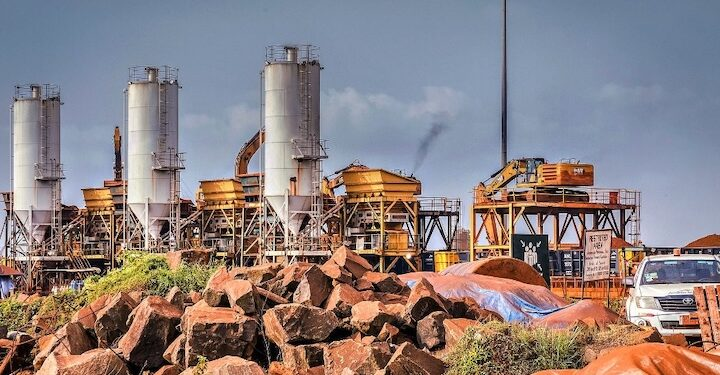
Liberia’s mining industry is generating a surge in export earnings, but questions are mounting over how much of the country’s mineral wealth is reaching government coffers and the communities whose land and resources sustain the industry.
The sector contributed approximately $432 million to Liberia’s more than $1 billion in revenue collections in 2026, according to Liberia Revenue Authority Commissioner General James Dorbor Jallah.
The contribution underscores mining’s importance to the government’s finances while highlighting the country’s dependence on an industry whose export earnings have risen sharply.
Yet the revenue milestone comes against the backdrop of a March 2026 assessment by Forest Trends, which found substantial gaps in legally required community benefits, discrepancies between Liberia’s reported mineral exports and foreign trading partners’ import records, and weaknesses in enforcement that could be costing the country significant sums.
The findings raise a central question for Africa’s oldest republic: As its mineral exports expand, is Liberia capturing a fair share of the wealth extracted from its soil?
Revenue Growth, but Questions Over Returns
Liberia’s mining export earnings climbed to approximately $1.34 billion in 2025, from $820 million in 2024, according to world Bank reporting. That represents an increase of about 63%, reflecting a sharp expansion in mineral production and export activity.
Iron ore production tripled to 14.9 million metric tons in 2025 from 5.2 million tons a year earlier, while gold output increased 44% to 410,000 ounces. Mining’s share of real gross domestic product rose to 28.5%.
The expansion has helped bolster government revenue. Collections increased from approximately $612 million in 2023 to $700 million in 2024 and $848 million in 2025, Jallah said at the government’s Kapa Kulono town hall in Tubmanburg, Bomi County.
Liberia crossed the $1 billion revenue threshold in September 2026, he said, with mining accounting for approximately 41% of collections. Based on the reported $432 million contribution and a $1 billion benchmark, the mining share would be about 43%, although the precise percentage depends on the total collections used.
The government has set a revenue target of approximately $1.3 billion for 2027. Jallah expressed confidence that the target would be achieved.
Higher collections give the government greater capacity to finance roads, schools, health services and public-sector salaries. But the headline figures do not, by themselves, establish whether Liberia is capturing the full fiscal value of its mineral resources.
Export earnings represent the value of goods sold abroad, not the amount available to the state. Government receipts depend on the taxes, royalties, fees and other payments actually collected, while the wider economic benefits also depend on employment, local procurement, domestic processing and the distribution of mining-related income.
That distinction is critical for a country where mineral exports are expanding rapidly but many communities in resource-producing areas continue to face substantial development needs.
A $400 Million Question for Mining Communities
The Forest Trends assessment points to a significant gap between the benefits communities have received and the amounts the report says they may be entitled to under applicable legal arrangements.
Companies operating under Mineral Development Agreements shared no more than $119 million with affected communities between 2007 and 2023, the assessment found. Another approximately $12 million was provided through in-kind contributions, including road works.
The report estimates that communities could have had a legal claim of roughly $454 million if gold producers had been held to the same community contribution standard as iron ore companies. That comparison implies a shortfall of more than $335 million on that measure alone.
Using its broader accounting, the assessment estimates that rural communities have been deprived of at least $400 million in legally required benefits.
The findings raise questions about whether Liberia’s existing mineral agreements and enforcement mechanisms are delivering the benefits promised to communities affected by mining operations.
For residents living near mines, the economic consequences extend beyond the distribution of cash. Community benefits can help finance infrastructure, improve access to essential services and offset some of the local costs associated with resource extraction.
When required payments are not made, communities risk bearing the environmental and social costs of mining without receiving the full benefits intended for them.
Billions in Trade Discrepancies
The assessment also identifies discrepancies between Liberia’s declared mineral exports and the imports reported by its trading partners.
Since 2011, foreign importers have reported approximately $2.7 billion more in purchases of Liberian gold and iron ore than Liberia has declared in exports, according to the report.
The difference amounts to about 43% of the relevant reported import value.
For iron ore alone, reported production exceeded recorded exports by approximately 23 million metric tons.

