

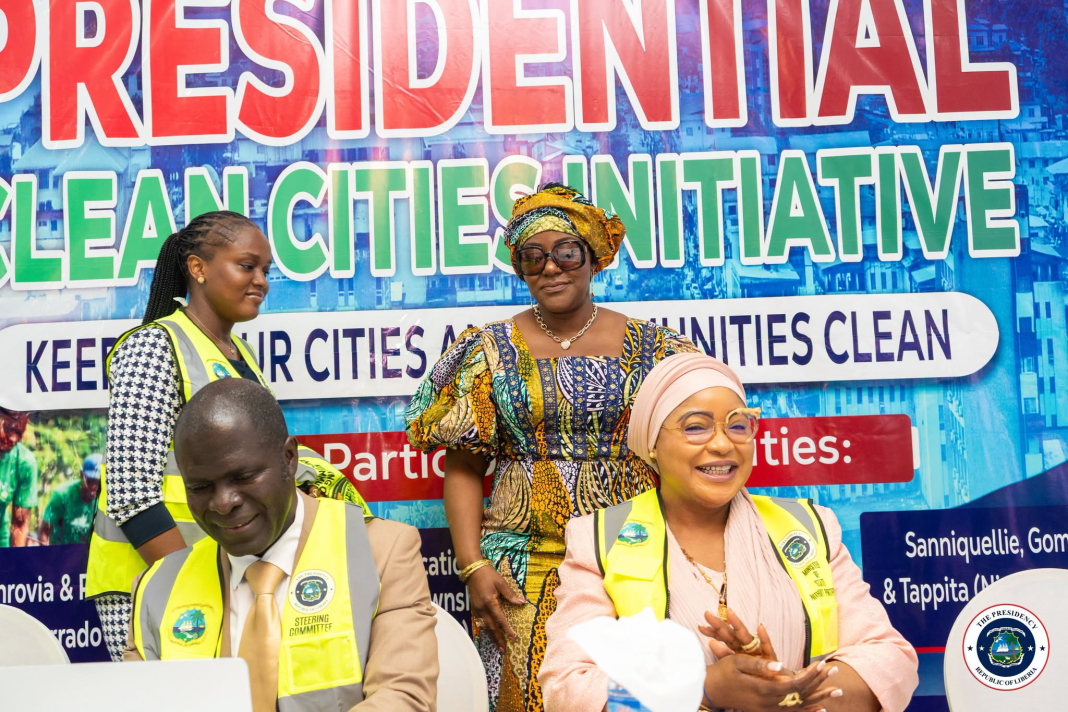
Executive Director of the Environmental Protection Agency (EPA), Dr. Emmanuel King Urey Yarkpawolo, has called for a sustained national commitment to urban sanitation, stressing that Liberia’s efforts to keep cities clean must continue long after the implementation of the Presidential Clean Cities Initiative.
Speaking Monday at the official launch and orientation for Phase One of the initiative in Monrovia and Paynesville, Dr. Yarkpawolo described the program as a timely intervention that combines youth employment with environmental protection and community development.
The launch ceremony, held at the Monrovia City Corporation (MCC), brought together government officials, municipal authorities, implementing partners, and hundreds of young participants recruited under the initiative. The orientation focused on project objectives, roles and responsibilities, sanitation worker safety, community engagement, and the distribution of personal protective equipment.
Dr. Yarkpawolo commended President Joseph Nyuma Boakai Sr. for championing the initiative, noting that it provides meaningful employment opportunities for young people while addressing growing sanitation challenges in Liberia’s urban centers.
Addressing the participating youth, the EPA Executive Director emphasized the importance and dignity of sanitation work, describing their role as critical to improving public health and environmental conditions across communities.
“You are not simply cleaning streets and drains,” he told participants. “You are helping to create healthier, safer, and more resilient communities.”
He urged residents to support the initiative by disposing of waste responsibly and recognizing the contribution of sanitation workers to national development.
Linking the initiative to climate resilience, Dr. Yarkpawolo warned that improper waste disposal, blocked drainage systems, and the destruction of wetlands significantly increase the risk of urban flooding, particularly during periods of heavy rainfall.
According to him, maintaining clear drainage channels, protecting wetlands, and improving waste management practices are essential measures for helping communities adapt to the effects of climate change. However, he noted that these efforts must be supported by sound urban planning, improved drainage infrastructure, and stronger environmental safeguards.
The EPA boss also highlighted the public health benefits of regular waste collection and drainage maintenance. He said proper sanitation helps prevent floodwater contamination of homes and drinking water sources while reducing mosquito breeding grounds and the spread of disease.
Worker safety, he added, must remain a priority throughout the implementation process. He called for adequate supervision, protective equipment, appropriate tools, and clear guidance on handling hazardous waste materials. He further stressed the need for proper transportation and disposal of collected waste at designated facilities.
“The employment may be short-term, but our commitment to clean cities must be permanent,” Dr. Yarkpawolo declared.
He urged municipal governments to institutionalize regular cleaning programs, establish clear lines of responsibility, and allocate resources for waste collection and transportation within annual budgets.
The EPA Executive Director also called for increased attention to public spaces, including markets, streets, transport terminals, public drains, and parks. He encouraged stronger collaboration among local authorities, community leaders, businesses, market associations, and residents to maintain cleaner urban environments.
Additionally, he challenged stakeholders to explore long-term opportunities for participating youth through recycling, waste collection, and other environmental service enterprises.
Dr. Yarkpawolo reaffirmed the EPA’s commitment to supporting the Clean Cities Initiative through technical guidance, public awareness campaigns, and collaboration with city authorities and implementing agencies.
He concluded by urging Liberians to view the initiative as the start of a lasting culture of environmental responsibility, one that creates jobs, reduces flood risks, protects public health, and builds pride in the nation’s cities.

