

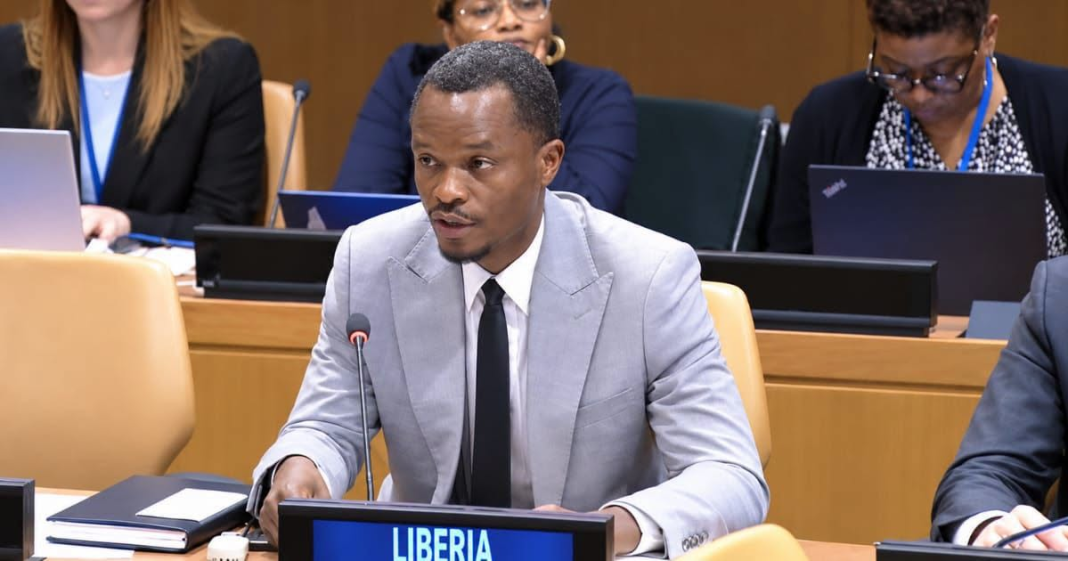
Liberia has renewed calls for women to play a central role in peace negotiations, conflict prevention, and post-conflict recovery efforts, stressing that women must be empowered to shape peace agreements rather than merely occupy seats at the negotiating table.
The call was made during a United Nations side event held Tuesday in New York and co-sponsored by Liberia, UN Women, and the NGO Working Group on Women, Peace and Security.
Speaking at the gathering, Liberia’s Political Coordinator to the United Nations Security Council, Prutus Morlai Sackie, highlighted the urgent need to address persistent barriers that continue to hinder women’s participation in peacebuilding initiatives worldwide.
Sackie outlined three key priorities for advancing the global Women, Peace and Security agenda: ensuring stronger protection for women peacebuilders, increasing sustainable funding for women-led organizations, and guaranteeing meaningful participation throughout every stage of peace processes.
“Women must be more than participants in peace talks; they must be active decisionmakers whose voices influence outcomes and implementation,” Sackie emphasized.
He noted that women engaged in conflict resolution, human rights advocacy, and political reconciliation often face threats, intimidation, and reprisals that restrict their ability to contribute freely and effectively. To address these challenges, Sackie called on governments and international partners to establish confidential reporting mechanisms, improve responses to security threats, and implement practical protection measures tailored to the needs of women peacebuilders.
His remarks echoed the principles enshrined in United Nations Security Council Resolution 1325, adopted unanimously on October 31, 2000, which recognizes the critical role of women in conflict prevention, peace negotiations, peacebuilding, and the protection of women and girls in situations of armed conflict.
Beyond security concerns, Sackie underscored the importance of predictable and long-term financial support for women-led civil society organizations. He argued that meaningful participation cannot be achieved through symbolic invitations to conferences and international forums alone.
“Women’s organizations require the resources necessary to operate independently and effectively,” he said, stressing that funding should cover staffing, security measures, and operational expenses that allow organizations to sustain their work in fragile and conflict-affected environments.
The Liberian diplomat pointed to United Nations data from 2023, which revealed that women accounted for only 9.6 percent of negotiators and 13.7 percent of mediators in peace processes, despite making up 26.6 percent of signatories to peace and ceasefire agreements. The statistics, he said, demonstrate the continuing gap between global commitments to gender equality and women’s actual influence on decisions that shape the future of conflict-affected societies.
Sackie further argued that women must be involved from the earliest stages of peace negotiations, including agenda-setting and the drafting of agreements, and remain engaged during implementation and monitoring phases.
The need for greater inclusion is reflected in United Nations figures for 2024, which showed that only 11 of the 36 peace agreements concluded worldwide contained provisions relating to women, girls, gender issues, or sexual violence. According to Sackie, such figures illustrate why representation alone is not enough unless women are able to influence the substance of agreements and ensure commitments are translated into action.
For Liberia, the issue holds particular significance. The country’s history of civil conflict and the internationally recognized role women played in advocating for peace continue to serve as a powerful example of the impact women can have in ending conflict and rebuilding societies.
Concluding his remarks, Sackie emphasized that protection, financing, and participation are inseparable pillars of lasting peace.
“We will measure the credibility of our commitments by what we make possible, even though women have already demonstrated their courage,” he said.
Liberia’s intervention adds momentum to growing international efforts to strengthen implementation of the Women, Peace and Security agenda, reinforcing the message that sustainable peace depends on women not only helping to negotiate agreements but also participating in their implementation, oversight, and accountability processes.

