

RABAT, Morocco — Morocco is accelerating a sweeping expansion of its maritime infrastructure with the imminent launch of the Nador West Med port complex and plans for a major enlargement of the Tanger Med platform, reinforcing the kingdom’s strategy to position itself as a leading logistics, industrial and energy hub linking Africa, Europe and global markets.
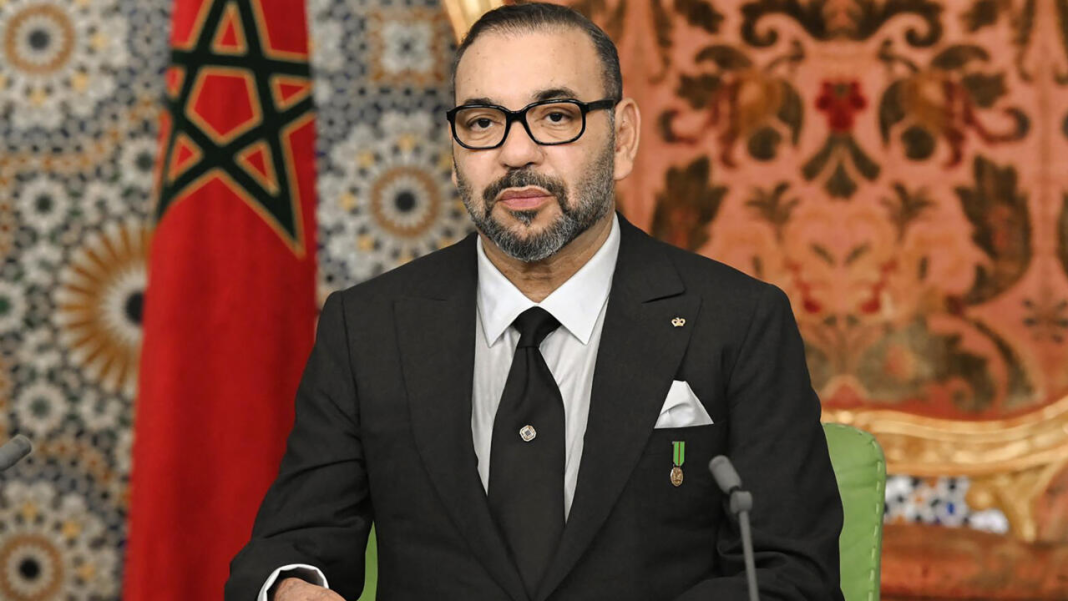
The ambitious agenda was reviewed during a high-level working session chaired by King Mohammed VI at the Royal Palace in Rabat, where officials assessed progress on the Nador West Med project and preparations for the construction of Tanger Med 3, a new facility that will significantly increase Morocco’s container-handling capacity.
The projects represent one of the most substantial infrastructure investments in the country’s history, with combined expenditures exceeding 62 billion Moroccan dirhams, equivalent to approximately $6.2 billion. They form part of a broader national effort to capitalize on shifting global supply chains and strengthen Morocco’s competitiveness in international trade, logistics and energy distribution.
According to the Royal Office, the Nador West Med complex alone has attracted about 54 billion dirhams in public and private investment. The integrated port and industrial platform is expected to complement the operations of Tanger Med while creating a new center for maritime commerce and industrial development along Morocco’s northeastern Mediterranean coast.
The first container terminal at Nador West Med is scheduled to begin operations in the coming days, marking a significant milestone for a project year in the making. A second terminal is expected to become operational in April 2027.
Once fully completed, the two facilities will provide a combined annual handling capacity of 5.3 million twenty-foot equivalent units (TEUs), a standard measure used in global container shipping. The first terminal is designed to process 3.5 million TEUs per year, while the second will add another 1.8 million TEUs annually.
Beyond container operations, the port complex will feature specialized terminals for bulk cargo and general merchandise, broadening its capacity to serve multiple sectors of the economy.
A key component of the project is its extensive energy infrastructure. Plans include a hydrocarbon terminal connected to storage facilities capable of holding up to four million cubic meters of fuel products, alongside a liquefied natural gas (LNG) terminal designed to process as much as five billion cubic meters annually.
Officials view these investments as critical to strengthening Morocco’s energy security, particularly as countries worldwide seek more diversified and resilient energy supply chains amid ongoing geopolitical and market uncertainties.
In addition to maritime and energy operations, Nador West Med is being developed as a major industrial and logistics platform aimed at attracting manufacturers, transportation companies, warehousing operators and export-oriented businesses. The industrial zone associated with the project is already active, with one factory operational and three additional facilities under construction.
Government projections indicate the development could generate approximately 14,000 direct jobs and 20,000 indirect jobs through port operations, industrial production, logistics services and related economic activities. However, officials acknowledge that achieving those targets will depend on continued private-sector investment, workforce development and sustained industrial growth.
To maximize the project’s economic impact, Morocco is simultaneously investing in critical transport infrastructure, including a railway link connecting Selouane to Nador West Med, a highway linking Guercif and the port, and improvements to regional road networks. These connections are intended to improve access to domestic production centers and facilitate the movement of goods across the country.
During the meeting, King Mohammed VI emphasized that the benefits of the massive investment should extend beyond the port itself. He called for accelerated vocational training programs aligned with emerging industries and stressed the importance of ensuring employment opportunities for young people in neighboring provinces.
While Nador West Med approaches its operational debut, Morocco is also preparing for the next phase of expansion at Tanger Med, the country’s flagship maritime gateway.
Tanger Med 3, planned west of the existing Tanger Med 2 facility, will add 1,200 meters of quay infrastructure and increase annual container-handling capacity by an estimated 4.5 million TEUs. The project carries an investment value of roughly eight billion dirhams, or about $800 million.
A concession agreement has already been signed with Maersk-APM, one of the world’s largest shipping and terminal-operating groups, underscoring international confidence in Morocco’s maritime growth strategy.
The expansion is expected to enhance existing passenger and roll-on/roll-off cargo operations while enabling the port complex to accommodate increasing maritime traffic. Once all planned developments are completed, Tanger Med’s annual handling capacity could reach approximately 20 million TEUs, potentially placing it among the world’s largest container ports by capacity.
The investment builds on Tanger Med’s strong performance in recent years. The port handled 10.24 million TEUs in 2024 before increasing to approximately 11.11 million TEUs in 2025. Cargo throughput also rose to 161 million tonnes in 2025, while the facility processed more than 535,000 international freight trucks and over 3.2 million passengers.
The simultaneous development of Nador West Med and Tanger Med 3 reflects Morocco’s broader strategy of combining world-class port infrastructure with industrial expansion, transport connectivity and job creation. While Tanger Med continues to serve as a major transshipment and export gateway, Nador West Med is being positioned as a complementary industrial, logistics and energy center.
As Morocco moves closer to commissioning Nador West Med and breaking ground on Tanger Med 3, the challenge will be ensuring that these multibillion-dollar investments translate into lasting gains in trade, industrial productivity, energy resilience and employment. For King Mohammed VI, ensuring that surrounding communities share in those benefits remains central to the kingdom’s growing maritime ambitions.

