

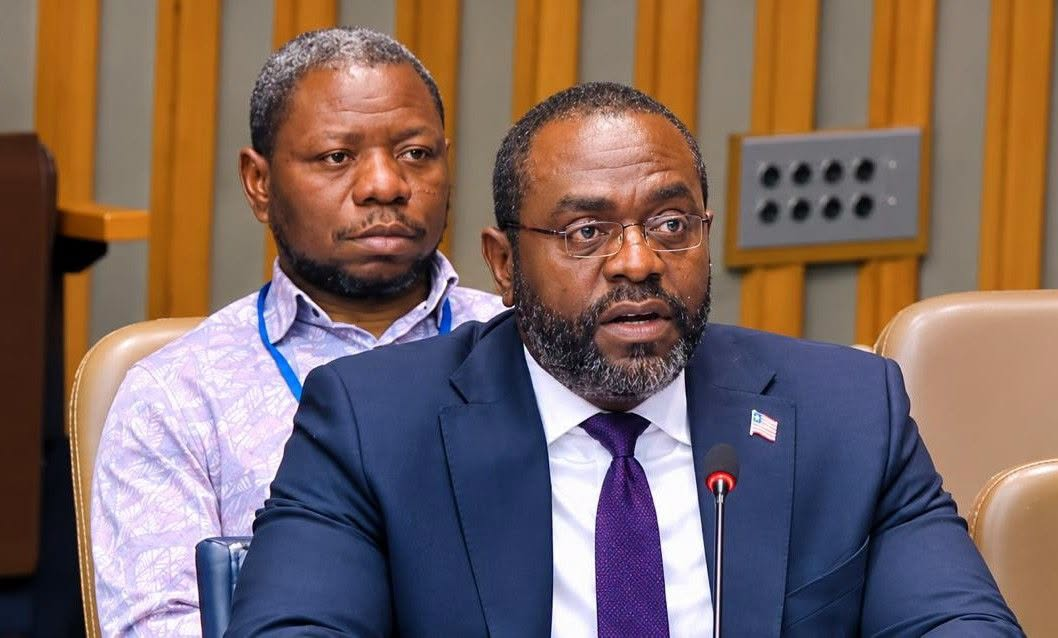
Liberia has called for stronger international cooperation to address the growing challenge of space debris while advocating for greater participation of African nations in the rapidly expanding field of space science and technology.
Speaking before the United Nations General Assembly’s Fourth Committee in New York, Liberia’s Minister Plenipotentiary and Deputy Permanent Representative to the United Nations, Baba Sillah, reaffirmed the country’s commitment to the peaceful and sustainable use of outer space under the agenda item on international cooperation in the peaceful uses of outer space.
Sillah emphasized that outer space must remain a peaceful, secure and accessible domain that serves the interests of all humanity. He noted that space exploration and scientific advancement should contribute to sustainable development, international cooperation and the well-being of both present and future generations.
“Outer space must remain a peaceful environment for scientific discovery and collaboration,” Sillah told delegates, stressing the importance of maintaining global cooperation in the management and use of space resources.
Central to Liberia’s message was the growing threat posed by space debris, which experts have increasingly identified as a major challenge to the long-term sustainability of space activities. As more governments and private companies deploy satellites and expand their operations in Earth’s orbit, concerns have grown over the potential risks posed by discarded equipment and orbital debris.
According to Liberia, the accumulation of debris threatens satellites, spacecraft and critical space-based infrastructure that supports telecommunications, navigation, weather forecasting, disaster management and scientific research.
Sillah urged United Nations member states to deepen collaboration on space-debris mitigation efforts, strengthen information-sharing mechanisms and adopt responsible practices that protect the orbital environment.
He stressed that preserving the sustainability of outer space requires collective action and a shared commitment to safeguarding access for future generations.
“Protecting the space environment is a global responsibility,” Liberia’s representative stated, noting that the benefits of space exploration can only be sustained through coordinated international efforts.
Beyond concerns surrounding debris, Liberia also used the forum to advocate for broader African participation in the global space sector. Sillah highlighted the need for stronger partnerships involving the United Nations, the African Union, regional bodies and international development partners to improve access to space technologies across the continent.
He emphasized that enhanced investment in technical training, knowledge transfer and capacity-building programs would enable African countries to harness the benefits of space science and innovation more effectively.
Liberia argued that increased access to space technology could significantly strengthen agricultural productivity, environmental monitoring, climate forecasting, disaster preparedness and communications infrastructure across Africa.
The country’s position reflects wider concerns among developing nations about the uneven distribution of scientific and technological opportunities. Many African countries continue to face barriers in accessing advanced technologies despite growing recognition of their importance for economic growth and sustainable development.
Sillah also acknowledged the role played by the United Nations Committee on the Peaceful Uses of Outer Space (COPUOS) and the United Nations Office for Outer Space Affairs (UNOOSA) in promoting dialogue, technical cooperation and capacity-building among member states.
According to Liberia, these institutions remain essential in fostering inclusive participation in space activities and ensuring that developing nations are not left behind as the global space economy continues to expand.
Linking the discussion to the United Nations’ 2030 Agenda for Sustainable Development, Sillah emphasized that space-based technologies can serve as powerful tools for achieving development goals, particularly in areas such as climate resilience, environmental protection and disaster risk reduction.
In its concluding statement, Liberia renewed its support for multilateral efforts aimed at preserving outer space as a domain of peace, scientific advancement and international cooperation. The country called on all UN member states to reaffirm their commitment to responsible space governance and inclusive development.
Liberia’s intervention adds to ongoing global discussions about balancing the expanding use of outer space with the need to protect its long-term sustainability.
As dependence on space technologies continues to grow worldwide, the country maintains that international cooperation will remain critical to ensuring that the benefits of space activities are shared equitably and that the orbital environment is preserved for generations to come.

