

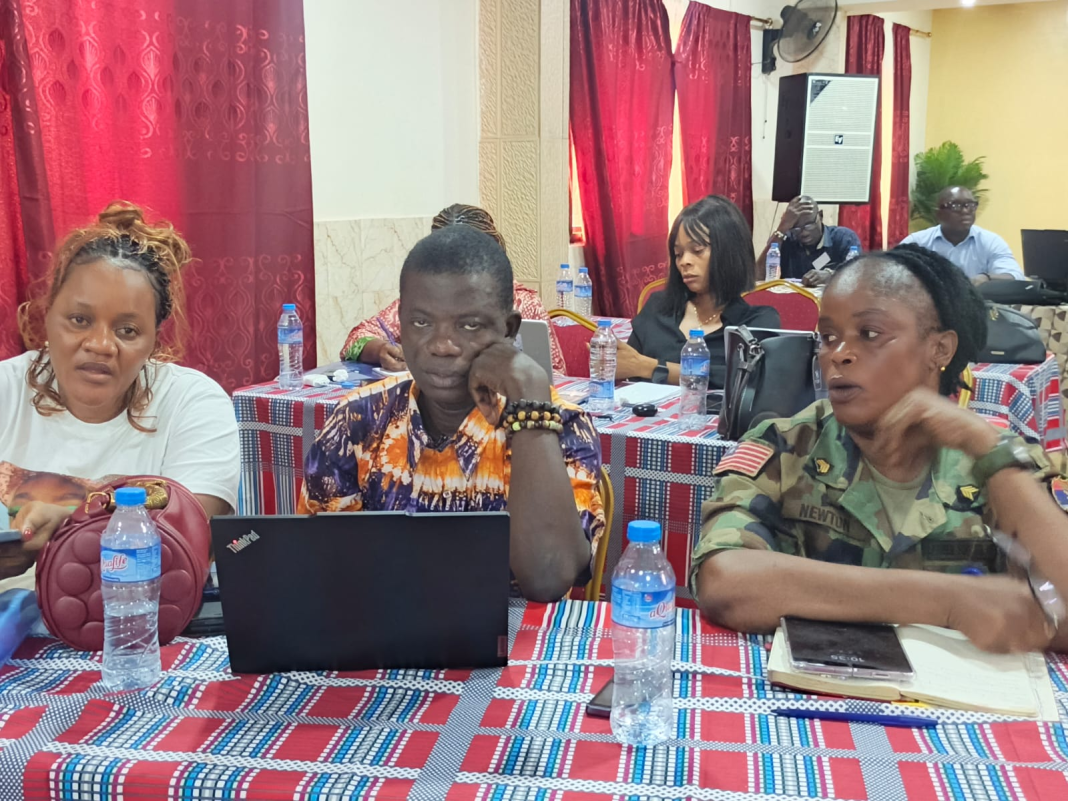
The Ministry of Finance and Development Planning (MFDP), through its Gender-Responsive Planning and Budgeting National Coordination Unit (GRPB-NCU), has launched a three-day training workshop aimed at strengthening the integration of gender considerations across Liberia’s public financial management system.
The workshop, being held in Buchanan from October 28 to 30, brings together representatives from government spending entities to enhance their capacity to incorporate gender-responsive approaches into national planning, budget preparation, implementation, monitoring, and evaluation processes.
The initiative is being conducted with support from the United Nations Development Programme (UNDP) and forms part of ongoing efforts to ensure that public policies and resource allocation respond more effectively to the diverse needs of Liberia’s population.
Speaking during the opening session, GRPB National Coordinator Kpannah Mason called on participants to critically assess existing public financial management practices and identify practical strategies for addressing gender disparities in government policies, programs, and budgetary decisions.
Mason stressed that gender mainstreaming should not be viewed as the responsibility of a single institution but rather a collective obligation shared by all government entities.
“Gender mainstreaming is not the sole responsibility of the Ministry of Gender, Children and Social Protection. All spending entities have a role to play,” she said.
According to Mason, integrating gender perspectives into government planning and budgeting processes is essential for ensuring that public resources are allocated in ways that address the varying needs and circumstances of citizens while promoting inclusive development.
She highlighted the education and health sectors as key examples where gender-responsive policies can help improve service delivery. In the education sector, she noted, targeted interventions can increase equitable access to quality education, while in the health sector, gender-focused policies can strengthen access to maternal healthcare services and enhance overall health outcomes.
The training follows a day-long validation exercise held earlier this week in Monrovia by the MFDP in collaboration with the Ministry of Gender, Children and Social Protection, with support from UNDP. The exercise examined the Gender Fiscal Impact Assessment of Micro, Small and Medium Enterprises (MSMEs), with particular attention to women-owned businesses in Liberia.
Mason emphasized the critical role played by women-owned MSMEs in supporting household livelihoods and driving economic activity across the country. However, she noted that government revenue measures, public expenditure decisions, and fiscal policies do not always affect women-owned enterprises in the same way as other businesses.
As a result, she said, policymakers must better understand how fiscal measures influence women entrepreneurs and identify reforms that can improve their access to financing, markets, and government support programs.
“Understanding the relationship between fiscal policies and women-owned businesses will help government institutions develop more inclusive policies and ensure that public spending contributes to equitable economic opportunities,” Mason said.
The workshop will cover a range of topics designed to enhance participants’ understanding of gender-responsive governance. Key thematic areas include communication strategies for gender-responsive budgeting, the national planning and budget process, gender integration in budget formulation, fiscal transparency, and monitoring and evaluation mechanisms.
Organizers expect the training to strengthen the ability of government spending entities to systematically incorporate gender considerations throughout the public financial management cycle, resulting in more responsive and inclusive programs and services.
Mason reaffirmed the GRPB-NCU’s commitment to supporting government institutions through technical guidance, collaboration, and coordination efforts aimed at embedding gender perspectives into institutional plans, budgets, and development programs.
She said the unit remains focused on ensuring that gender concerns are reflected in the allocation and utilization of public resources, thereby improving fairness and equity in service delivery across the country.
The GRPB-NCU, which operates under the Ministry of Finance and Development Planning, is mandated to coordinate national efforts to mainstream gender throughout Liberia’s public financial management framework.
Its work includes promoting collaboration among government institutions to ensure that gender considerations are incorporated into planning, budgeting, implementation, monitoring, and evaluation activities.
Through these efforts, the unit seeks to advance a more inclusive approach to governance by ensuring that public resources address the needs of women, men, girls, boys, older persons, persons with disabilities, and other marginalized groups.
Mason concluded by expressing appreciation to UNDP for its continued support through the EQUANOMICS Programme and acknowledged the Ministry of Gender, Children and Social Protection for its ongoing partnership in advancing gender-responsive public financial management in Liberia.

