

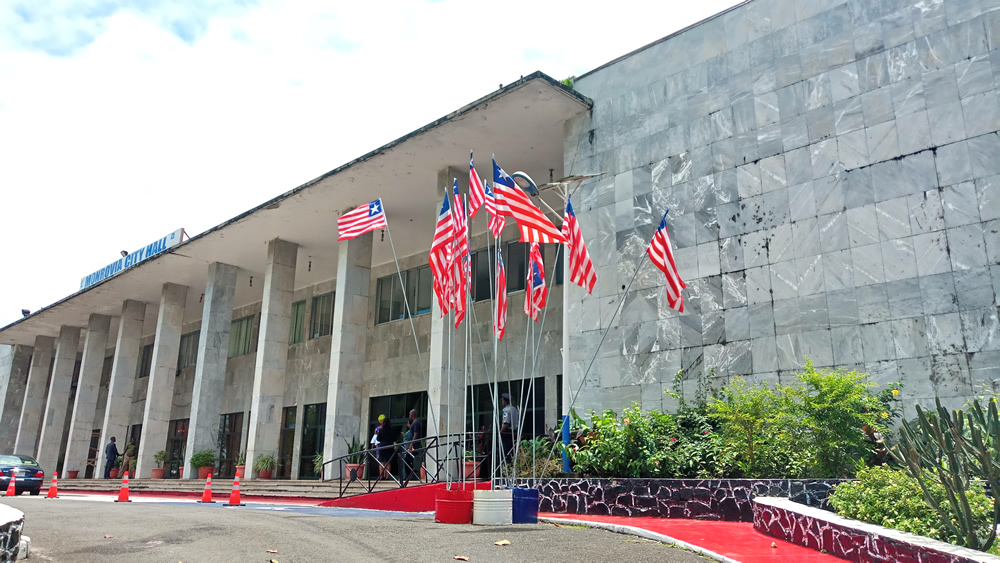
Mayor-designate outlines sweeping agenda targeting sanitation, climate resilience, revenue reforms and urban renewal.
Monrovia City Corporation (MCC) Mayor-designate James K. Mulbah has unveiled an ambitious blueprint to transform Liberia’s capital into a cleaner, greener and more sustainable city, while calling on lawmakers to increase the corporation’s proposed 2027 budget allocation from approximately US$8.5 million to US$14.5 million.
Presenting his vision during a confirmation hearing before the Liberian Senate Committee on Local Government, Mulbah outlined a comprehensive urban reform strategy aimed at tackling Monrovia’s chronic sanitation problems, weak revenue collection systems, environmental degradation, poor drainage infrastructure and broader governance challenges.
At the heart of his proposal is a six-pillar development agenda focused on domestic resource mobilization, integrated waste management, urban beautification, climate resilience, stakeholder coordination, and strategic financing partnerships.
Mulbah told senators that Monrovia’s long-standing sanitation crisis cannot be addressed through routine garbage collection alone. Instead, he argued, the city requires a modern and sustainable urban management system capable of generating the resources needed to provide critical public services.
“Monrovia does not lack revenue opportunities; it lacks the systems to collect them,” he said, emphasizing the need for stronger municipal institutions and improved financial management.
A cornerstone of the proposed reforms is the establishment of a Digital Monrovia Revenue Registry, a centralized platform designed to improve revenue collection, transparency and accountability. Under the system, properties and businesses across the city would be registered and assigned unique municipal identification numbers, creating a comprehensive database for billing, enforcement and monitoring.
According to Mulbah, the initiative would help curb revenue leakages, strengthen financial independence and reduce the city’s reliance on central government allocations and donor support.
Addressing one of Monrovia’s most visible challenges, the mayor-designate proposed an integrated waste management system that covers the entire chain of waste disposal, from sorting and collection to recycling and final disposal.
His plan would divide the city into designated waste collection zones, each assigned service providers, collection schedules and performance benchmarks. Contractors would be paid based on verified service delivery, a move intended to enhance efficiency while ensuring accountability for public resources.
Mulbah also announced plans to launch a pilot waste-sorting initiative known as “Separate Your Waste” in Sinkor. The project aims to encourage households and businesses to separate refuse before collection while creating opportunities for recycling, composting and other waste-to-value enterprises that could generate employment, particularly for young people.
Beyond waste management, Mulbah outlined an environmental renewal strategy that includes the development of green corridors along major roadways such as Tubman Boulevard and Somalia Drive. He further pledged to collaborate with development partners and government institutions to plant 200,000 indigenous and climate-resilient trees throughout the capital.
The initiative, he said, is intended to improve urban aesthetics, expand green spaces and help strengthen Monrovia’s resilience to the growing impacts of climate change.
Recognizing the threat posed by recurring floods, Mulbah also proposed the creation of a Monrovia Drainage Maintenance Programme in partnership with the Ministry of Public Works. The initiative would prioritize drainage mapping, routine cleaning and improved maintenance to reduce blockages and mitigate flood risks affecting communities across the city.
The mayor-designate acknowledged that achieving his vision would require strong collaboration among government agencies, development partners, the private sector and local communities. Key institutions identified for partnership include the Ministry of Finance, Ministry of Public Works, Environmental Protection Agency, Liberia Revenue Authority, Liberia Water and Sewer Corporation and the Liberia National Police.
If confirmed, Mulbah pledged to begin implementation immediately through a series of actions during his first 100 days in office, including assessments of municipal revenue and waste management systems, the introduction of pilot waste collection zones, improvements to landfill operations and the development of investment proposals for sustainable urban projects.
Central to his presentation was a request for an additional US$6 million in budgetary support. He said the funding would primarily be used to prepare a new disposal cell at the Cheesemanburg landfill and rehabilitate waste transfer stations across Monrovia.
While commending President Joseph Nyuma Boakai Sr. for proposing an increase in the MCC’s budget allocation, Mulbah maintained that the current proposal remains inadequate to address the capital’s growing sanitation and infrastructure demands.
For many residents struggling with poor waste disposal, clogged drainage systems and frequent flooding, the proposed reforms offer a hopeful vision for the future. Whether that vision becomes reality, however, will depend on securing adequate funding, strengthening institutional cooperation and delivering measurable improvements in the lives of Monrovia’s citizens.

