

By Sidiki Fofana | Truth in Ink
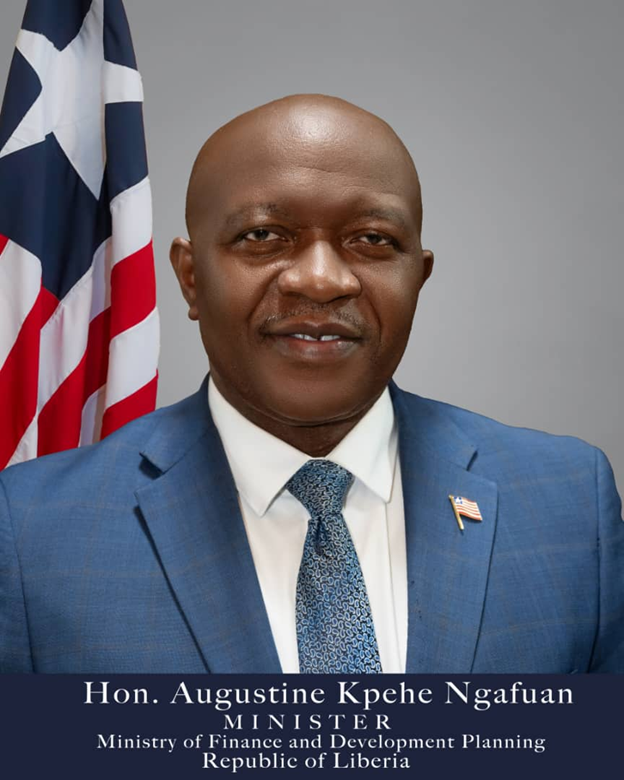
For nearly two decades, Augustine Ngafun has worked in Liberia’s public finance system. Today, as Minister of Finance, and the only man in recent memory to hold the post across two administrations, he finds himself under siege. Not in the courts of law, but in the courts of public opinion, where judgment is quick, merciless, and often driven by political talk shows.
The loudest voice in this trial is Stanton Witherspoon, whose program has become both courthouse and jury box. Allegations of corruption, though unproven, have placed Ngafuan under a microscope.
A Monrovia-based clergyman reached for scripture to frame the moment: “For all have sinned and fall short of the glory of God.” The logic behind this is that public office in Liberia is so tainted by suspicion that even those who may be clean cannot escape the stain of collective sin.
Former Finance Minister Samuel Tweah, himself a magnet for criticism, reminded Ngafuan of the burden that comes with the position:
“I don’t hate you, nor would I lead any attack on you. But it’s important you remember, as long as you hold that position, you become a target. The finance minister is held liable for every action within the economy, the number one concern of every citizen. These attacks are nothing personal; they are attacks on the office itself.”
Tweah’s words echo the reality that in a fragile economy, whoever sits at Broad Street’s treasury desk will never be free of blame.
Ngafuan sees it differently. He has dismissed Witherspoon’s show as a “tabloid media outlet” unworthy of serious attention. To him, this is no abstract debate about policy, but an orchestrated personal assault designed to strip him of credibility.
On the streets, the public is divided:
“When rice is expensive and the U.S dollar rate keeps climbing, who else do we blame? He is the finance minister, he must answer,” said a market woman in Red Light.
A university student pushed back: “Ngafuan is a technocrat, not a politician. He inherited a broken system. We attack every finance minister the same way, but nothing ever changes.”
A petty trader cut it short: “If he is innocent, let him open the books. Until then, we will not trust.”
A History of Finance Ministers on Trial
Ngafuan is not the first to face this crucible, for example:
- Amara Konneh (2012–2016) endured harsh criticism during the Ebola crisis, accused of mismanaging donor funds. Audits later found little personal wrongdoing, yet his reputation carried the scars.
- Samuel Tweah (2018–2023) spent years under suspicion of “eating Money” through road contracts and the controversial printing of billions in Liberian dollars. He left office as a deeply polarizing figure.
- Long before, David Farhat (1990s) was linked to questionable loans during Taylor’s regime. Many historians now argue he lacked the power to stop Taylor’s financial dictates, but the public’s verdict was already sealed.
The truth is that every finance minister is dragged before the court of public opinion, and almost none leave unscathed.
In this particular case intellectuals are divided. Some aware of the danger when trial by media replaces trial by evidence. “The risk,” one political science lecturer explained, “is that we destroy reputations without ever proving wrongdoing. In such a climate, no competent professional will want to serve.”
But civil society advocates see it differently. “If the people cannot question their leaders loudly and openly, then corruption will thrive unchecked,” one activist argued. “Public scrutiny is itself a weapon against impunity.”
So is Ngafun being wrongfully persecuted, or is he simply facing the wrath that always comes with running Liberia’s fragile economy? Perhaps both. Public suspicion ensures that no finance minister escapes criticism. Yet the personal venom of the current attacks raises the question of whether accountability has been replaced by vendetta.
In the end, the debate is larger than one man. It is about whether Liberia can balance scrutiny with fairness. Both are necessary; the people’s right to question, and the individual’s right not to be condemned without proof.
And therein lies the tragedy of the Finance Ministry itself. In Liberia, finance ministers are less custodians of the treasury than prisoners in a courtroom without walls, judged daily, sentenced weekly, and rarely granted acquittal.

