

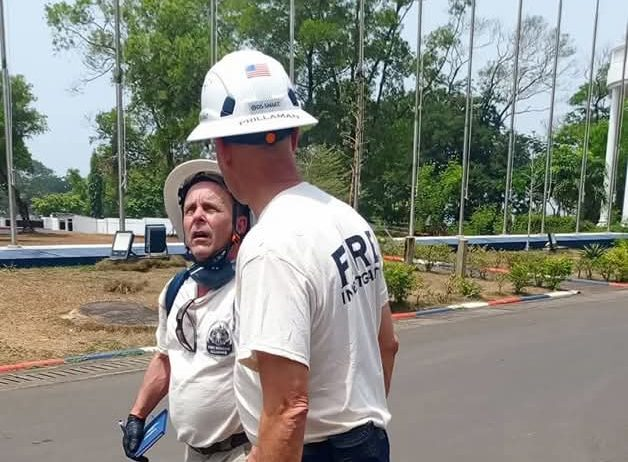
Nearly three months after the devastating fire that engulfed the Capitol Building on December 18, 2024, Liberian authorities have officially invited a team of U.S. fire experts to assist in the ongoing investigation.
This decision comes on the heels of growing public concern regarding the impartiality and professionalism of the police investigation, which has already concluded that there is overwhelming evidence of arson.
Police Inspector General Gregory Coleman told reporters that the crime scene remains intact and that the experts’ involvement is intended to reinforce the existing findings made by the police.
“One thing you should be aware of is that the crime scene has been preserved. There has been no tampering,” he said.
“These experts are here to work with us on our ongoing investigation. They are not launching a separate probe but rather filling in gaps to strengthen our findings.
“Whatever investigation we have already conducted, the scene remains set for them to examine and assist us in moving forward.”
The transparency of the investigation has been called into question, particularly after the police initially ruled out other causes of the fire shortly after the incident with President Joseph Boakai labeling it as an act carried out by “hooligans.”
In late December, just days after the fire, the Police Inspector General publicly reiterated the conclusion of arson, suggesting that no other scenarios were considered.
The investigation shifted following the arrests of people police considered suspects. Charges of arson and other crimes were levied against them, based on what police described as conclusive evidence.
As the case is now in court, with the accused facing trial, the announcement of the involvement of international fire experts raises questions. Many are concerned that the primary role of these experts may be limited to supporting the government’s existing conclusion of arson rather than conducting a new, independent investigation.
Experts suggest that maintaining independence, transparency, and thoroughness is crucial. This includes ensuring that investigative teams can operate without undue influence, allowing for unbiased assessments and conclusions.

