

INTRODUCTION
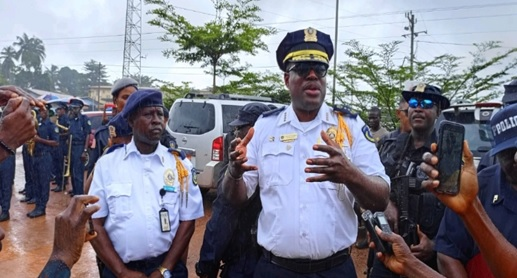
Community policing stands as a crucial strategy in rebuilding trust, enhancing security, and fostering social cohesion in post-conflict societies. In Liberia, devastated by 14 years of civil war (1989–2003), the Liberia National Police (LNP) faced the monumental task of restoring law enforcement legitimacy and public safety.
Community policing, with its emphasis on police-community partnership, transparency, and localized problem-solving, has emerged as a key tool for the country’s ongoing recovery. This article examines the significance of community policing in Liberia, drawing on empirical studies, institutional reforms, and grassroots initiatives.
Law enforcement officers do not have an easy job especially in Liberia. When enforcing the law, they deal with so many problems within the society, such as serious traffic accidents, drug and alcohol addiction, youth violence, quarrelling between spouses and showing directions to people, calling for fire service and also calling the ambulance for sick person or a woman is about give birth. The law enforcement officers, they must face danger and make a quick lighting decisions to overcome the situation.
In this education, we will be discussing community policing after the second Liberian civil war ended in 2003 in which United Nations (UN) was placed in charge of the country’s security and established UN mission in Liberia (UNMIL) under UN Security Resolution 1509 according to the UN Security Index. Many law enforcement officers have gone through so many training by the UN home and abroad and other have achieved degrees in their areas of interest, such as Criminal Justice Administration, Sociology, Public Administration, Law and just to name few.
Community Policing
Community Policing is a broad term generally meaning an approach or a process for law enforcement to work alone with the community to gather information on crimes and who be criminals, to be proactive instead of reactive.
Accordingly, a new approach to policing began to emerge in the early 1980s as an alternative to traditional policing, and emphasizes close interaction between police and the neighborhoods they serve, Ortmeier and Davis(2012, pg. 32).
Law enforcement officer most walk their beats and become more of a part of the communities they serve. The major issue of community policing in Liberia is more on prevention than confrontation and aggression. There are many communities in Liberia and the law enforcement officers cannot be all over at the same time, so other community base organizations and community chairmen should work with the law enforcement to prevent crime and criminal activities within their community. The law enforcement is for the community and the community is for the law enforcement.
I know right now others are saying the law enforcement institutions of Liberia do not have sufficient equipment for crime prevention. In this regard, the law enforcement institutions of Liberia are working with what they have on hands to prevent crimes. In so doing, any meaningful organizations or wealthy individuals can donate to the law enforcement institutions of Liberia to have a good working relationship between the community and the enforcement institutions.
The International Crisis Group wrote in 2011 to over 4,000 officers have been trained including the armed Emergency Response Unit (ERU) and the specialized Police Support Unit (PSU) are all responsible to combat and prevent crimes within the community. There are many specialize units within the other law enforcement institutions not the Liberia National Police alone. There is one thing I want other people to understand, that is all law enforcement officers are police in general not the Liberia National Police only. These reforms laid the groundwork for rebuilding the LNP’s credibility. Community policing emerged soon after, aligning with broader security governance goals—particularly the LNP’s aim to improve human and personal security while engaging civilians in local peace and security mechanisms .
The heart of problem-oriented law enforcement is that this concept calls on law enforcement officer to analyze problems, which can include learning more about the victims as well as offenders.
Community law enforcement relations concept is one of the major processes that are ongoing in most part of the world. With the law enforcement problem after the war in Liberia, many stations had been destroyed, abandoned or taken over by rebel forces. One of the concept that is needed between the law enforcement institutions in Liberia is team policing, this technique to deliver total law enforcement services to a neighborhood. With team law enforcement, officers were assigned semi-permanently to particular neighborhoods; they would become familiar with the inhabitants and with their problems and concerns.
In community law enforcement crimes were investigated and solved at the local level, with specialists called in only if the resources needed to continue an investigation were not available locally. To have a better and safe community in Liberia we need to work together with the law enforcement institutions to prevent crimes within our community not the government alone. Community law enforcement, recognizing that law enforcement cannot solve public safety problems alone, encourages interactive partnerships with relevant stakeholders. The range of potential partners is large because every citizen are partners to the law enforcement organizations, and these partnerships can be used to accomplish development goals solutions to problems through collaborative problem solving and improving public trust in Liberia.
The law enforcement organizations of Liberia should partner with a number of other government institutions to identify community concerns and offer alternative solutions. These include but not limited to legislative bodies, prosecutors, probation and parole (corrections), public works ministry, ministry of health, and schools.
The public should play a role in prioritizing and addressing public safety problems.
Many scholars and authors in the field of law enforcement and criminal justice have traced the issue of community policing to Sir Robert Peel. The ideas of Peel are that law enforcement officer needed to seek the cooperation of the community and the public and prioritize crime prevention.
The Liberia National Police (LNP) has introduced community policing as a means of protecting and providing and enabling environment for citizens and solving crimes (spokesman LNP, Moses Carter).
The Liberia National Police, Liberia Immigration Service, Drug Enforcement Agency, National Fire Service are the frontline forces of internal security in the fight against crimes, the protection of life and property, and in the maintenance of the rule of law, as directed by their statute ( according to Justice Ministry).
Community Partnership Establishing and maintaining mutual trust is the central goal of the first core component of community policing—community partnership. Police recognize the need for cooperation with the community. In the fight against serious crime, police have encouraged community members to come forth with relevant information. In addition, police have spoken to neighborhood groups, participated in business and civic events, worked with social agencies, and taken part in educational and recreational programs for school children. Special units have provided a variety of crisis intervention services.
So how then do the cooperative efforts of community policing differ from the actions that have taken place previously? The fundamental distinction is that, in community policing, the police become an integral part of the community culture, and the community assists in defining future priorities and in allocating resources. The difference is substantial and encompasses basic goals and commitments.
Community partnership means adopting a policing perspective that exceeds the standard law enforcement emphasis. This broadened outlook recognizes the value of activities that contribute to the orderliness and well-being of a neighborhood.
These activities could include: helping accident or crime victims, providing emergency medical services, helping resolve domestic and neighborhood conflicts (e.g., family violence, landlord-tenant disputes, or racial harassment), working with residents and local businesses to improve neighborhood conditions, controlling automobile and pedestrian traffic,
providing emergency social services and referrals to those at risk (e.g., adolescent runaways, the homeless, the intoxicated, and the mentally ill), protecting the exercise of constitutional rights (e.g., guaranteeing a person’s right to speak, protecting lawful assemblies from disruption), and providing a model of citizenship (helpfulness, respect for others, honesty, and fairness).
These services help develop trust between the police and the community.
This trust will enable the police to gain greater access to valuable information from the community that could lead to the solution and prevention of crimes, will engender support for needed crime-control measures, and will provide an opportunity for officers to establish a working relationship with the community.
The entire police organization must be involved in enlisting the cooperation of community members in promoting safety and security.
Traditional Policing in Liberia Traditional policing in Liberia predates the establishment of a formal police force and continues to influence security and justice delivery today. Rooted in indigenous governance systems, community elders, chiefs, secret societies, and customary laws historically governed dispute resolution and social control.
Even after the establishment of the Liberia National Police (LNP) in 1956, traditional policing remained relevant, particularly in rural areas where formal law enforcement presence is minimal. This article explores the nature, functions, challenges, and significance of traditional policing in Liberia.
Historical Background
Traditional policing in Liberia is deeply connected to customary justice systems. Before Western models of law enforcement were introduced, communities relied on chiefs, elders, and traditional leaders to maintain peace, resolve conflicts, and enforce social norms (Isser, 2009). Justice and policing were carried out through customary courts, palaver huts, and, in some cases, by secret societies such as the Poro (male society) and Sande (female society), which played roles in regulating community behavior and providing moral guidance (Sawyer, 1992).
The dual legal system introduced during colonial times further entrenched traditional policing. While urban areas increasingly relied on statutory law and formal police, rural communities continued to use customary approaches (Isser et al., 2009).
Characteristics of Traditional Policing in Liberia
- Community-Centered Enforcement
Traditional policing is highly localized. Elders and chiefs, often supported by community watch groups, are responsible for ensuring order within their jurisdiction. Decisions are based on communal consensus rather than codified law.
- Restorative Justice
Unlike formal policing, which emphasizes punishment, traditional policing focuses on reconciliation and restoration. Conflicts are typically resolved through apologies, fines, or symbolic compensation (Isser, 2009).
- Integration of Cultural Practices
Rituals, oaths, and traditional sanctions are common in dispute resolution. For instance, swearing on sacred objects is used to prove truthfulness, while offenders may face spiritual consequences if dishonest (Sawyer, 1992).
- Role of Secret Societies
The Poro and Sande societies historically acted as regulators of social behavior. They enforced rules, initiated youths into adulthood, and in some cases provided policing functions by sanctioning wrongdoers.
- Accessibility and Legitimacy
Traditional policing is often more accessible than formal police institutions, particularly in remote counties where the LNP presence is weak. Communities trust their elders and chiefs more than government police officers, who are sometimes perceived as corrupt or absent (Isser et al., 2009).
Advantages of Traditional Policing
Cultural Legitimacy: Traditional systems reflect local norms and values, making them widely accepted.
Accessibility: Chiefs and elders are always present within communities, unlike under-resourced police stations.
Efficiency in Minor Cases: Many disputes are resolved quickly without requiring lengthy procedures.
Restorative Focus: The emphasis on reconciliation strengthens community ties and prevents long-term resentment.
Challenges of Traditional Policing
- Human Rights Concerns
Some practices—such as trial by ordeal (using hot objects or poison to test guilt)—conflict with international human rights standards (UNMIL, 2011).
- Gender Discrimination
Women are often disadvantaged in customary systems, especially in cases of inheritance, domestic violence, and sexual abuse (Isser, 2009).
- Conflict with Formal Law
Duality between customary law and statutory law creates tension. For example, customary courts may rule on criminal matters (like assault), which legally fall under state jurisdiction.
- Lack of Formal Oversight
Chiefs and elders operate without standardized procedures, raising risks of bias, corruption, or abuse of authority.
- Limited Capacity to Handle Serious Crimes
Traditional policing is effective for minor disputes but inadequate for organized crime, drug trafficking, or terrorism—issues increasingly affecting Liberia.
Contemporary Relevance
Even after the civil war, traditional policing remains vital in Liberia. UNMIL (United Nations Mission in Liberia) noted that over 70% of disputes in rural Liberia are handled through customary mechanisms rather than formal courts or the LNP (UNMIL, 2011).
The Liberian government has acknowledged this reality by attempting to harmonize customary and statutory systems. The Truth and Reconciliation Commission (TRC) of Liberia recommended strengthening local governance while ensuring compliance with human rights standards (TRC Report, 2009).
Today, traditional policing continues to work alongside the Liberia National Police, particularly through Community Watch Forums (CWFs), which blend traditional and modern approaches to policing (UNDP, 2019).
Conclusion
In conclusion, Community policing in Liberia has had a meaningful impact in rebuilding the social contract between police and citizens, curbing mob violence, improving legal awareness, and offering peaceful dispute resolution pathways. While limitations remain—particularly in trust-building and crime reduction—the approach remains significant as a post-conflict peacebuilding and governance tool. It has demonstrated that when police engage communities through dialogue, transparency, and shared responsibility, they lay the foundation for stronger institutions and safer societies.
Traditional policing in Liberia plays a significant role in maintaining order, especially in rural areas where formal police presence is limited. It is rooted in cultural legitimacy, restorative justice, and community participation. However, it faces challenges related to human rights, gender equality, and the handling of serious crimes.
For Liberia to strengthen its justice system, traditional policing must be harmonized with statutory law while safeguarding rights and ensuring accountability. A hybrid model that
respects cultural traditions while adhering to democratic and legal norms may be the most sustainable approach to justice and security in Liberia.
Thank you for reading
About the Author
Professional Profile Summary
Tarpeh L. U-sayee, Jr. is a seasoned Liberian law enforcement professional, criminal justice professor, and police training expert with a solid foundation in international relations, theology, and public service. With over a decade of experience in both law enforcement and criminal justice education, he currently serves as a trainer at the Liberia National Police Training Academy and lectures at various private universities in Liberia.
He holds a Master’s Degree in Foreign Service Leadership (International Relations), a Master of Divinity, dual Bachelor’s Degrees in Sociology and Criminal Justice, and an Associate Degree in Management. He is also a prospective doctoral graduate in Church Growth and Ministry.
Mr. U-sayee is a graduate of the Liberia Police Academy, the Louisiana State Police Academy (USA), and the Lagos State Police Academy (Nigeria). As an Apostle and spiritual leader, he brings a unique combination of ethical leadership, academic excellence, and practical field experience. His lifelong mission is centered on peacebuilding, unity, and the advancement of the rule of law in Liberia.
References
Isser, D. H. (2009). Looking for Justice: Liberian Experiences with and Perceptions of Local Justice Options. United States Institute of Peace.
Isser, D. H., Lubkemann, S. C., & N’Tow, S. (2009). Looking for Justice: Liberian Experiences with and Perceptions of Local Justice Options. United States Institute of Peace Press.
Sawyer, A. (1992). The Emergence of Autocracy in Liberia: Tragedy and Challenge. Institute for Contemporary Studies.
Blair, R., Karim, S., & Morse, B. (2021, November 30). Brief 76: Community Policing in Liberia Increased Reporting and Lowered Crime. EGAP.
Friedman, J. (2011). Building civilian police capacity: Post-Conflict Liberia, 2003-2011. Innovations for Successful Societies.
Morse, B., & Tsai, L. L. (2020, August). Building Trust and Improving Effectiveness: Lessons from Liberia. MIT GOV/LAB.
Parley Liberia & NED. (2024, November 1). Project on Community Policing Launched by RAL and NED. FrontPageAfrica.

