


By Festus Poquie
When Joseph Boakai was sworn in as Liberia’s president in January, 2024, many of the people who raised him in this northern border town imagined a different kind of legacy: smallholders with better tools, paved roads that let produce reach Monrovia quicker, and steady incomes that might finally lift families out of the poverty that has lingered since war and deforestation stripped this region of its former bounty.
Less than two years into his tenure, however, residents of Foya woke to another, very different image rising among the trees: a multimillion-dollar presidential villa under construction in the forested hills outside town.
The project, which civil society activists say is being built by MUSNS Groups Incorporated, led by Joe Mulbah, an ally of the President with Edward Yamba named as chief engineer began on September 10, 2024, nine months into the Boakai regime.
Eddie Jawolo, executive director of Naymote Partners for Democratic Development, has been among the most vocal critics, alleging the structure’s value exceeds US$10 million and pressing for clarity on who is paying the bills.
“I have all the information about the project, and they couldn’t share the source of funding,” Jawolo told reporters.
“The only response from the government through the Ministry of Information is that it is funded by the Mano River Union. I reached out to MRU, and they called the Minister. Wait for the next one,” he said on Facebook.
The Mano River Union (MRU) — the regional body that includes Liberia, Sierra Leone, Guinea and Ivory Coast was initially cited by government officials as the source of financing. The MRU, according to verified public information has rejected any link to the villa.
That contradiction, plus the presence of state security guarding the site and limited public documentation about the project, has amplified calls for transparency.
The questions are pointed. In his 2024 asset declaration, President Boakai listed a net worth of $970,419.60. How, critics ask, can a sitting president who declared less than a million dollars in assets be connected to a country villa allegedly worth more than ten times that amount in less than two years in office?
Government spokespeople have not produced public contracts, financing statements or procurement records that would answer that question.
For Foya’s farmers, the villa raises a sharp moral and economic contrast. Foya District was once one of Liberia’s most productive agricultural areas, supplying rice and other staples. Today, most households farm at a subsistence level.
Coffee, cocoa and palm oil remain local cash crops, but the region still bears the scars of Liberia’s civil wars: damaged infrastructure, deforested hills, and limited access to safe water, electricity, health care and reliable markets.
“A $10 million investment here could be transformative,” said a development worker familiar with the county’s needs, speaking on condition of anonymity based on the nature of his job.
“You could build a processing factory, create jobs, stabilize incomes and improve local roads. Instead, the visible investment is a private villa that benefits very few.”
The math underscores the point. Local and international development sources say a small factory, or a cluster of value-added agricultural projects and feeder roads, can cost in the single digit millions and create dozens to hundreds of direct and indirect jobs.
For the estimated price of the villa, critics say, the opportunity cost for Foya where the 2008 census put the town population at just over 20,000 and the district at 73,312 is stark.
Jawolo and other civil society actors have called on Liberia’s procurement watchdogs and anticorruption agencies to disclose any contracts and funding streams connected to the project.
The precise role of the Public Procurement and Concession Commission (PPCC) is uncertain, Jawolo says, and there is no public tender or approval documentation in the national registry that directly ties to the work. 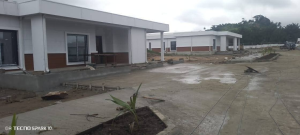
Comparisons to past controversies elsewhere in Africa have already begun to circulate. South Africa’s Nkandla episode, where upgrades to a former president’s private home became a national scandal over the use of state funds, is invoked by activists and commentators as a cautionary example. But unlike Nkandla, which prompted official inquiries and court rulings — the Foya development’s funding trail remains publicly opaque.
Locals say the emerging villa has become a talking point: many are proud that a son of Foya rose to the presidency, but several also feel a sting when they compare the new construction to the unmet needs on the ground.
“They say he is one of us but where is that kindness for the rest of us?” asked a smallholder farmer who came to the weekly Foya market. “We need help with seeds, tools, and a place to sell what we grow.” For fear of reprisal, he didn’t give name as people here are interconnected.
The government has defended the president and the project in terse communications but has so far not produced a full accounting of funding sources or a detailed explanation of the project’s purpose and public benefits.
The MRU’s denial of involvement has only widened the gap between official statements and public skepticism.
Analysts say this moment is about more than one building. It is a test of institutional transparency and democratic accountability in a country where governance institutions are still consolidating and where the dividends of peace and stability have yet to reach many rural communities. 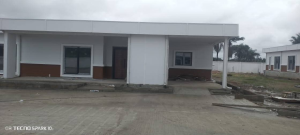
“If leaders are going to invest in symbolic structures at home, they also owe their communities a clear accounting of why those choices serve the public interest,” said a governance specialist based in Monrovia.
“If funds are private gifts or personal savings, show the receipts. If they’re public or donor funds, publish the contracts, the procurement records, the approvals.”
For now, Foya’s daily rhythms — market traders, children weaving through stalls, farmers heading to plots continue against the backdrop of a project that has become a living symbol of inequality in a place that remembers better days and desperately wants a future with more opportunity.
Whether the villa will be the spark for development, a source of employment, or simply a private retreat in the forest remains an open question, one that many here say should be answered in public.

