


Abstract
Press freedom is essential for democratic accountability, yet tensions persist between journalists and law enforcement in Liberia. Since the 2019 repeal of criminal libel, sedition, and related provisions, Liberia made important legal progress. Nevertheless, incidents of harassment, arrests, restricted access, and inadequate investigations into attacks on journalists continue to raise alarm for media freedom and rule of law.
This article examines Liberia’s legal framework, patterns of abuse and impediments, law enforcement perspectives and constraints, and practical, evidence-based recommendations for harmonizing public safety with a free and independent press.
Key sources include the K. Abdullai Kamara Press Freedom Act (2019), reports from the Press Union of Liberia (PUL), the Committee to Protect Journalists (CPJ), Reporters Without Borders (RSF), Freedom House, and U.S. State Department human-rights reports.
Introduction
A free press plays a watchdog role that is indispensable to democratic life: it informs citizens, exposes abuses, and subjects power — including the police and judiciary — to scrutiny. Liberia’s post-conflict recovery and democratic consolidation have made press freedom an important civic value.
The 2019 legislative reform that abolished criminal libel, sedition, and “criminal malevolence” marked a legal milestone intended to protect journalists and align Liberian law with regional and international norms.
However, implementation problems and recurrent clashes between media practitioners and security actors show that legal reform alone is not sufficient. This article maps the landscape of press–police relations in Liberia, documents recurring problems, and proposes pragmatic, implementable reforms.
Legal and Policy Framework
Constitutional and statutory foundations
Liberia’s Constitution guarantees freedom of expression and of the press (Article 15). The decisive statutory change was the passage and presidential assent of the press-freedom legislation commonly referenced as the K. Abdullai Kamara Press Freedom Act of 2019, which repealed criminal libel, sedition, and criminal malevolence from the Penal Code and moved defamation into the civil realm.
This removed the immediate threat of criminal prosecution for many journalistic activities, a longstanding barrier to investigative reporting. The text and official publication of the KAK Act are available in national legislative archives.
International obligations
Liberia is party to international instruments that protect free expression — including the International Covenant on Civil and Political Rights (ICCPR) and the African Charter on Human and Peoples’ Rights — which set standards for permissible restrictions (narrowly drawn,
necessary and proportionate) and require the state to protect journalists from attack and intimidation. These treaties frame both normative obligations and useful benchmarks for national institutions.
Historical Overview of Arrests and Assaults of Journalists in Liberia
The history of press freedom in Liberia reflects the nation’s broader struggle for democracy, accountability, and human rights. Since the 1980s, Liberian journalists have endured recurring cycles of repression, intimidation, and assault—especially during times of political instability, war, and regime change. Despite progress in legal reform, the tension between state power and journalistic independence continues to shape Liberia’s media environment.
The 1980s: Authoritarian Control and Media Censorship
Following the 1980 military coup that brought Master Sergeant Samuel K. Doe to power, Liberia entered a period of tight state control over the media. During this decade, most media outlets were either state-owned or heavily censored.
Journalists who criticized the government were frequently harassed, detained, or silenced through intimidation. Although public documentation from this period is limited, oral accounts and press union records indicate that journalists faced surveillance, arbitrary arrests, and occasional disappearances.
The press operated under a climate of fear, with military decrees restricting publications deemed “anti-government.”
The 1990s to 2003: Civil War, Repression, and Violence Against the Press
The outbreak of Liberia’s first civil war in 1989 marked one of the darkest periods for press freedom. Between 1990 and 2003, journalists were subjected to severe harassment, threats, and violence from all sides — government troops, rebel factions, and local militias. Many were accused of espionage or spreading “enemy propaganda.” Media institutions were looted, destroyed, or forced to close, and numerous journalists fled into exile or went into hiding.
One of the earliest documented cases occurred in 2000, when four journalists — Joseph Bartuah, Abdullah Dukuly, Jerome Dalieh, and others — were arrested and charged with espionage after reporting critically on government activities. In another incident, the Press Union of Liberia’s office was raided and dispersed by security forces as members gathered to discuss
violations against journalists. The President of the Press Union of Liberia (PUL) at the time, Suah Deddeh, was also reportedly detained and harassed in 2001 by state security agents. These events exemplified the repressive use of state power to silence dissenting voices.
During this turbulent era, Liberia’s media landscape suffered extreme losses. Journalists were often caught between warring factions who viewed independent reporting as a threat. The civil conflict not only crippled press institutions but also created a legacy of fear that lingered long after peace was restored.
The Mid-2000s: Postwar Transition and Continuing Threats
Following the signing of the Comprehensive Peace Agreement in 2003, Liberia began its transition toward democracy. The election of Ellen Johnson-Sirleaf in 2005, Africa’s first female president, brought renewed optimism for human rights and free expression. The media grew rapidly, and independent radio stations, newspapers, and online platforms re-emerged.
Nevertheless, the relationship between the press and law enforcement remained uneasy. By 2006, the Nieman Reports and other international outlets documented continuing cases of harassment and intimidation of journalists covering government corruption and police misconduct. While overt state censorship declined, police brutality and the arbitrary arrest of reporters remained problematic.
The 2010s: Legal Reform and Persistent Harassment
The 2010s marked a turning point in Liberia’s media history. Civil society and the Press Union of Liberia successfully lobbied for reforms that culminated in the K. Abdullai Kamara Press Freedom Act (2019). This act repealed criminal libel, sedition, and criminal malevolence from Liberia’s Penal Law — offenses that had long been used to silence journalists.
However, while legal reforms advanced, practice lagged behind. During the 2011 and 2017 election cycles, journalists faced harassment, threats, and occasional arrests by security personnel. Many reported being obstructed while covering political rallies and protests. Freedom House and Reporters Without Borders noted that although the legal environment
improved, police officers and local officials continued to intimidate media workers who investigated corruption or reported on sensitive national security issues.
2020–2025: Modern Challenges, Violence, and Impunity
In recent years, Liberia has continued to face challenges balancing press freedom and law enforcement authority. Several high-profile cases between 2020 and 2024 highlight persistent abuses.
In 2024, for instance, talk show host and producer Kesselee Sumo was beaten and arrested by two officers of the Liberia Drug Enforcement Agency (LDEA) and a court sheriff in Monrovia.
The incident drew condemnation from the Committee to Protect Journalists (CPJ), which called for a full investigation and dismissal of all charges against Sumo. Similarly, various journalists have reported intimidation, destruction of recording equipment, or illegal detention while covering corruption scandals or demonstrations.
Reports from the Press Union of Liberia (PUL) indicate that each year, multiple cases of assaults, unlawful arrests, and threats against journalists occur across the country. Most of these cases remain unresolved, reflecting a pattern of impunity that undermines public confidence in both the police and the justice system.
Despite these setbacks, the overall legal environment for the media has improved. The decriminalization of press offenses remains a major achievement, and Liberia’s press today operates with more freedom than during previous decades.
Nevertheless, lingering abuses by individual officers, weak institutional accountability, and the rise of misinformation continue to threaten the safety and integrity of journalism.
Restrictions on access during public order events and trials
Media access to protests, crime scenes, and court proceedings is sometimes limited by police and other authorities citing crowd control, safety or the integrity of investigations.
While some restrictions can be justified for short periods on legitimate public-safety grounds, blanket or indefinite denials of access — or arrests for recording public events — violate constitutional guarantees and international norms and chill reporting. Election periods and politically charged events have repeatedly seen spikes in such access restrictions.
Impunity and weak investigation of attacks on journalists
Attacks on journalists — whether physical assault, threats, or judicial harassment — often go inadequately investigated. The absence of timely and transparent inquiries fosters impunity, emboldens perpetrators, and pushes some journalists toward self-censorship.
U.S. State Department human-rights reports and civil-society monitoring note that while mechanisms exist to lodge complaints, outcomes are uneven and prosecutions or disciplinary actions against security officials are rare.
Law enforcement constraints and perspectives
Operational pressures and institutional capacity
Liberian security organs operate under practical constraints: limited budgets, understaffing, training shortfalls, and high caseloads. In this environment, law-enforcement leaders often
perceive unregulated media access or premature reporting as real threats to investigations and public order. Where protocols for managing media at crime scenes or during operations are absent or poorly communicated, frontline personnel may resort to heavy-handed responses.
These are operational problems requiring training and institutional reform rather than legal excuses for rights violations.
The challenge of misinformation and sensational reporting. 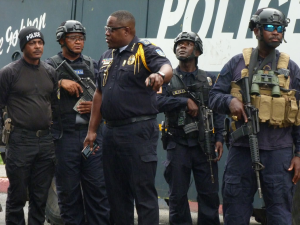
Police legitimately object to inaccurate or sensational reporting that can inflame tensions, spread misinformation, or endanger witnesses.
However, the appropriate remedy is public correction, litigation in civil courts (where warranted), or professional sanctions — not arbitrary detention or force. Both the media and the police share responsibility for accuracy, but the power differential means the state must avoid using coercive powers to punish critical coverage.
Finding the balance: best practices and institutional reforms
- Clear, published protocols for police–media interactions
National police and other security agencies should adopt and publish standard operating procedures (SOPs) detailing how officers should manage journalists at protests, crime scenes, and security operations (e.g., identification badges, designated press areas, escorts for sensitive operations, and channels for information release).
SOPs reduce ad-hoc decisions and clarify lawful boundaries. International guidance and comparative models (from ECOWAS partners and UN-backed police reform programs) can inform locally appropriate SOPs.
- Joint training programs & capacity building
Regular, jointly delivered training for police and journalists can build mutual understanding:
police trainers cover human-rights obligations and de-escalation techniques; media trainers cover ethics, source protection, and safety protocols when covering violent events. RSF, UNESCO, and regional NGOs have run such programs and could partner with Liberian institutions to scale them.
- Strengthened complaint, oversight and accountability mechanisms
Government oversight bodies (the Ministry of Justice, internal police professional standards units, and independent human-rights commissions) must be resourced and empowered to investigate complaints against security forces promptly and transparently.
Where misconduct is found, disciplinary or prosecutorial action should follow. Likewise, media complaints about inaccurate reporting should be handled by self-regulatory press bodies to raise standards and reduce tensions.
- Public interest exceptions and responsible reporting standards
Journalists should observe ethical rules, verify information before publication, and avoid endangering ongoing investigations or vulnerable persons.
But “responsible reporting” must not be a pretext for censorship: standards should be precise (e.g., not revealing active witness identities) and enforced through independent press councils or ombudspersons rather than through criminal or coercive state action.
Liberia’s media sector — including the Press Union of Liberia — has an essential role to play in institutionalizing ethics and mediation.
- Legal clarity and access to remedies
The KAK Act’s decriminalization of libel removed a major weapon used historically to intimidate journalists. However, civil defamation suits and the potential for large damages still risk bankrupting small outlets.
Lawmakers and the judiciary should ensure defamation remedies are proportionate and that courts protect both reputation and free expression in line with international standards. Simultaneously, suspects within law enforcement who commit rights violations must be subject to civil and criminal processes as warranted.
Recommendations (practical, short-term and medium-term)
Short-term (6–12 months)
- Publish a joint police–press SOP for managing media at public events and crime scenes.
- Launch a pilot workshop series for police and journalists (Monrovia first, then counties) on rights, ethics, and safety.
- Create a fast-track complaint desk within the Ministry of Justice to investigate alleged abuses against journalists.
Medium-term (12–36 months)
- Establish an independent media ombudsman or strengthen an existing self-regulatory body to mediate disputes and promote ethics.
- Reform civil-defamation remedies to avoid disproportionate penalties that chill reporting (e.g., proportional damages, caps for small outlets).
- Institutionalize joint monitoring during elections and other high-risk events, supported by international partners (UNESCO, ECOWAS).
Conclusion
Liberia’s 2019 legal reforms were a significant step forward for press freedom. Nevertheless, law-enforcement practices, limited institutional capacity, and recurring incidents of harassment and restricted access show the reform’s promise remains partially unrealized.
The solution is not to choose between security and free expression but to strengthen the rules, capacities, and accountability systems that allow both to thrive. With clear SOPs, joint training, strengthened oversight, proportional legal remedies, and constructive dialogue between the Press Union of Liberia and security institutions, Liberia can better protect journalists and preserve the rule of law — both vital to a resilient democracy.
About the Author
Professional Profile Summary
Tarpeh L. U-sayee, Jr. is a seasoned Liberian law enforcement professional, criminal justice professor, and police training expert with a solid foundation in international relations, theology,
and public service. With over a decade of experience in both law enforcement and criminal justice education, he currently serves as a trainer of the Executive Protection Service (EPS), the Liberia National Police Training Academy and lectures at various private universities in Liberia.
He holds a Master’s Degree in Foreign Service Leadership (International Relations), a Master of Divinity, dual Bachelor’s Degrees in Sociology and Criminal Justice, and an Associate Degree in Management. He is also a prospective doctoral graduate in Church Growth and Ministry.
Mr. U-sayee is a graduate of the Liberia Police Academy, the Louisiana State Police Academy (USA), and the Lagos State Police Academy (Nigeria). As an Apostle and spiritual leader, he brings a unique combination of ethical leadership, academic excellence, and practical field experience. His lifelong mission is centered on peacebuilding, unity, and the advancement of the rule of law in Liberia.
References
- Abdullai Kamara Press Freedom Act (Liberia, 2019) — official text.
Committee to Protect Journalists (CPJ) — “Liberian journalists harassed, arrested by security forces” and related alerts (2020–2024).
Reporters Without Borders (RSF) — Country profile and World Press Freedom reports.
Freedom House — “Freedom in the World: Liberia” country reports (2023–2025).
U.S. Department of State — “Country Reports on Human Rights Practices: Liberia” (2021, 2022, 2023).
EISA — Media assessment report (2023 election period).
Media Foundation for West Africa (MFWA) — coverage of Liberia’s decriminalization of libel and subsequent analysis.

