

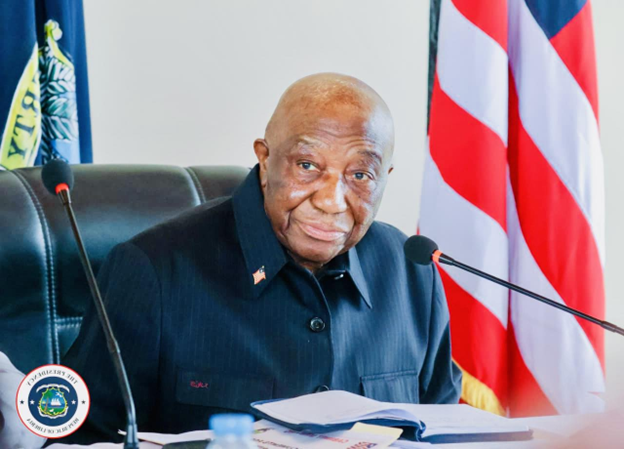
By Sidiki Fofana | Truth in Ink
Liberia’s political divide has grown so deep that it now shapes even the most ordinary interactions. What once was a difference of opinion has turned into a taboo, supporters of one political side forbidding to sit or speak freely with those from another. Over the years loyalty to party has replace national identity. Yet, amid all this division, one demand unites Liberians everywhere and that is “President Joseph Boakai must audit and prosecute those who misused public funds.”
For his supporters, this is not just about keeping a campaign promise. It is the moral test of his leadership, the one thing that could separate him from his predecessors. They believe holding people accountable is not revenge but duty to restore public confidence in government. For his opponents, however, the challenge is sharper and more strategic. They insist that if Boakai’s government truly believes the audit reports are credible, then it must stop the political noise and act decisively in court. Otherwise, these allegations are nothing more than recycled propaganda meant to distract from the administration’s own failures.
The unison amongst supporters and oppositions for the first time in recent years that the President audits and prosecutes, is rooted in the fact that each new government coming to power promises to “audit the past,” and each ends up looking like the one before it. Ellen Johnson Sirleaf said it after Charles Taylor, George Weah said it after Ellen, and now Boakai says it after Weah. And this time the people together demand that this cycle must end, or Boakai must shut up and accept defeat in this fight.
Today, the Boakai administration stands at that same crossroad. The longer it delays, the more it looks unwilling to touch those close to the presidency. Fingers are pointing toward growing discrepancies at the National Port Authority (NPA), NASSCORP, and other agencies led by individuals known to have strong ties to the President. These men and women, protected by the many influences surrounding him, appear to be the invisible wall blocking action against the very corruption his government condemns.
Recently, reports surfaced linking the President’s son to shares in a controversial shipping company, while public concern continues to grow over a multimillion-dollar project in the President’s home county, a project with no clear owner or explanation. At the same time, the Legislature, long accused of locking audits to protect its own, has surprisingly voted to have the House of Representatives audited. And yet, despite new audit findings revealing disturbing misuse of funds, and calls from both allies and opponents for decisive action, the President has remained silent. Many now fear that complacency, not caution, has exposed the President commitment to accountability.
Part of the problem lies in political debt. Those who financed and supported Boakai’s campaign now occupy some of the most powerful positions in government. Moving against them would shake the very alliance that keeps his administration together. The fight against corruption is not proven by words, as Boakai would want us to believe, it is measured by sacrifice, even when that sacrifice means losing friends, financiers, or trusted allies.
Ordinary Liberians see through the excuses. The market woman in Red Light, the motorcyclist in Gbarnga, the student at the University of Liberia, and even opponents of the government, they are not asking for miracles, only for economic justice found in the courts. Their question is simple, yet profound; why is the Boakai government hiding or protecting in its reluctance to either audit or act on the audit reports through the courts?
Many, including those who support the government, believe the President’s hesitation comes from fear; fear that setting a precedent today could be used against him tomorrow. If he prosecutes current or former officials, he opens the same door that could one day lead to his own.
This is not only a political failure; it is a moral one. Liberia’s problem is not the absence of laws or institutions; it is the absence of will. Trust has been broken so many times that it now seems to Boakai that his only obligation isn’t to uphold trust, but to simply betray it also.
President Boakai’s legacy will not be shaped by how many past projects he completed or new ones initiated, but it will be judged by whether he dares to end the long tradition of unpunished corruption.
Until then, the question remains: Is the Boakai government too compromised to prosecute corruption, or simply too afraid to?

