

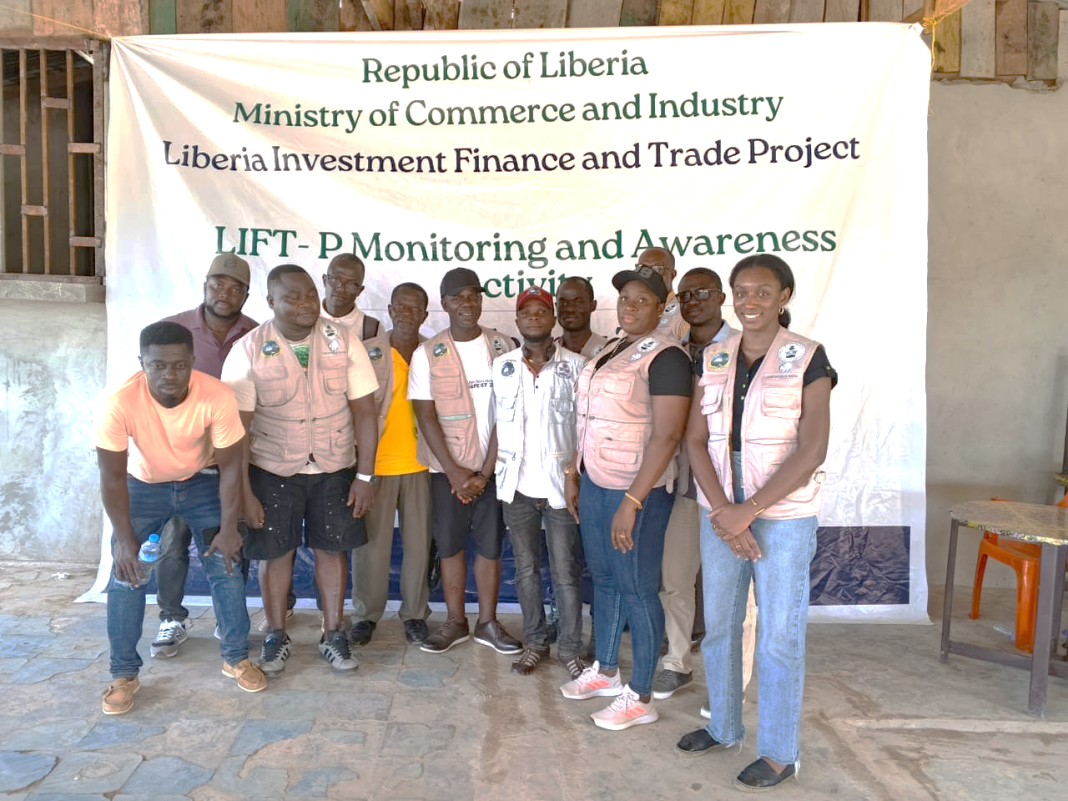
The Government of Liberia, through its Liberia Investment, Finance & Trade Project (LIFTP), has stepped up efforts to expand affordable credit to Liberian owned micro, small and medium enterprises (MSMEs), kicking off a nationwide Line of Credit (LOC) monitoring and awareness campaign across five counties and building on nearly $2.5 million already disbursed to local businesses.
The campaign, implemented by the Ministry of Commerce in collaboration with the Central Bank of Liberia and the LIFTP Project Implementation Unit (PIU), ran town hall meetings, radio talk shows and direct business engagements in Lofa, Nimba, Bong, Margibi and Grand Bassa.
It began in Foya on October 28 and concluded in Buchanan, aiming to deepen understanding of LOC terms and encourage uptake among entrepreneurs in agriculture, manufacturing and technology.
Since the LOC was launched in 2024, participating financial institutions have issued nearly $2.5 million in long-term, low interest loans to 112 MSMEs across eight counties. Phase II, rolled out in July 2025, injected an additional $3.5 million and brought seven more financial institutions into the program to broaden access and scale lending to Liberian owned businesses.
“The Line of Credit under LIFTP is designed to break barriers for MSMEs,” said Patrick Paye, Financial Sector Development Specialist at the PIU/Ministry of Commerce. “With low interest rates and flexible terms, we are creating a pathway for businesses to grow and contribute to Liberia’s economic transformation.”
Campaign teams stressed loan terms intended to ease borrowing pressures: interest rates of 12–14 percent, repayment periods of up to three years and grace periods ranging from two to six months. Officials said these conditions are structured to offer a viable alternative to predatory lending and to reduce reliance on informal financing channels.
Business groups welcomed the push but pressed for further reforms. “This initiative is a gamechanger for Liberian entrepreneurs,” said James Smith, Head of LIBA County Coordinators. “We are urging every local business to register and take advantage of this opportunity to access affordable financing. It’s time to move from the informal sector into the formal economy.” At a stop in Margibi, LIBA representatives highlighted that roughly 84 percent of local businesses operate informally, a factor that limits access to credit and tax compliance.
The five-county tour also surfaced concerns about interest rates, transparency and competition from foreign owned businesses. Campaign officials responded by underscoring standardized LOC terms and promising stronger outreach to ensure clarity on eligibility, application procedures and monitoring.
Monitoring and compliance were prominent features of the campaign. LIFTP teams reviewed environmental and social safeguards documentation, assessed business practices and records, and carried out physical inspections of project sites to ensure adherence to the program’s safeguards and quality standards. Officials said the checks are intended to promote environmental sustainability, responsible business conduct and enduring operational improvements among beneficiaries.
Gender inclusion has been a central outcome to date: 54 percent of LOC disbursements in Phase I went to women owned or women led enterprises, enabling expansion of market stalls, shops and startups across communities.
The LOC initiative is implemented jointly by the Ministry of Commerce, the Central Bank of Liberia, the Ministry of Finance and Development Planning and private financial partners, with coordination from the Liberia Business Association. LIFTP said the Monitoring and Awareness Campaign will continue to additional counties in coming weeks, aiming to translate outreach into more registrations, formalization and loan applications.
Officials framed the expanded credit push as a strategic tool to catalyze small business growth, create jobs and strengthen the country’s private sector, a crucial step to accelerate Liberia’s wider economic recovery and resilience.

