

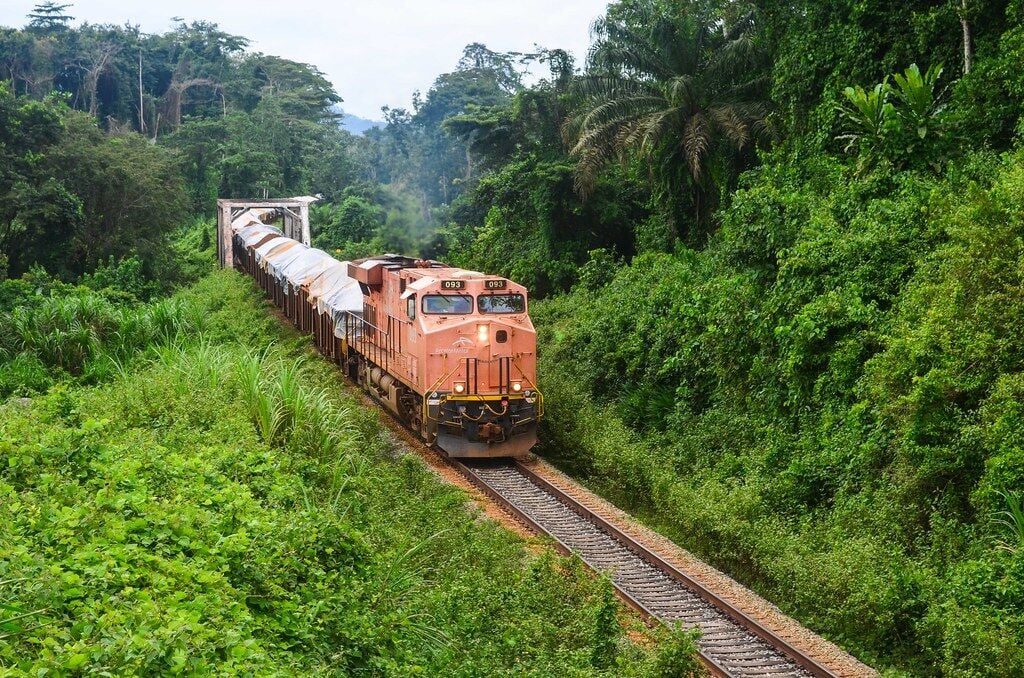
Liberia’s international partners take keen interest in the country’s economic future as lawmakers weigh whether to open the lucrative railway corridor or maintain ArcelorMittal monopoly that would deny Liberia billions of dollars in revenue.
With the legislature nearing decision on granting the first additional rail-user – Ivanhoe Atlantic – access to the Yekepa-Buchanan railway, international observers are offering perspective on how opening the railway corridor will help grow Liberia’s economy and strengthen ties with the United States and the European Union.
These global actors including geopolitical analyst say free movement along the corridor will diversify investment, expand revenues and boost GDP.
Keeping it locked into dependence on a single rail user like ArcelorMittal Liberia (AML) will deny the country meaningful investment opportunities and weaken the domestic economy, they said.
The U.S. House Foreign Affairs Committee has publicly lauded Liberia’s movement toward “a transparent, multi-user rail system under a truly independent operator framework,” saying ratification of Ivanhoe Liberia’s Concession and Access Agreement would signal to Washington and U.S. companies that Liberia is “open for business.” Such an outcome could catalyze U.S. investment in critical minerals, the committee added.
European and Francophone analysts are watching closely as well.
Gérard Vespierre, a foreign policy analyst in France framed President Joseph Boakai’s recent Paris visit as the start of deeper economic ties with France across renewables, mining, health and education, and highlighted plans for a Franco Liberian chamber of commerce.
He warned that an enduring AML exclusivity over the rail corridor risks choking the free movement of African mineral resources and constraining the EU’s supply chains for strategic minerals.
The debate is set against fresh resource prospects. Recent discoveries of iron ore, uranium and lithium in and around Liberia could — if the country builds infrastructure and attracts exploration capital generate “several billion U.S. dollars” in potential revenue.
Observers say the key constraint is logistics: a single private rail operator with exclusive access can limit market entry, prevent transit of bi-lateral trade through Liberian ports and depress the economic potential of the corridor.
AML’s own reporting shows record iron ore production and exports and a share price gain of more than 50% this year.
Yet critics note the company does not disclose its Liberian turnover, taxes paid locally or dividends remitted to the state in respect of its 15% Liberian stake.
That lack of transparency, analysts warn, undermines public confidence and may undercut Liberia’s negotiating position in future deals.
There are signs that change remains possible. AML’s Mineral Development Agreement (MDA) has been subject to renegotiation in the past. Analysts point to this as precedent for rebalancing terms to level the playing field for other private investors. Because MDAs and related concessions require legislative approval, lawmakers retain a lever to amend or refine contractual arrangements to protect national interests.
The stakes extend beyond contract terms. Liberia’s public debt stood at $2.6 billion as of June 2025 — more than quadruple the level a decade earlier and above the IMF’s recommended 50% threshold for developing economies.
With national budget planning already underway for 2026, officials face urgent pressure to widen the revenue base and accelerate GDP growth.
Policy prescriptions from outside observers stress two twin imperatives: protect strategic logistics infrastructure while remaining nimble enough to attract foreign direct investment through transparent public private partnerships.
French analysts urged their government to monitor the contractual resolution of the Yekepa Buchanan corridor closely, characterizing it as vital not only to Liberia but to the balanced flow of African raw materials to European markets.
For Monrovia, the choice is clear in economic terms: authorize regulated access for additional rail users to unlock new mining projects, transit revenues and greater integration with Western partners — or preserve a de facto monopoly that may yield short-term stability for a single operator but constrain broader growth and fiscal resilience.
With several large revenue generating concessions under legislative consideration, the world will be watching whether Liberia embraces a multi-user model that could expand opportunity or continues down a path that critics say concentrates benefits and limits the country’s long-term economic upside.

