

By Sidiki Fofana | Truth In Ink
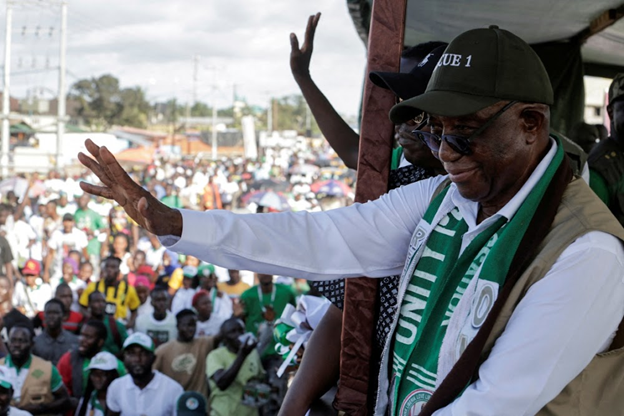
Liberia is approaching a politically decisive moment. As December 6 nears, the mood across government and within the Unity Party has shifted from ordinary concern to a quiet but powerful anticipation. Elders have been consulted, party structures are alert, diplomats are listening closely, and political actors across the country are recalibrating their strategies. The question that sits at the heart of every discussion is whether President Joseph Nyuma Boakai will use this moment to declare his intention to seek a second term.
This is not ordinary political chatter. It reflects the need for stability in a country that has endured years of uncertainty. Within the Unity Party, many believe the silence surrounding 2029 has extended long enough. They argue that the administration cannot afford the vacuum created by speculation. In a nation still struggling with economic fragility and institutional inconsistencies, a clear statement from the President would help steady the national direction and prevent the internal drift that often accompanies political ambiguity.
December 6 has become symbolic not because of the program itself but because it represents a turning point. Inside ministries, political offices, and party headquarters, the lack of clarity is beginning to shape behavior. Ambition is rising, alliances are being tested, and some individuals are positioning themselves quietly in anticipation of an open field.
Those who favor an early declaration say that the President’s voice would redirect the administration’s attention back to performance rather than succession politics, and that it would force party officials, ministers, and lawmakers to align behind the work at hand. They insist that Liberia needs consistency in policy direction, and that investors, development partners, and even citizens would benefit from knowing whether the country’s leadership will remain stable beyond 2029.
Liberia’s own history offers lessons. When Ellen Johnson Sirleaf delayed clarity about her second term, uncertainty crept into her administration and affected investor sentiment until she finally announced. In the Weah years, silence regarding his re-election plan created internal factions that weakened decision-making and diverted attention from governance. Across the region, leaders who managed timing well, such as Ghana’s Akufo-Addo, strengthened policy continuity, while those who allowed speculation to linger, like Nigeria’s Goodluck Jonathan or Kenya’s Kibaki, found themselves governing amid growing internal divisions.
Those advocating for a December 6 announcement believe early clarity would calm nerves, stabilize the political environment, and prevent unnecessary internal power struggles. They argue that the administration needs unity now more than ever, especially with critical decisions pending in mining, agriculture, electricity, public-sector reform, and infrastructure. They also believe that announcing now would allow the President to shape a long-term narrative grounded in reform, modernization, and national renewal without the constant shadow of uncertainty.
But there are also serious arguments against an early declaration. Some believe that once the President announces, the entire government will shift into campaign mode, and that governance will be overshadowed by political maneuvering. They worry that the opposition will have too much time to study and attack the administration’s strategy. Others argue that the President’s political capital may be stronger later, especially if the government delivers tangible results in the next two years. In their view, a declaration rooted in achievement carries more weight than one made early, when some reforms are still in motion.
These competing viewpoints have created a national pause. Whether or not President Boakai speaks on December 6, the day has already become a focal point for expectation. The public is looking for direction, the ruling party is waiting for clarity, investors are reading signals, and political actors across the country are preparing for a shift.
Liberia does not need unnecessary political tension. It needs policy consistency, focused leadership, and a government free from internal rivalry. December 6 offers the President a rare chance to calm speculation, close the space for internal distractions, and define the tone of his leadership moving forward. Whether he seizes that opportunity remains his choice. For now, a party awaits clarity in a nation of uncertainty.

