

By E. J. Nathaniel Daygbor
Despite persistent protests by students at the University of Liberia (UL), President Joseph Boakai has maintained that his government has consistently provided funding for the renovation and maintenance of the institution. The president’s remarks, delivered during his recent State of the Nation Address, have reignited debate over the condition of Liberia’s premier public university, where students continue to decry deteriorating facilities and poor learning environments.
President Boakai emphasized that allocations for UL’s upkeep—including painting and structural maintenance—have long been available. “Funding has always been provided for proper maintenance of the university,” he said, underscoring the government’s commitment to education. Yet, on the ground, the reality appears starkly different.
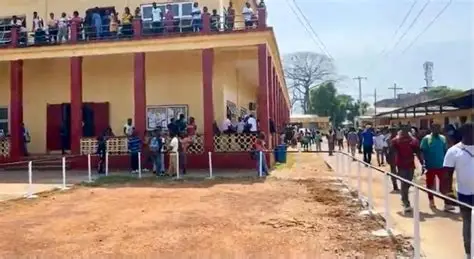
At UL’s Capitol Hill campus, major structures such as the Louis Arthur Grimes School of Law, graduate programs, and undergraduate buildings are visibly worn, with walls stained and infrastructure neglected. The Fendell campus, which houses thousands of students, and the A.M. Dogliotti College of Medicine along Congo Town Boulevard, remain unpainted and in need of urgent rehabilitation.
Frustrated by the gap between official pronouncements and lived reality, students—particularly members of the Students Unification Party (SUP)—have staged nonstop protests.
Their demands include the reconditioning of bathrooms, repainting of campuses, and general improvements to learning facilities. Demonstrators argue that the government’s claims of funding do not match the physical state of the university, raising questions about accountability and transparency in the use of public resources.
“The conditions are unacceptable,” one student protester remarked during a recent demonstration. “We hear about money being allocated, but we don’t see the results. Our classrooms, restrooms, and campuses remain in disrepair.”
The administration of the University of Liberia, led by President Dr. Layli Maparyan, has remained tightlipped in the face of mounting student pressure. Calls for comment on the protests and the alleged mismanagement of renovation funds have gone unanswered, further fueling speculation about whether the funds are being properly utilized.
Observers note that the controversy highlights broader challenges in Liberia’s education sector, where inadequate infrastructure, overcrowded classrooms, and limited resources continue to undermine learning outcomes. For many, the UL protests symbolize a larger struggle for accountability in public institutions.
President Boakai’s assertion that funding has been provided raises critical questions: if resources are indeed available, why do campuses remain visibly dilapidated? Who is responsible for ensuring that allocations translate into tangible improvements? And why has the university administration remained silent in the face of student unrest?
As protests continue, the issue has become a test of governance and institutional credibility. Students insist that their demonstrations will not end until concrete action is taken to rehabilitate facilities. Meanwhile, the government’s assurances of funding remain under scrutiny, with the public demanding clarity on whether the money is reaching its intended purpose.
The unfolding dispute at UL underscores the urgent need for transparency in public spending and accountability in institutional management. For Liberia’s oldest university, the stakes are high: without visible improvements, questions about “who chops UL renovation funding” will persist, eroding trust in both government and university leadership.

