

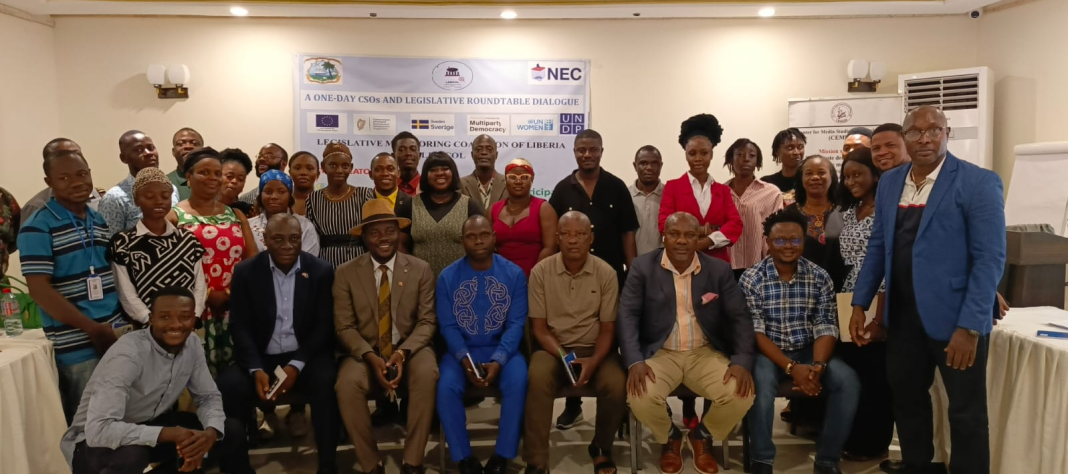
The Center for Media Studies and Peacebuilding (CEMESP), in partnership with the Independent Information Commission (IIC) and the EU-funded Liberia Media Empowerment Project (LMEP), convened a high-level stakeholder dialogue on January 29, 2026, to examine persistent challenges in Liberia’s Freedom of Information (FOI) framework.
The one-day event in Monrovia brought together policymakers, political leaders, legal experts, civil society actors, and media representatives to chart reform priorities aimed at strengthening transparency, accountability, and open governance.
The dialogue focused on gaps in existing laws, policies, and institutional arrangements that continue to hinder citizens’ access to public information. Participants underscored the need for stronger inter-agency coordination, improved compliance by public institutions, and greater public awareness of information rights.
Delivering special remarks, European Union Ambassador to Liberia Nona Deprez highlighted the centrality of access to information in democratic governance. She reaffirmed the EU’s commitment to supporting Liberia’s governance and media reform efforts, stressing that transparency is vital to combating corruption, reinforcing public institutions, and building trust between citizens and the state. Deprez emphasized that collaboration among government, civil society, and the media remains critical to advancing effective implementation of the FOI Act.
CEMESP Executive Director Malcolm W. Joseph described access to public information as a cornerstone of democracy. He acknowledged milestones such as the passage of the FOI Act and the establishment of the IIC but warned that persistent challenges undermine progress.
“Inconsistencies across legal instruments, weak coordination, limited compliance, capacity gaps, and low public awareness continue to obstruct effective implementation,” Joseph said. He noted that journalists, civil society organizations, and ordinary citizens often struggle to obtain timely and accurate information.
Joseph explained that the dialogue, organized under the Liberia Media Empowerment Project implemented through Internews, was designed as a strategic platform to advance policy coherence and institutional collaboration. He stressed that the initiative should feed into ongoing national reform processes rather than serve as a one-off engagement.
A distinguished panel featured Cllr. Tiawan Gongloe of the Liberia People’s Party, Law Reform Commission Chairman Cllr. Bonor Varmah, Independent National Commission on Human Rights Commissioner Atty. Patimilia Doe Paivey, and former IIC Commissioner Cllr. Bedor Wla Freeman. Panelists examined legal inconsistencies and institutional weaknesses while proposing pathways to strengthen FOI compliance.
Press Union of Liberia President Julius K. Kanubah raised concerns about inadequate government support for the IIC, warning that without sustained funding, the Commission risks becoming ineffective despite its statutory autonomy. Representing the Liberia Anti-Corruption Commission, John E. Tommy reaffirmed the LACC’s commitment to ensuring FOI laws are harmonized and effectively implemented, noting that reliable access to information is fundamental to fighting corruption.
The dialogue concluded with a shared commitment among stakeholders to pursue legal and policy reforms, reinforce cooperation, and promote a governance culture that upholds access to public information as both a democratic right and a catalyst for accountability, citizen participation, and sustainable peacebuilding in Liberia.

