

By J. Mason Kollie/ Lofa County
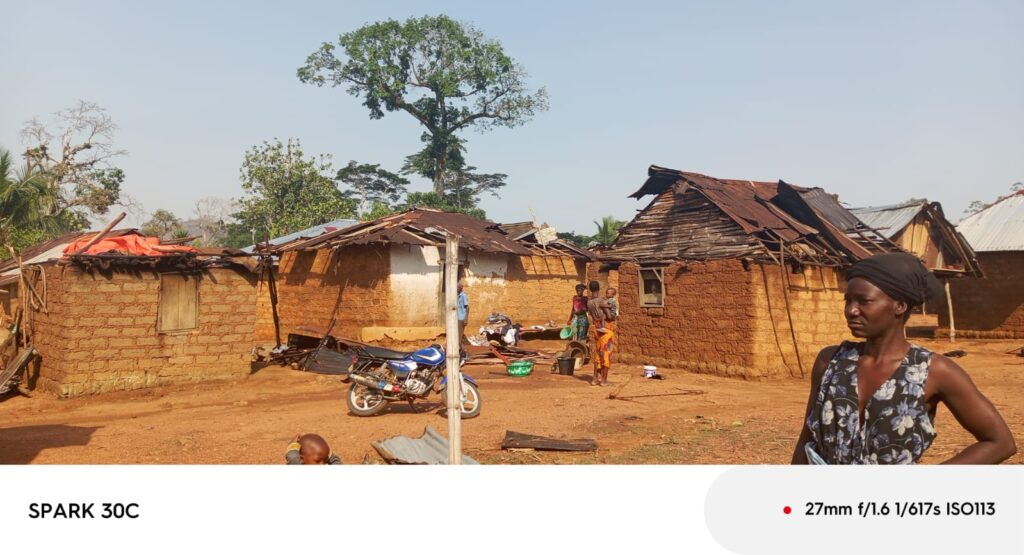
Lower Lofa County has been left reeling after a violent storm tore through several rural settlements on March 21, 2026, destroying homes, schools, and community infrastructure. The disaster has displaced hundreds of residents and disrupted essential services, deepening the vulnerability of already struggling communities.
The storm struck towns including Hilgbelahun, Bassamalahun, Kolba City, Wuhalahun, and Mbalahun. In Bassamalahun, Wuhalahun, and Mbalahun, the only primary schools were completely destroyed, leaving students without classrooms. In Kolba City, the Harleyngee Community Radio lost its solar power system, while Eagle FM’s transmission tower was severely damaged, silencing vital communication channels.
Eyewitnesses described the storm as beginning with torrential rainfall that quickly escalated into widespread destruction. “The damages are enormous and unimaginable,” one victim lamented, as families surveyed collapsed roofs and scattered belongings. Reports confirm at least one person was injured in Hilgbelahun, while hundreds remain homeless.
School administrators in the affected towns are urgently appealing to the government for intervention to ensure students can resume their 2025/2026 academic year. Community leaders and victims are also calling on the National Disaster Management Agency, the Liberian Red Cross Society, and philanthropists to provide relief, rebuild homes, and restore public facilities.
The storm’s impact extended beyond education and housing. A rice kitchen was completely unroofed, further threatening food security in the region. Local residents warn that without swift assistance, recovery will be slow and painful.
Storm disasters are not new to Lower Lofa. In March 2025, the Voinjama District Farmers’ Cooperative Building suffered major roof damage from a similar event. Earlier storms in 2020 and 2023 devastated towns in Kolahun District, including Ndambu, Wuhulahun, Mbakanda, and Hassagolowan, leaving a trail of destruction across homes and public buildings.
Environmental and climate change experts are linking the recurring disasters to unchecked deforestation and commercial pit-sawing in rural areas. They argue that widespread clearing of forests has weakened natural barriers, exposing communities to harsher weather conditions. “Environmental abuse is amplifying the risks,” one expert noted, urging stronger enforcement of conservation policies.
As residents of Lower Lofa struggle to rebuild, the storm serves as a stark reminder of the urgent need for climate resilience, disaster preparedness, and sustainable environmental management. Without decisive action, communities remain at the mercy of increasingly violent weather patterns.

