

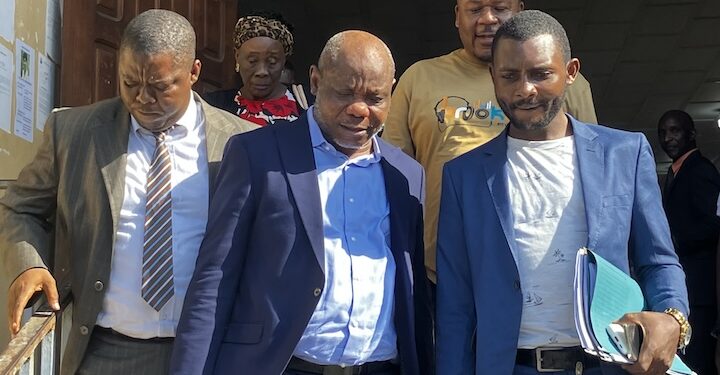
The prosecution’s case against former Finance and Development Planning Minister Samuel Tweah and other defendants suffered a setback after the chief investigative witness failed to produce evidence tying national security funds to personal use, though a judge on Monday allowed photocopies of bank checks to be entered into the record.
Baba M. Borkai, program manager for Monitoring and Investigation at the Liberia Anti Corruption Commission, was unable in court to point to documents or testimony that showed funds allegedly disbursed out of national security allocations were personally diverted to the defendants.
Prosecutors had relied on Borkai to identify evidence that would establish “personal enrichment,” a key element for proving theft and criminal conspiracy.
Borkai outlined his investigation and referenced Central Bank of Liberia (CBL) documents, but did not produce proof that the payments were misused for personal purposes.
Defense lawyers argued that the absence of affirmative evidence of personal gain undercuts the factual basis for the indictment.
Prosecutors asked the court to admit photocopies of checks referenced in CBL records after failing to present originals.
Defense counsel Arthur Johnson objected, invoking the “best evidence” rule and arguing the prosecution had not shown the originals were missing or unavailable — a prerequisite, he said, for replacing originals with photocopies.
Judge Feika allowed oral argument on the admissibility issue, then, following a short recess, denied the defense objection and permitted the photocopies into evidence.
The judge said a procedural error should not automatically block the prosecution from proving its case if the defense could not show how the error prejudiced the defendants. He noted the prosecution still bears a high burden of proof.
Legal analysts said the ruling preserves the trial’s momentum but also highlights the prosecution’s evidentiary gaps.
“The judge has essentially said the prosecution blundered but the trial should go on,” one analyst said.
“Allowing the photocopies may keep the case alive, but it does not cure the fact that the prosecutors have yet to show how the payments amounted to personal enrichment.”
Prosecutors will now face the task of demonstrating how the admitted documents — including the photocopied checks — establish unlawful conduct by Tweah and the other accused. How they intend to bridge that evidentiary gap remains the central question as the trial proceeds.

