

By Freddie Ross
Football stakeholders in Margibi County are pressing the Ministry of Youth and Sports to prioritize the rehabilitation of the Nancy B. Doe Sports Stadium, warning that its deteriorating state is undermining youth development and the growth of local athletics.
The appeal was delivered during an interactive engagement with Minister Cornelia W. Kruah’s delegation, part of her Phase One Assessment Mission across Liberia.
Speaking at the session, Benedict Chie, Secretary General of the Upper Margibi County Sub‑Committee of the Liberia Football Association (LFA), and Ton Kekula, Chairman of the Inter‑School Sports Association of Margibi County, outlined the pressing challenges facing sports in the region. Their concerns were formally presented to Thomas Kojo, Director of Sports at the Ministry, who accompanied the Minister.
Both officials commended Minister Kruah for initiating the decentralization tour, describing it as a strategic effort to bring government closer to communities. They noted that the initiative provides a vital platform for athletes and administrators in rural areas, ensuring that young people across Liberia feel the presence and support of the Ministry.
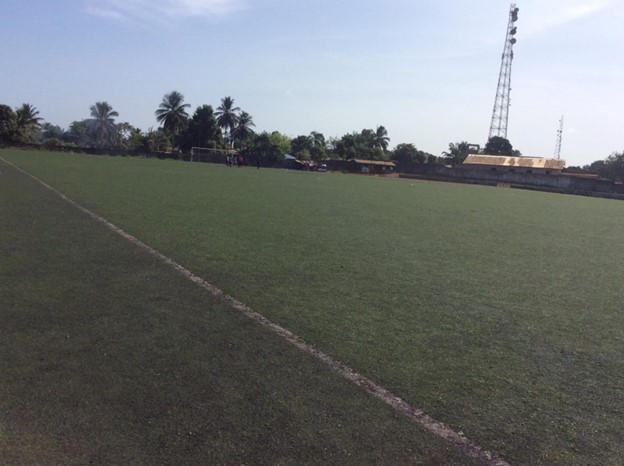
Yet despite their appreciation, the stakeholders stressed that the full benefits of decentralization cannot be realized without addressing critical infrastructure gaps. Chief among them is the Nancy B. Doe Stadium, which they described as being in a “highly dilapidated state.”
Concerns raised included extensive damage to both the inner and outer perimeter fences, creating safety risks for players, officials, and spectators. Essential facilities such as bathrooms, dressing rooms, and match officials’ quarters were reported to be unusable. The artificial turf on the playing surface was described as “completely worn out,” while sections of the grandstands have sustained visible structural damage.
Stakeholders emphasized that rehabilitating the stadium is crucial to unlocking the potential of young athletes in Margibi County. A modern, functional facility, they argued, would significantly boost participation and performance in football, kickball, and other sports.
“The stadium is the heartbeat of sports in Margibi,” Mr. Chie said. “Without a safe and functional venue, our athletes cannot compete at their best, and our youth lose opportunities to grow through sports.”
Mr. Kekula added that investment in infrastructure is not only about athletics but also about community empowerment. “When young people have access to quality facilities, they are motivated to pursue their talents, stay engaged, and contribute positively to society,” he noted.
The call from Margibi reinforces a broader national conversation about the urgent need for investment in sports infrastructure as a driver of youth empowerment and development. For many communities, stadiums and playing fields are more than recreational spaces; they are hubs of identity, pride, and opportunity.
As Minister Kruah continues her nationwide assessment, the voices from Margibi highlight the stakes: without immediate action to restore the Nancy B. Doe Stadium, the promise of decentralization risks being overshadowed by neglect of the very facilities meant to sustain it.

