

By Ben TC Brooks/River Gee County
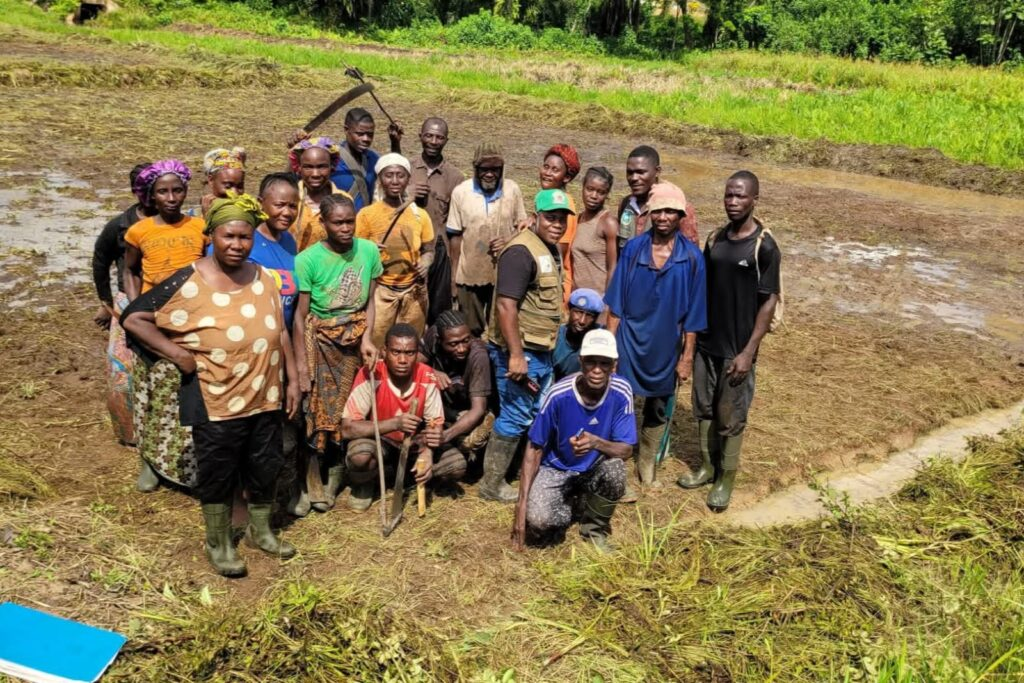
The Bartuogbeh Farmers Association in River Gee County has embarked on its second phase of lowland clearing, following a highly productive first harvest under Liberia’s Smallholder Agriculture Transformation and Agribusiness Revitalization Project (STAR-P).
Formed to strengthen collaboration and boost food production in Tuobo Administrative District, the cooperative takes its name from the Grebo phrase “Bartuogbeh” — meaning “Let’s Put Strong.” That spirit of unity has already yielded tangible results. Members describe their initial harvest as a breakthrough, demonstrating how collective farming can improve yields, enhance food security, and generate income for rural households.
During its first phase, the cooperative cultivated approximately six hectares of lowland rice. The harvest provided both food and income, with part of the yield sold and part reserved for replanting. Encouraged by this success, the farmers are now clearing additional land to expand rice production.
Madam Lucy Chenekan, speaking on behalf of the cooperative’s women leaders, expressed gratitude to the Ministry of Agriculture for sustained support. “Our first harvest was successful. We sold part of our produce and saved some for replanting, which motivated us to continue,” she said.
Chenekan credited County Agriculture Coordinator Jasper Sheriff Tweh for urging farmers to adopt a cooperative model rather than working individually. “His encouragement, along with the Ministry’s support, has given us access to better seeds, tools, and equipment, increasing our production capacity,” she added.
She also stressed the importance of continued assistance to sustain progress in local food production.
The STAR-P program, funded by the World Bank and the International Fund for Agricultural Development (IFAD), is designed to strengthen smallholder farmers by improving productivity, enhancing value chains, and expanding market access.
Through STAR-P, farmers receive improved rice varieties, modern equipment, and training in cultivation and post-harvest techniques. The program also invests in infrastructure such as storage facilities, drying platforms, and feeder roads — critical for reducing losses and connecting rural producers to markets.
County Agriculture Coordinator Tweh praised Bartuogbeh’s achievements as evidence of what rural communities can accomplish with the right support. “The success in Tuobo Gbaweliken should inspire other communities to organize and take advantage of available opportunities,” he emphasized. Tweh reaffirmed STAR-P’s commitment to providing technical assistance, improved inputs, and specialized training to boost productivity and minimize post-harvest losses.
For Bartuogbeh members, rice farming is more than agriculture — it is a pathway to economic empowerment. Farmers say increased production will help them meet essential needs such as school fees, healthcare, and household expenses.
Local observers believe Bartuogbeh’s success demonstrates the value of collaboration, modern farming methods, and sustained assistance in unlocking rural potential. They remain hopeful that the cooperative’s achievements will motivate other communities across River Gee County to form similar associations and actively participate in government and donor-supported agricultural programs.
While optimism runs high, Chenekan emphasized that sustained access to improved inputs, equipment, and training will be essential for scaling production and ensuring long-term food security. The cooperative’s leaders are determined to build on their gains, but they acknowledge that institutional backing remains critical.
As Bartuogbeh Farmers clear new lowlands for rice cultivation, their story reflects a broader narrative of resilience and transformation in Liberia’s agricultural sector. With unity, modern methods, and sustained support, rural communities are proving they can drive economic empowerment and food security from the ground up

