

Solidarity and Trust for a New Day (STAND) has formally petitioned the Liberian Senate to reject the nomination of Mr. Jonathan K. Weedor as Chairman of the National Elections Commission (NEC), citing conflict of interest, compromised neutrality, and risks to democratic stability.
The group has also shared its communication with international partners, including the United States Embassy, the United Nations, the European Union, ECOWAS, the African Union, and The Carter Center, underscoring the gravity of its appeal.
Liberia’s Constitution requires strict political neutrality from NEC commissioners. Article 89 explicitly prohibits members from holding party membership or public office. STAND argues that mere resignation from a political party does not resolve deeper concerns about prior political involvement, operational loyalty, and public perception. The organization insists that neutrality must extend beyond formal compliance to encompass credibility in the eyes of the electorate.
Mr. Weedor’s active role in the 2023 presidential campaign of President Joseph Nyemah Boakai is central to STAND’s objection. Publicly available evidence suggests he played a technical role in vote tabulation and result announcements for the Unity Party.
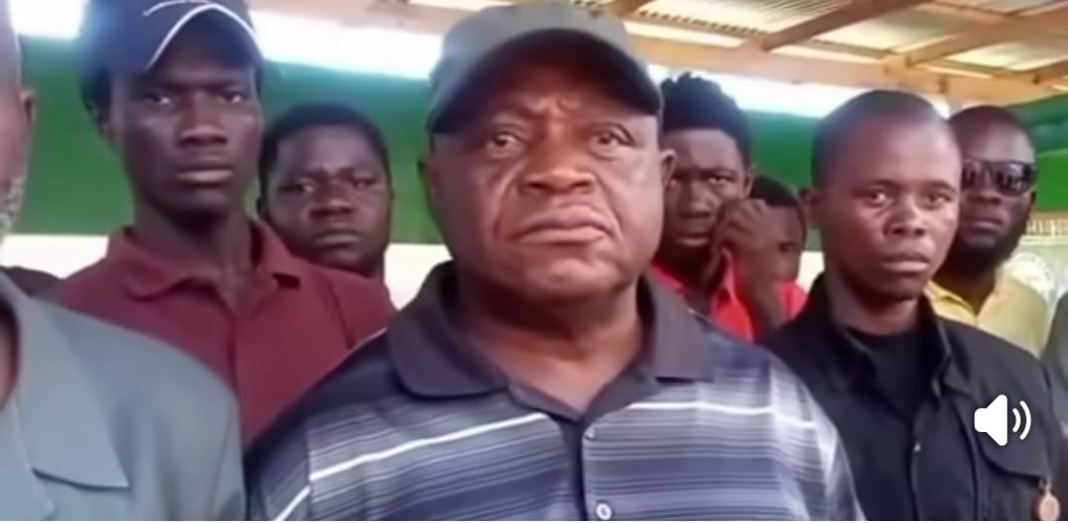
In video footage, he reportedly described himself as President Boakai’s nephew and emphasized their shared roots in Lofa County—remarks interpreted as signaling personal and traditional loyalty. STAND has requested that this evidence be formally reviewed by the Senate during deliberations.
STAND stresses that in electoral matters, perception is as consequential as reality. Even absent wrongdoing, prior campaign involvement creates reasonable doubts about impartiality in future elections, particularly the 2029 polls. If the NEC chair is perceived as politically aligned, election outcomes risk being delegitimized regardless of technical soundness. Public confidence, the group warns, is the bedrock of peaceful elections.
The organization draws parallels to Liberia’s troubled electoral past. The 1985 elections under Samuel K. Doe, managed by the Special Elections Commission (SECOM) led by Emmett Harmon, were widely viewed as manipulated. That perception fueled political distrust, instability, and ultimately the November 1985 coup, which contributed to years of civil conflict. STAND cautions that ignoring lessons from history could endanger Liberia’s fragile democratic stability.
Liberia’s democratic progress exists within a volatile regional environment, marked by instability in parts of the Sahel and tensions with neighboring Guinea. STAND argues that Liberia cannot afford decisions that undermine electoral trust or trigger unrest. The NEC must not only be independent in law but must also command unquestionable credibility among citizens.
STAND recalls President Boakai’s own warning during the 2023 elections that rigging would mean “the end of Liberia.” The group contends that appointing a figure with visible partisan ties risks creating the very fears the President once cautioned against. Protecting NEC’s credibility, it insists, is not partisan—it is a matter of national survival.
The petition emphasizes that the Senate’s role transcends confirmation. As a constitutional safeguard, senators must act with patriotic judgment and constitutional courage. Their decision will shape not only the credibility of the 2029 elections but also Liberia’s long-term stability. STAND frames the choice as a test of national unity and institutional integrity.
In conclusion, STAND formally urges the Senate to reject Mr. Weedor’s nomination, arguing that public trust, electoral credibility, and national peace are at stake. By sharing its communication with international partners, the group signals its commitment to transparency and democratic accountability.
The appeal closes with respect for the Senate’s deliberations, urging lawmakers to prioritize the Constitution and the national interest above partisan considerations.

