

Abstract
Security planning for annual and high-profile events has evolved into a sophisticated discipline that blends intelligence, operational strategy, legal awareness, and technological innovation. From post-conflict environments such as Liberia to highly institutionalized systems in the United States and across Europe, the protection of Very Important Persons (VIPs) represents both a tactical necessity and a symbol of state capacity.
This article provides an in-depth, explanatory, and comparative analysis of VIP protection in the context of annual and significant events. Moving beyond outlines, it interrogates operational realities, institutional challenges, and lessons learned from major global incidents. The study integrates theory with practice and offers policy-relevant recommendations, particularly for developing security systems such as those within ECOWAS.
Introduction
The organization of annual and high-profile events—whether political inaugurations, independence celebrations, religious gatherings, or international summits—inevitably places states under intense scrutiny. These events are not only ceremonial; they are political statements, economic opportunities, and social gatherings that attract both legitimate participants and potential threats.
VIP protection within this environment becomes a central pillar of national security. It is not merely about placing armed officers around a dignitary; rather, it involves a layered system of prevention, deterrence, detection, and response. The failure of VIP protection can result in assassination, mass casualties, or national embarrassment, all of which may destabilize governance structures.
In fragile and post-conflict states like Liberia, the stakes are even higher. The preservation of peace—achieved after prolonged civil conflict—depends heavily on the ability of security institutions to manage large events without incident. Conversely, in advanced democracies such as the United States and countries across Europe, the challenge lies in balancing robust security with civil liberties and open access.
Conceptual Foundations of VIP Protection
VIP protection is rooted in the principle of risk minimization under conditions of uncertainty. The central question is not whether a threat exists, but how likely it is to materialize and what its consequences would be.
In practical terms, VIP protection involves three interconnected domains:
Preventive Intelligence – identifying threats before they occur
Protective Operations – shielding the VIP from identified risks
Crisis Response – mitigating damage if prevention fails
These domains operate simultaneously rather than sequentially. For example, intelligence gathered during an event may immediately alter operational deployment.
Understanding the Threat Environment
Nature of Threats
Threats to VIPs during major events are multidimensional. Traditional threats such as assassination or bombing remain relevant, but modern security planners must also contend with decentralized and unpredictable actors.
The emergence of “lone-wolf” attackers has significantly complicated VIP protection. Unlike organized groups, these individuals often operate without detectable communication patterns, making intelligence gathering difficult. The September 11 attacks further demonstrated how unconventional methods could bypass traditional security frameworks.
Psychological and Symbolic Dimensions
VIPs are not only individuals; they are symbols of political authority, religious influence, or economic power. Attacking a VIP is often intended to send a broader message. This symbolic dimension increases the attractiveness of such targets and necessitates a more sophisticated protective strategy.
Lessons from the United States
The United States Secret Service is widely regarded as a global benchmark for VIP protection, largely due to its historical experiences and institutional evolution.
The Assassination of President John F. Kennedy
The assassination of John F. Kennedy in 1963 remains one of the most studied failures in VIP protection. The President was exposed in an open-top motorcade, and the surrounding buildings were not adequately secured.
This incident revealed a critical flaw: security planning must extend beyond immediate proximity to include environmental dominance. Today, protective teams conduct extensive advance work, including rooftop surveillance, sniper deployment, and public access restrictions.
The Reagan Shooting and the Value of Reaction Time
When Ronald Reagan was shot in 1981, the effectiveness of the protective detail was demonstrated not by preventing the attack, but by minimizing its consequences. The rapid evacuation of the President to a medical facility saved his life.
This incident underscores an important principle: perfect prevention is unrealistic; therefore, rapid response capability is essential.
Post-9/11 Transformation
After the September 11 attacks, VIP protection in the United States expanded to include:
Airspace control (No-Fly Zones)
Integration of intelligence databases
Multi-agency coordination under the Department of Homeland Security
These developments illustrate how large-scale incidents can fundamentally reshape security doctrines.
European Experiences and Open Society Challenges
European countries operate within democratic frameworks that prioritize openness and accessibility. This creates unique challenges for VIP protection.
The Assassination of Olof Palme
The killing of Olof Palme in 1986 occurred in a low-security environment. Palme often moved without close protection, reflecting Sweden’s historically low threat perception.
The lesson here is clear: threat environments can change rapidly, and security policies must adapt accordingly.
Coordinated Terrorism in France
The November 2015 Paris attacks exposed vulnerabilities in urban security. Although not targeted at a single VIP, the attacks demonstrated how large public events can become high-risk environments.
European responses have included:
Increased surveillance, Intelligence sharing through Europol
Deployment of armed patrols in public spaces
Event Security Failures: Manchester Arena
The Manchester Arena bombing revealed a critical oversight: inadequate security during the exit phase of an event. This phase is often less controlled, making it attractive for attackers.
African and ECOWAS Context
Liberia: Post-Conflict Realities
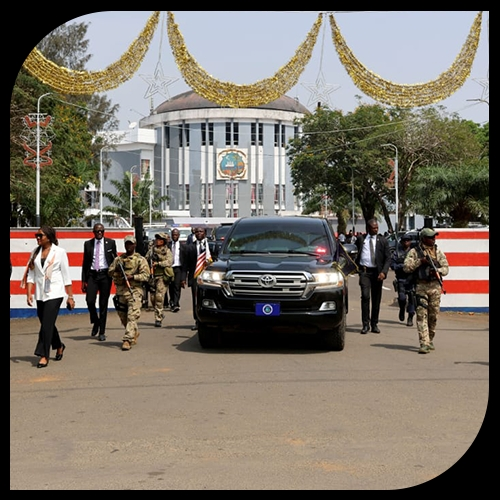
In Liberia, VIP protection is shaped by both historical experience and current institutional capacity. The country’s recovery from civil war has necessitated a focus on rebuilding trust in security institutions.
Annual events such as Independence Day celebrations require careful planning, often with limited resources. Challenges include:
Inadequate surveillance infrastructure, Limited specialized training, and Dependence on international support.
However, Liberia has made significant progress through partnerships with international organizations and regional bodies.
Nigeria: High-Threat Environment
Nigeria presents a contrasting case, where VIP protection is heavily influenced by insurgency threats. The presence of extremist groups has necessitated:
Military involvement in VIP security, Armored transportation, and Intelligence-led operations
Ghana: A Model of Stability
Ghana demonstrates how democratic stability contributes to effective VIP protection. The country’s peaceful electoral transitions have allowed security agencies to refine their strategies without the pressure of persistent conflict.
Operational Planning: From Theory to Practice
Operational planning is where abstract security principles are translated into actionable strategies.
Advance Work and Reconnaissance
Advance teams visit event locations days or weeks before the event. They assess:
Physical layout, Crowd flow patterns, and Emergency evacuation routes
This process is not static; it is continuously updated based on new intelligence.
Layered Security Approach
The concept of layered security ensures that threats are intercepted at multiple points:
Outer Layer: Traffic control and crowd screening
Middle Layer: Identity verification and surveillance
Inner Layer: Close protection
This redundancy ensures that failure at one layer does not compromise the entire system.
Technology and Modern VIP Protection
Technology has become indispensable in modern security operations.
Surveillance Systems
Closed-circuit television (CCTV) allows for real-time monitoring of large crowds. In advanced systems, facial recognition software can identify known threats.
Communication Systems
Secure communication is essential for coordination. Encrypted radios and digital platforms enable real-time information sharing.
Emerging Threats and Countermeasures
The use of drones by hostile actors has introduced new vulnerabilities. Counter-drone technologies are now being integrated into VIP protection strategies.
Inter-Agency Coordination
No single agency can manage VIP protection alone. Effective coordination is essential.
In the United States, agencies such as the Secret Service, FBI, and local law enforcement operate under unified command structures. In Europe, cross-border cooperation is facilitated through institutions like Europol.
In ECOWAS countries, coordination remains a challenge due to:
Resource disparities, and Institutional fragmentation
However, regional initiatives are gradually improving cooperation.
Legal and Ethical Considerations
VIP protection operates within the framework of law. Excessive use of force or unlawful surveillance can undermine public trust.
In democratic societies, security measures must be balanced against:
Freedom of movement, Freedom of assembly, and Privacy rights
This balance is particularly delicate during public events.
Crisis Management and Emergency Response
Despite the best planning, incidents may occur. Effective crisis management involves:
Immediate neutralization of threats, Rapid evacuation of VIPs, and Clear communication with the public.
Medical preparedness is also critical. The survival of Ronald Reagan demonstrates the importance of rapid medical intervention.
Post-Event Evaluation and Institutional Learning
After-action reviews are essential for continuous improvement. These reviews analyze:
What worked well, and What failed
How future operations can be improved
In advanced systems, these lessons are institutionalized through training and policy updates.
Key Challenges in VIP Protection
Across all regions, common challenges include:
Rapidly evolving threats, Insider risks, Technological gaps,and Political interference.
For countries like Liberia, resource limitations add an additional layer of complexity.
Recommendations
Institutional Strengthening: Establish specialized VIP protection units
Capacity Building: Continuous training and international collaboration
Technology Investment: Surveillance and communication systems
Legal Reform: Clear frameworks for security operations
Regional Cooperation: Enhanced ECOWAS security mechanisms
Conclusion
VIP protection during annual and high-profile events is a dynamic and multifaceted discipline. Lessons from the United States and Europe demonstrate the importance of technology, coordination, and preparedness, while experiences from Liberia and ECOWAS highlight resilience in the face of constraints.
Ultimately, effective VIP protection is not defined by the absence of threats, but by the ability to anticipate, manage, and respond to them. As global security challenges continue to evolve, so too must the strategies and institutions tasked with safeguarding those at the center of public life.
References (APA Style)
Allison, G. (1971). Essence of Decision. Boston: Little, Brown.
ECOWAS Commission. (2020). Regional Security Strategy. Abuja.
Europol. (2022). European Union Terrorism Situation and Trend Report.
Federal Emergency Management Agency (FEMA). (2018). Incident Command System.
Goldstein, H. (1990). Problem-Oriented Policing. McGraw-Hill.
Liberia National Police. (2022). Operational Guidelines for Public Safety. Monrovia.
United Nations Office on Drugs and Crime (UNODC). (2019). Handbook on Police Accountability.
U.S. Department of Homeland Security. (2021). If You See Something, Say Something Campaign and Special Event Planning Guide.
Author’s Profile
Dr. Tarpeh Lasanah U-sayee, Jr. is a seasoned law enforcement professional, Apostle, and academic. He is a graduate of the Liberia Police Academy, the Louisiana State Police Academy (USA), and the Lagos State Academy (Nigeria). He holds a Doctorate in Church Growth in Ministry, a Master’s degree in Foreign Service Leadership in International Relations, a Master of Divinity, and degrees in Sociology and Criminal Justice. He serves as a professor of criminal justice at private universities and as a trainer at the Liberia National Police Training Academy, with expertise in criminal procedure, VIP protection, and security management in post-conflict societies.

