

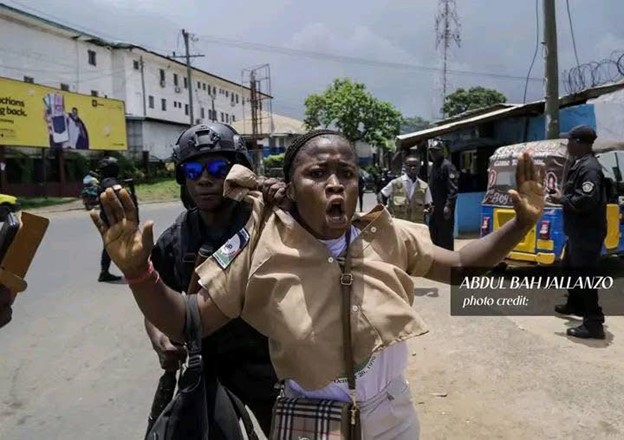
A storm of political outrage has erupted after the opposition Congress for Democratic Change (CDC) and the Movement for Economic Empowerment (MOVEE) jointly accused the Boakai-Koung administration of enabling political violence, following a brutal attack on District 10 Representative Yekeh Kolubah in Ganta, Nimba County.
In a fiery press release dated May 7, 2026, signed by CDC National Chairman Atty. Janga A. Kowo and MOVEE National Chairman Hon. Prince Mehn, the two parties condemned the incident as a disgraceful assault on democracy. They alleged that Kolubah was targeted while conducting what they described as a “peaceful political tour” in Ganta.
“This attack is cowardly, disgraceful, and completely unacceptable in a democratic and civilized society,” the statement declared. “What occurred in Ganta is not an isolated incident. It represents a dangerous escalation in the growing campaign of intimidation, political intolerance, and lawlessness that has increasingly characterized the conduct of the Boakai-Koung Administration.”
The opposition leaders warned that the attack signals a troubling normalization of violence in Liberia’s political arena. They accused the government of failing to protect dissenting voices and of fostering an environment where intimidation thrives unchecked.
Political analysts say the incident could deepen Liberia’s already polarized climate, with Kolubah’s history of outspoken criticism against successive administrations making him a frequent lightning rod for controversy. His supporters argue that the attack is part of a broader effort to silence opposition figures, while government officials have yet to issue a detailed response.
The CDC and MOVEE press release called on civil society, international partners, and democratic institutions to take urgent notice of what they described as a “pattern of political persecution.” They urged Liberians to resist the slide into lawlessness and to demand accountability from those in power.
For residents of Ganta, the attack has sparked fear and anger, raising questions about the safety of political engagement in the country’s interior. Witnesses described chaotic scenes as Kolubah’s entourage was disrupted, underscoring the fragility of peace in Liberia’s contested political spaces.
As tensions mount, the incident threatens to become a flashpoint in national discourse, testing the government’s commitment to democratic norms and the opposition’s resolve to confront what they call a dangerous precedent.

