

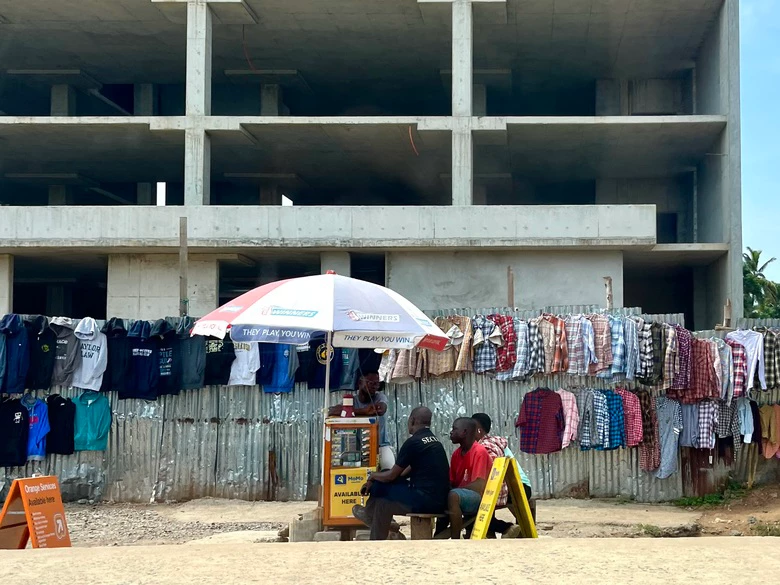
Like many lower-income economies, Liberia’s economy remains heavily dependent on agriculture, which accounted for around 33.8% of GDP in 2024 and continues to be the primary source of livelihood for most households.
Employment, on the other hand, is overwhelmingly informal, with about 87% of workers engaged in smallholder farming or unregistered micro-enterprises. This is especially stark for young people: approximately 14.8% of Liberians aged 15–24 are neither in education, employment, nor training (NEET), a figure that, given the scale of informality, almost certainly understates the depth of youth underemployment in the formal sector and the urgency of creating productive jobs.
While agriculture will remain a cornerstone of the economy, prospects for sustained and inclusive growth hinge on the expansion of a more productive non-agricultural private sector.
Identifying and addressing the constraints that limit firm growth is therefore central to effective economic policy to expand the non-agricultural private sector and create more productive jobs.
This Article draws on Liberia’s 2025 World Bank Enterprise Survey (WBES), comparing it against 2017 to trace how conditions have evolved over eight years. Let’s dive into it.
Declining productivity and employment growth
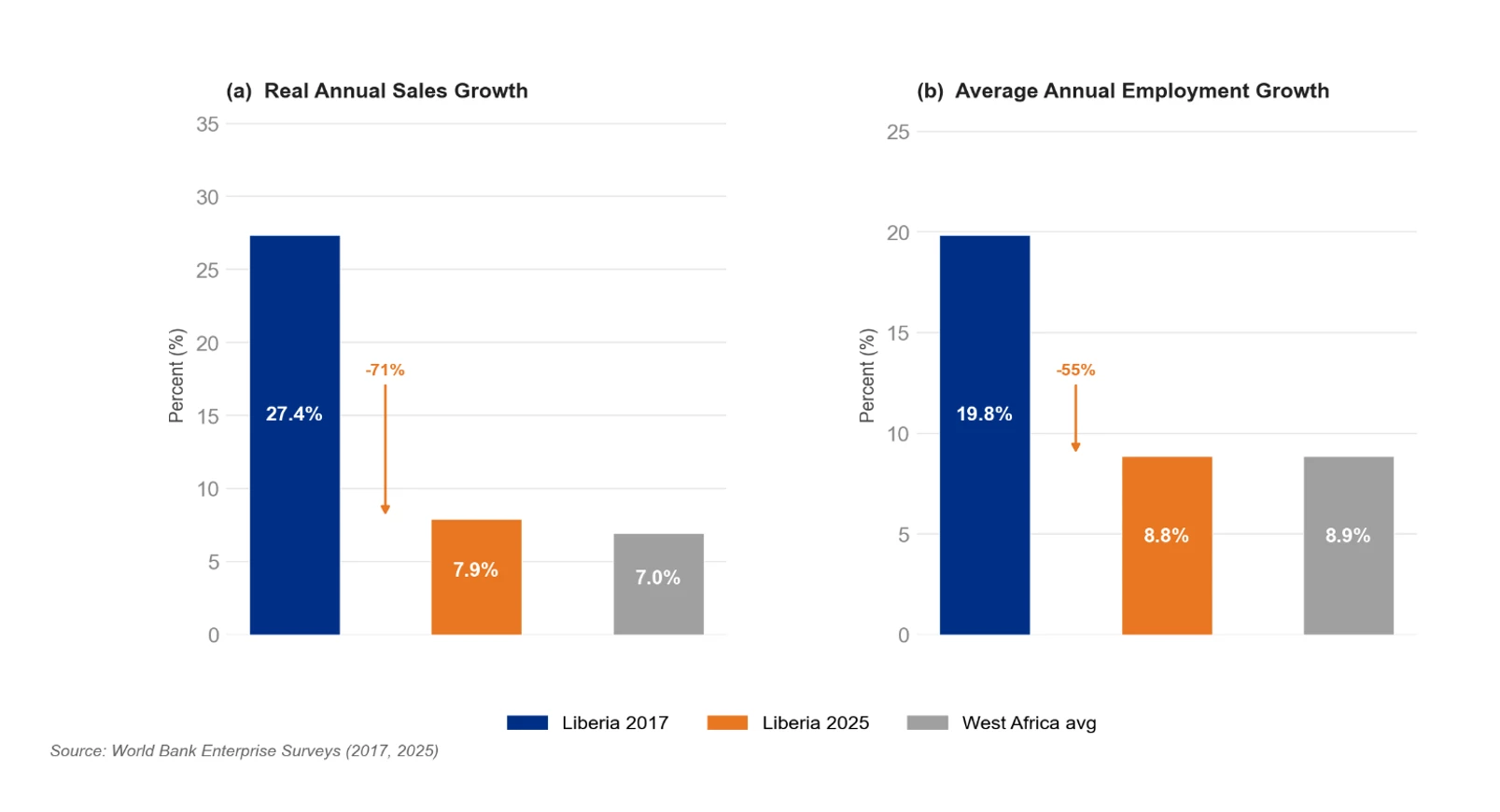
The most concerning finding is the significant decline in firm productivity and business dynamism. Real annual sales growth dropped sharply from 27.3% in 2017 to 7.9% in 2025 (Figure 1a), bringing Liberia closer to the West Africa average of 7.0% but suggesting a significant loss of momentum.
Average annual employment growth shows a similar pattern, declining from 19.8% in 2017 to 8.9% in 2025 (Figure 1b) — now comparable to the regional average but well below the pace needed to absorb a fast-growing workforce.
Figure 1. Real Annual Sales and Employment Growth
With 63% of Liberia’s population under the age of 25, the slowdown in employment generation is particularly concerning. The data point to a private sector that experienced robust expansion in 2017 but now confronts mounting constraints on growth and job creation.
Shifting business obstacles
Business obstacles facing Liberian firms have changed significantly since 2017 (Figure 2). Access to finance became the leading constraint, rising from 29.9% to 39.8% of firms citing it as their biggest obstacle in 2025. Many SMEs face tight borrowing conditions — driven by high collateral requirements, limited credit histories, and high interest rates while the microfinance institutions remain too small to close the gap. These constraints become particularly binding on firms looking for innovation, equipment upgrades, or expansion.
Figure 2. Business Obstacles
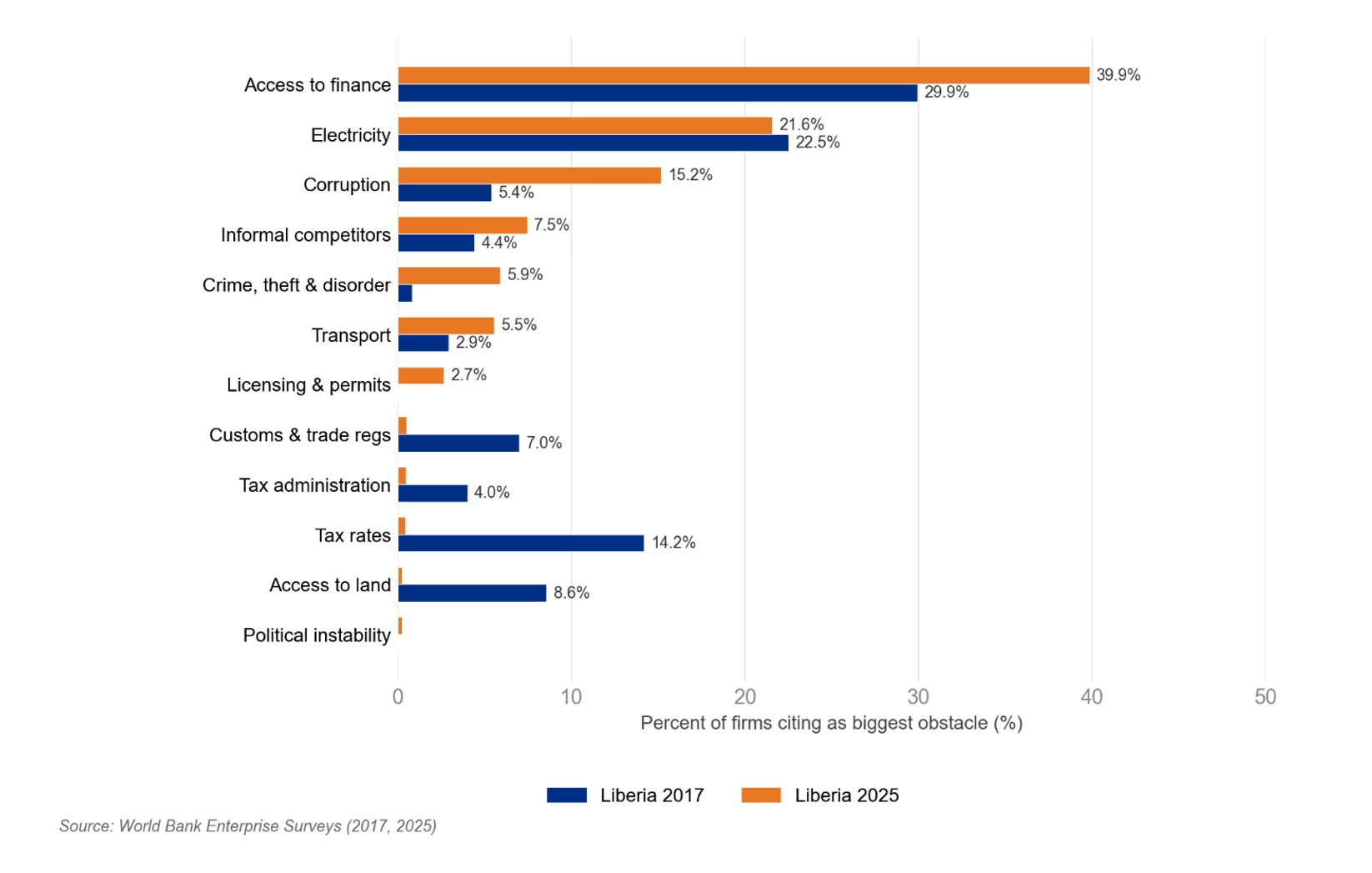 Electricity remains a persistent challenge, cited by 21.6% of firms in 2025 compared to 22.5% in 2017. Despite the marginal improvement, unreliable power supply continues to force businesses to rely on costly backup generators, raising operational costs and disrupting production. Indeed, between 2017 and 2025 the percentage of firms owning a generator went from 73% to 91% while utilization rates remained broadly unchanged. This pattern indicates a substantial increase in firms’ dependence on self-generation. Such widespread reliance on generators serves as a clear signal of weak grid reliability; when firms systematically invest in and depend on alternative power sources, it reflects a lack of confidence in the consistency and adequacy of public electricity provision. For manufacturing firms in particular, inconsistent electricity supply constrains growth. Transport bottlenecks and competition from informal-sector firms further compound these challenges placing registered businesses at a disadvantage due to regulatory and tax compliance costs.
Together, these findings highlight a set of interconnected obstacles requiring the need for comprehensive reforms in financial sector development, infrastructure investment, and regulatory frameworks.
Decreasing innovation activity
The share of firms introducing new products or services fell from 53.5% in 2017 to 13.1% in 2025 (Figure 3a), showing a 76% decline and well below the West Africa average of 18.7%. Process innovation followed the same trajectory, declining from 30.8% to 14.2% (Figure 3b). This sharp decline likely reflects tightening financial constraints, as innovation requires upfront investment in R&D, new equipment, and market development — investments that depend heavily on access to finance.
Figure 3. Innovation Activity
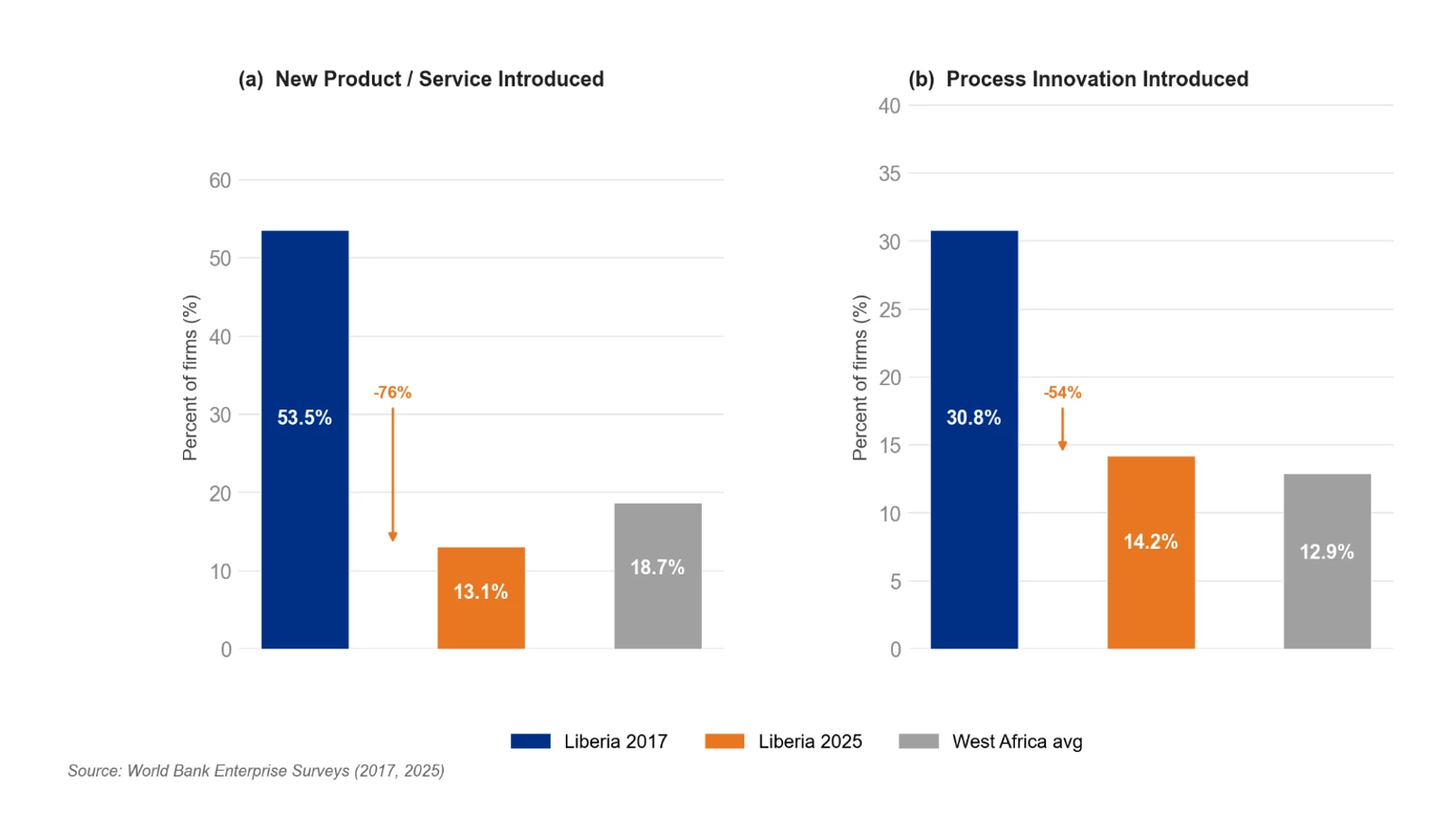 The result is a troubling negative cycle. Without access to capital, firms cannot innovate; without productivity gains, they cannot self-finance or qualify for credit. Breaking this cycle is essential to restoring dynamism to Liberia’s private sector.
Policy implications and the path forward
Together, these findings have significant implications for development policy in Liberia and West Africa — particularly for private-sector growth, economic diversification, and job creation — and are highly relevant to advancing the government’s ARREST Agenda for Inclusive Development (AAID).
Access to finance remains the most pressing barrier, despite improvements in political stability and governance. Expanding financial inclusion alongside regulatory reforms would help ease this constraint. At the same time, sustained investment in electricity infrastructure is critical, as high energy costs continue to limit firm capacity. Firms also need stronger innovation support and clearer pathways to formalization that do not impose excessive regulatory burdens.
This analysis directly informs the World Bank Group’s broader jobs agenda, which seeks to help developing countries translate growth into more and better-quality local jobs. With 1.2 billion young people set to enter the global workforce over the next decade, accelerating firm growth and expanding access to finance in countries like Liberia will be critical to turning economic potential into real opportunities for workers on the ground.
With more than 4.02 million acres of arable land, a strategic location in West Africa, and a young, growing population, Liberia is well positioned for growth. The right policy framework and targeted private-sector support, can help reverse the decline in productivity and innovation, unlocking sustainable, inclusive growth and more — and better — jobs for all Liberians.
By

