

By E. J. Nathaniel Daygbor
In a dramatic move that has electrified the corridors of power, Senator Bill Twehway of Rivercess County has introduced sweeping reform legislation that promises to rewrite Liberia’s democratic playbook. The proposed Democratic Pluralism and Electoral Inclusion Amendment Act seek to permanently repeal the controversial 2% vote-threshold penalty and enshrine absolute ballot access as a constitutional right for all political parties and independent candidates.
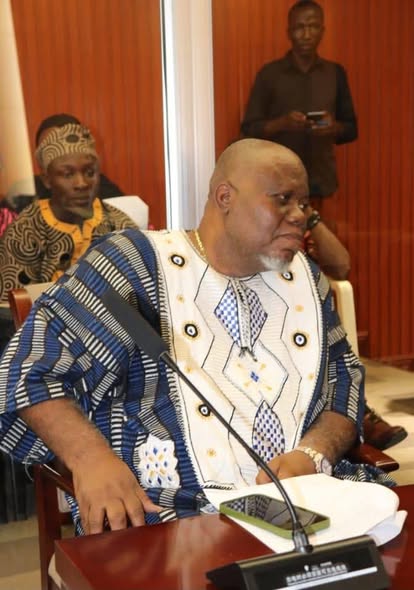
The submission, delivered with fiery conviction before the Senate, Tuesday at the Liberian Senate. “True democracy thrives on absolute inclusion, not state-enforced exclusion,” Twehway declared, his words reverberating across the chamber. He denounced the existing law as a “death sentence” for emerging voices, condemning its twelve-year ban on underperforming parties as a betrayal of Liberia’s pluralistic ideals.
At the heart of the bill lies the repeal of Chapter 5A of the 2014 Amended Elections Law, which imposed the punitive threshold. Critics have long argued that the provision entrenched political monopolies, silenced minority movements, and forced voters into fear-driven choices. Twehway’s amendment flips the script: ballot access becomes permanent, inalienable, and immune to numerical metrics.
“This legislation is about correcting historical imbalances,” Twehway insisted. “It ensures that every Liberian, no matter how small their constituency or niche their ideology, has a lawful stake in our national discourse.”
Equally groundbreaking are the reforms to Chapter 4, Section 4.10, which fortify the rights of party and candidate observers. Under the amendment, accredited representatives will enjoy unrestricted proximity inside polling rooms, immunity from arbitrary expulsion, and the absolute right to digitally record tally sheets.
Observers will now be empowered to document every stage of the process — from voter identification to ballot counting — ensuring transparency that cannot be manipulated or concealed. “By empowering observers, we restore public trust in the ballot box,” Twehway proclaimed. “Political grievances must be resolved through verifiable systems, not in the streets.”
The bill’s preamble reads like a manifesto for pluralism, declaring that sovereignty resides in the citizenry and that electoral thresholds are artificial barriers to entry. It warns against duopolies and insists that democracy must embrace non-linear growth, where small parties and independents are free to evolve without fear of extinction.
Analysts say the legislation could radically reshape Liberia’s political terrain. By eliminating punitive restrictions, the act opens the door for regional parties, grassroots movements, and independent voices to flourish. “This is a seismic rupture in the old order,” noted one political commentator. “It dismantles the architecture of exclusion and replaces it with a framework of inclusion.”
Civil society groups have hailed the bill as a triumph for democratic freedom, while established parties are bracing for a more competitive landscape. Some lawmakers, wary of losing their dominance, are expected to resist. Yet the momentum behind Twehway’s proposal is undeniable, fueled by public demand for fairness and transparency.
International observers are watching closely, with many viewing the amendment as a litmus test for Liberia’s commitment to deepening democracy. If passed, the act could set a precedent across Africa, where electoral thresholds have often been used to stifle dissent and consolidate power.
The Senate now faces a defining choice: embrace pluralism or cling to exclusion. For Twehway, the stakes are nothing less than national unity and peace. “Our country’s stability is rooted in ensuring that every Liberian feels included,” he urged. “This is the supreme interest of democracy.”
As debate looms, one thing is clear: Liberia stands at the edge of a historic transformation. The Democratic Pluralism and Electoral Inclusion Amendment Act is more than legislation — it is a rallying cry for freedom, a bold strike against monopoly, and a resounding affirmation that democracy belongs to all.

