

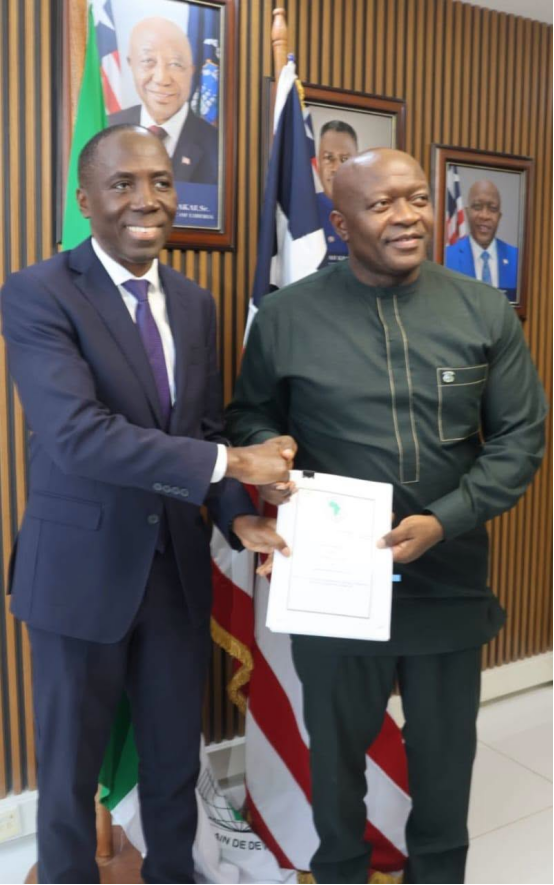
In a bold stride toward economic renewal, the Government of Liberia has clinched a $16.7 million loan agreement with the African Development Bank (AfDB), kindling hopes of fiscal stability and sweeping reforms in the nation’s lucrative but troubled mining sector.
The deal, hailed as the first phase of a two‑year program under the government’s ARREST Agenda for Inclusive Development (AAID), signals a fresh push to ensure Liberia’s natural wealth translates into tangible benefits for its citizens.
At the signing ceremony, Finance and Development Planning Minister Augustine Ngafuan lauded the AfDB’s unwavering support in Liberia’s post‑war journey, citing its pivotal role in infrastructure expansion, economic reforms, and private sector empowerment. He spotlighted flagship initiatives such as the Youth Entrepreneurship Investment Bank (YEIB) and Special Agricultural Processing Zones, designed to spark job creation and transform agriculture into a growth engine.
“This program arrives at a defining moment,” Ngafuan declared, stressing the urgency of tightening economic governance, boosting revenue collection—particularly from mining—and ensuring national resources serve the people rather than vanish into inefficiency.
AfDB Country Manager Rees Mwasambili underscored the Bank’s commitment to Liberia’s reform agenda, noting that the funds will fuel critical improvements in domestic revenue mobilization, debt management, public procurement, anti‑corruption measures, and transparency in mining operations. These reforms, he emphasized, will empower the government to deliver services more effectively while restoring public trust in national institutions.
The agreement is more than a financial transaction—it is a high‑stakes bet on Liberia’s future. With mining revenues poised to become a cornerstone of fiscal recovery, the AfDB’s intervention could mark a turning point in the nation’s quest for sustainable development and accountable governance.
As Liberia braces for the challenges ahead, the $16.7 million lifeline stands as both a promise and a test: can the country finally harness its mineral riches to uplift its people and cement its place on the path of inclusive growth?

