

Abstract
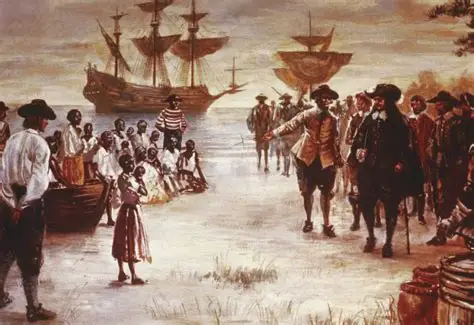
The Transatlantic Slave Trade remains one of the most devastating crimes against humanity in world history. Between the fifteenth and nineteenth centuries, millions of Africans were forcibly removed from West Africa to the Americas under brutal and inhumane conditions.
After the formal abolition of the slave trade in the early nineteenth century, West African societies, particularly Ghana, faced the difficult challenge of rebuilding social, political, economic, and cultural systems destroyed by centuries of human exploitation.
This article examines the impact of the Transatlantic Slave Trade on Ghana after 1800 and explores the continuing quest for justice, reparations, historical recognition, and reconciliation. Using historical analysis, postcolonial theory, and contemporary African perspectives, the study investigates the long-term consequences of slavery on Ghanaian society, the role of colonialism, the struggle for African identity, and the modern movement for reparatory justice.
The article argues that although legal abolition ended the physical trade in enslaved Africans, the structural inequalities and psychological wounds created by slavery continue to affect Ghana and the broader African continent. Ghana’s initiatives, including heritage tourism, the “Year of Return,” Pan-Africanism, and calls for reparations, represent significant efforts toward historical justice and healing.
Introduction
The Transatlantic Slave Trade stands among the darkest chapters in human civilization. For over four centuries, millions of Africans were captured, sold, transported, and enslaved across the Atlantic Ocean to work in plantations and industries in Europe and the Americas. West Africa became the principal source of enslaved Africans, and the territories now known as Ghana played a central role in this historical tragedy.
The modern Republic of Ghana, formerly known as the Gold Coast, became one of the most active regions in the slave trade due to its strategic coastal position and its interaction with European merchants, including the Portuguese, Dutch, Danish, British, and others. Forts and castles such as Cape Coast Castle and Elmina Castle became infamous holding centers where enslaved Africans were detained before shipment to the Americas.
Although Britain officially abolished the slave trade in 1807 and slavery itself in 1833, the consequences of the slave trade did not end. Instead, West Africa entered another era characterized by colonial domination, economic exploitation, racial discrimination, and social fragmentation. In Ghana, communities struggled with depopulation, loss of labor force, weakened political institutions, and cultural disruption. The post-1800 period therefore became a critical phase in the search for justice and restoration.
Justice in the Ghanaian context extends beyond legal abolition. It includes historical acknowledgment, cultural restoration, economic compensation, educational reform, and psychological healing. The quest for justice has become increasingly important in the twenty-first century as African nations and descendants of enslaved Africans demand reparations and global recognition of the crimes committed during slavery.
This article explores the historical evolution of the Transatlantic Slave Trade in Ghana and analyzes the broader struggle for justice after 1800. It examines the social, economic, political, and cultural impacts of slavery and evaluates Ghana’s role in contemporary movements for reparatory justice and Pan-African unity.
Historical Background of the Transatlantic Slave Trade in Ghana
Early European Contact
The Portuguese were the first Europeans to arrive on the Gold Coast in the fifteenth century. They established trade relations focused initially on gold, ivory, and spices. However, the increasing demand for labor in the Americas transformed African trade into a system centered on human beings.
European powers gradually constructed forts and trading posts along the coast of Ghana. These included: Elmina Castle, Cape Coast Castle, Fort Christiansborg
These structures became major slave export centers where Africans were imprisoned under horrific conditions before transportation across the Atlantic.
Scale of the Slave Trade
Historians estimate that more than twelve million Africans were transported across the Atlantic Ocean between the sixteenth and nineteenth centuries. Millions died during raids, transportation, and enslavement.
The Gold Coast became one of the leading exporters of enslaved Africans. Captives were obtained through warfare, kidnapping, political rivalries, and collaboration between some African intermediaries and European traders.
The infamous “Middle Passage” represented one of the most brutal aspects of the trade. Enslaved Africans were packed tightly into ships under inhumane conditions characterized by disease, starvation, torture, and death.
The Abolition of the Slave Trade after 1800
British Abolition Act of 1807
The British Parliament passed the Slave Trade Act in 1807, outlawing the trade in enslaved Africans throughout the British Empire. Several factors contributed to abolition:
Humanitarian campaigns by abolitionists.
Religious opposition from Christian groups.
Economic changes brought by industrialization.
Resistance and revolts by enslaved Africans.
Although abolition reduced legal slave trading, illegal trafficking continued for decades.
Impact on the Gold Coast
The abolition of slavery significantly altered economic and political relations in the Gold Coast. Many local economies previously dependent on slave trading shifted toward “legitimate commerce,” including trade in: Palm oil, Cocoa, Rubber, Timber and Gold
However, abolition did not immediately improve African societies. Instead, European powers intensified colonial ambitions in Africa.
Colonialism as a Continuation of Exploitation
From Slave Trade to Colonial Rule
Many African scholars argue that colonialism became a continuation of exploitation after the abolition of slavery. European nations that had profited from slavery redirected their interests toward direct territorial control.
In 1874, Britain formally declared the Gold Coast a colony. Colonial rule introduced: Forced labor systems, Economic dependency, Cultural domination, and Political suppression
The colonial economy primarily served European interests rather than African development.
Economic Consequences
The Transatlantic Slave Trade caused severe economic damage to Ghana and West Africa by:
Removing millions of productive young people, Destroying indigenous industries, Encouraging warfare and instability, Preventing industrial development.
Even after abolition, colonial policies ensured that African economies remained exporters of raw materials rather than industrial producers.
Social and Cultural Effects of the Slave Trade
Depopulation and Family Destruction
The slave trade caused massive population loss across West Africa. Entire communities were destroyed, and families were permanently separated.
The removal of large numbers of young adults weakened agricultural productivity and reduced social stability.
Breakdown of Trust
The slave trade created deep mistrust among African societies because local conflicts were often exploited for slave capture. Some African leaders collaborated with European traders for political or economic advantage.
This legacy contributed to ethnic tensions and weakened regional unity.
Cultural Disruption
African languages, religions, customs, and traditional institutions suffered major disruption. Enslaved Africans were stripped of their identities and forced to adopt foreign cultures in the Americas.
Despite this, African cultural traditions survived through music, religion, oral history, and resistance movements among the African diaspora.
Resistance and African Agency
Resistance within Africa
Africans did not accept slavery passively. Resistance occurred in many forms: Armed rebellion, Escape, Sabotage, and Refusal to cooperate
Community defense systems
Several African states resisted European domination and slave raiding.
Resistance during the Middle Passage
Enslaved Africans resisted aboard slave ships through hunger strikes, revolts, and suicide.
These acts demonstrated courage and a determination to maintain human dignity despite extreme oppression.
Diaspora Resistance
In the Americas, enslaved Africans organized rebellions and liberation movements. Important revolts included: The Haitian Revolution, Jamaican slave uprisings and Resistance in Brazil and the United States.
These struggles contributed significantly to the eventual abolition of slavery.
Ghana and the Search for Historical Justice
Independence and Pan-Africanism
Kwame Nkrumah became a leading advocate for African liberation and Pan-Africanism after Ghana gained independence in 1957.
Nkrumah viewed slavery and colonialism as interconnected systems of oppression. He promoted: African unity, Decolonization, Black consciousness, and Economic independence
Ghana became a symbol of African freedom and resistance.
Preservation of Slave Heritage Sites
Ghana has preserved major slave castles and heritage sites as historical memorials.
Notable sites include: Cape Coast Castle, and Elmina Castle
These locations now serve educational and commemorative purposes. Thousands of African descendants visit Ghana annually to reconnect with ancestral history.
Reparations and the Debate over Justice
Meaning of Reparations
Reparations refer to compensation or corrective measures for historical injustices. In the context of slavery, reparations may include: Financial compensation, Educational investments, Debt cancellation, Cultural restoration, and Official apologies
Ghana’s Position on Reparations
Ghana has increasingly supported calls for reparatory justice. African leaders and scholars argue that Europe and the Americas accumulated wealth through slavery while Africa suffered underdevelopment.
In 2023, discussions on reparations gained renewed attention during conferences hosted in Ghana and other African countries.
Arguments Supporting Reparations
Supporters argue that:
Slavery was a crime against humanity.
Western nations benefited economically from slavery.
Africa continues to suffer structural disadvantages rooted in slavery and colonialism.
Justice requires acknowledgment and compensation.
Arguments against Reparations
Opponents claim that:
Present generations should not be held responsible for historical crimes.
Determining compensation is difficult.
Some African groups participated in the trade.
However, many scholars argue that European powers controlled and expanded the system on a global scale and gained the greatest economic benefits.
The Year of Return and Cultural Reconnection
The 2019 “Year of Return”
In 2019, Ghana launched the “Year of Return” initiative to commemorate 400 years since the arrival of enslaved Africans in North America.
The initiative encouraged people of African descent to visit Ghana and reconnect with their heritage.
Significance of the Initiative
The program achieved several goals:
Promoted historical awareness.
Strengthened ties between Africa and the diaspora.
Boosted tourism and investment.
Encouraged cultural healing.
Prominent African Americans, scholars, artists, and activists visited Ghana during the program.
Psychological Trauma and Historical Memory
Intergenerational Trauma
The effects of slavery extend beyond economics and politics. Psychological trauma has been transmitted across generations through: Racial discrimination, Identity struggles, Historical, and exclusion
Cultural alienation
African descendants continue to confront the emotional legacy of slavery.
Memory and Education
Education plays a vital role in achieving justice. Ghanaian schools and universities increasingly emphasize African-centered history and the realities of slavery.
Museums and memorials also help preserve historical memory.
International Recognition and Human Rights
Slavery as a Crime against Humanity
International organizations such as the United Nations recognize slavery and the slave trade as crimes against humanity.
The 2001 Durban Conference against Racism emphasized the lasting consequences of slavery and colonialism.
Human Rights Perspective
Modern human rights frameworks emphasize: Human dignity, Equality,Freedom, and Non-discrimination
The history of slavery demonstrates the dangers of racial hierarchy and economic exploitation.
Contemporary Challenges Facing Ghana and West Africa
Despite progress, Ghana and many African countries continue to face challenges linked to historical exploitation:
Economic Dependency
African economies remain heavily dependent on raw material exports.
Youth Unemployment
High unemployment limits economic growth and social stability.
Neo-Colonialism
Some scholars argue that foreign economic influence continues through multinational corporations and unequal trade systems.
Migration and Brain Drain
Many educated Africans migrate abroad for better opportunities, affecting local development.
Pathways toward Justice and Development
Strengthening African Unity
Regional cooperation through organizations such as the Economic Community of West African States can help promote economic and political development.
Educational Reform
African history should be taught accurately and comprehensively.
Economic Empowerment
Industrialization and local entrepreneurship are essential for reducing dependency.
Cultural Restoration
Preserving African languages, traditions, and heritage strengthens identity and dignity.
Diplomatic Engagement
African nations should continue advocating for reparatory justice at international forums.
Conclusion
The Transatlantic Slave Trade profoundly shaped the history of Ghana and the broader West African region. Although abolition after 1800 ended the legal trafficking of enslaved Africans, the consequences of slavery persisted through colonialism, economic exploitation, social fragmentation, and psychological trauma.
Ghana’s experience demonstrates both the devastating effects of slavery and the resilience of African societies. Through independence movements, Pan-Africanism, heritage preservation, and reparations advocacy, Ghana has emerged as a leading voice in the global search for historical justice.
Justice for the Transatlantic Slave Trade is not merely about financial compensation. It involves acknowledgment, education, reconciliation, cultural restoration, and structural transformation. The continuing struggle for justice reflects a broader effort to restore dignity to African peoples and ensure that future generations understand the historical realities of slavery.
As Africa continues its journey toward development and self-determination, confronting the legacy of the slave trade remains essential. Ghana’s perspective offers valuable lessons on resilience, memory, and the enduring quest for justice in a post-slavery world.
About the Author
Dr. Tarpeh Lasanah U-Sayee, Jr. is a distinguished law enforcement officer, educator, researcher, minister of the Gospel, and international relations practitioner from the Republic of Liberia. With decades of experience in public service, academia, leadership development, and ministry, he has dedicated his life to advancing criminal justice education, professional law enforcement training, community development, and spiritual leadership.
Academically, Dr. U-Sayee possesses a remarkable educational background. He holds a Doctoral Degree in Church Growth and Ministry, a Master of Foreign Service Leadership in International Relations, a Master of Divinity, a Bachelor of Science Degree in Criminal Justice, a Bachelor of Science Degree in Sociology, and an Associate Degree in Management. His multidisciplinary education reflects his commitment to excellence in leadership, governance, justice, theology, and public administration.
References
Rodney, Walter. How Europe Underdeveloped Africa. London: Bogle-L’Ouverture Publications, 1972.
Nkrumah, Kwame. Neo-Colonialism: The Last Stage of Imperialism. London: Thomas Nelson & Sons, 1965.
Lovejoy, Paul E. Transformations in Slavery: A History of Slavery in Africa. Cambridge University Press, 2012.
Boahen, A. Adu. African Perspectives on Colonialism. Johns Hopkins University Press, 1987.
Davidson, Basil. The African Slave Trade. Boston: Little, Brown and Company, 1961.
Manning, Patrick. Slavery and African Life. Cambridge University Press, 1990.
Inikori, Joseph E. Africans and the Industrial Revolution in England. Cambridge University Press, 2002.
Austen, Ralph A. African Economic History. James Currey Publishers, 1987.
UNESCO. The Slave Route Project. Paris: UNESCO Publications.
United Nations. Durban Declaration and Programme of Action, 2001.
Falola, Toyin, and Matt D. Childs. The Yoruba Diaspora in the Atlantic World. Indiana University Press, 2004.
Hartman, Saidiya. Lose Your Mother: A Journey Along the Atlantic Slave Route. Farrar, Straus and Giroux, 2007.
Thornton, John. Africa and Africans in the Making of the Atlantic World. Cambridge University Press, 1998.
Klein, Herbert S. The Atlantic Slave Trade. Cambridge University Press, 2010.
Fage, J.D. A History of Africa. Routledge, 2002.
Iliffe, John. Africans: The History of a Continent. Cambridge University Press, 2007.
Asante, Molefi Kete. An Afrocentric Manifesto. Polity Press, 2007.
Cooper, Frederick. Africa since 1940: The Past of the Present. Cambridge University Press, 2002.
Berlin, Ira. Many Thousands Gone. Harvard University Press, 1998.
Williams, Eric. Capitalism and Slavery. University of North Carolina Press, 1944.

