

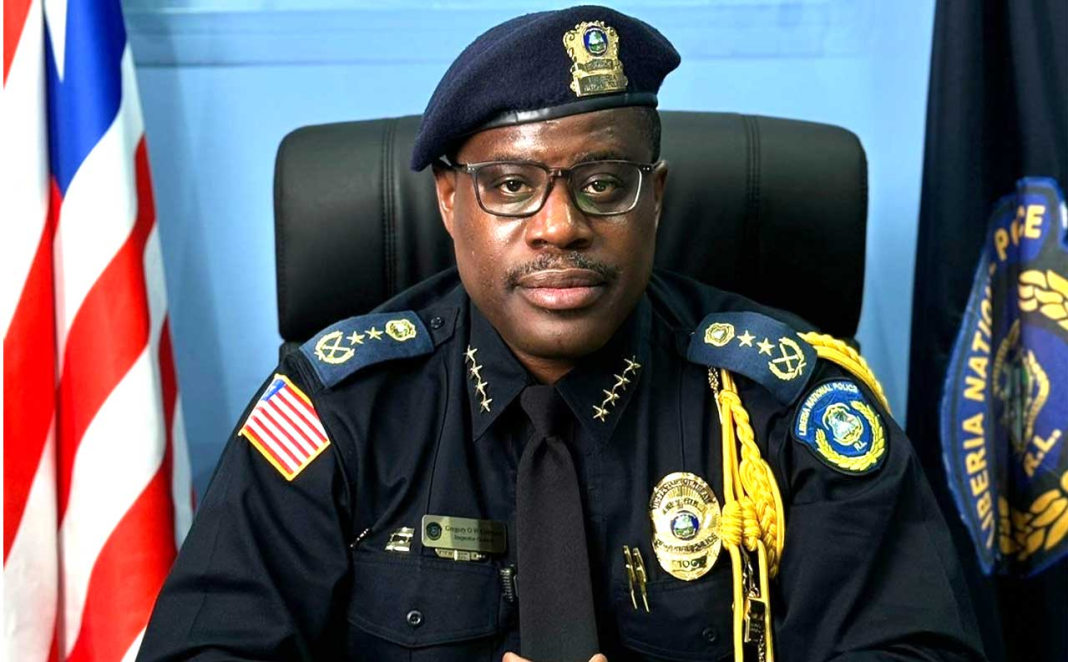
Police Inspector General Gregory Coleman ignored multiple foreign intelligence warnings about a large cocaine shipment entering Liberia and his possible involvement in a coordinated sting operation, according to people familiar with the matter.
In one instance, Coleman was tipped off and told to deploy police to assist the Drug Enforcement Agency in seizing the narcotics, which entered Liberia by sea from South America, the people said.
He also received a follow-up warning from a senior foreign intelligence source, which he similarly downplayed, according to the people. Coleman’s handling of the drug-trafficking episode after being exposed to foreign intelligence has led Liberia’s National Security Council to classify him as a person of interest in the broader criminal inquiry, they said.
Coleman couldn’t be reached for comment. The police public affairs department didn’t respond to requests for comment.
The case became public on June 8, when the Liberia Drug Enforcement Agency announced the seizure of about 237.6 kilograms of cocaine at Roberts International Airport.
U.S. Embassy in Monrovia Chargé d’Affaires Joseph Zadrozny would later single out the LDEA for successful preventing the shipment of the illicit narcotics.
Zadrozny also commended Officer-in-Charge Fitzgerald Biago and all officers involved in the operation, applauding their efforts in securing one of the country’s biggest drug seizures.
According to people familiar with the matter, a transnational trafficking network exploited Liberia’s strategic logistics position and governance gaps to move cocaine into and through West Africa. They said the operation may have involved a kickback scheme tied to policy decisions or operational directives that could have facilitated the trafficking.
The cocaine intercepted at the airport originated in Colombia, arrived in Liberia by sea and was destined for the UK via Brussels Airlines, the people said.
US intelligence agencies tracked the shipment and hoped to intercept it in the UK, but lost track after the consignment was assigned a diplomatic code.
People familiar with the investigation said officials may have entered into a 30% kickback arrangement with the cartel to facilitate passage of the narcotics. With the street value of the shipment rising from the official estimate of $19.2 million to more than $100 million, officials and accomplices may have profited by millions of dollars, the people said.
On June 19, Justice Minister and Attorney General Cllr. N. Oswald Tweh said investigators had identified 10 persons of interest, including owners of shipping firm GLS Menzies, following extensive interviews, document reviews, intelligence gathering and forensic examinations.
While public attention has focused on lower-profile suspects, the investigation appears significant in determining the scope of the trafficking network and the role of local actors.
The sources said senior officials may also be linked to the enterprise, including one influential member of the legislature with ties to both Liberia’s previous and current ruling establishments.

