

When we skin a leopard, it is but a rug; but we we still call it ‘leopard skin!'”
Lorma Proverb
By Prof. Kettehkumuehn E. Murray, Ph.D.
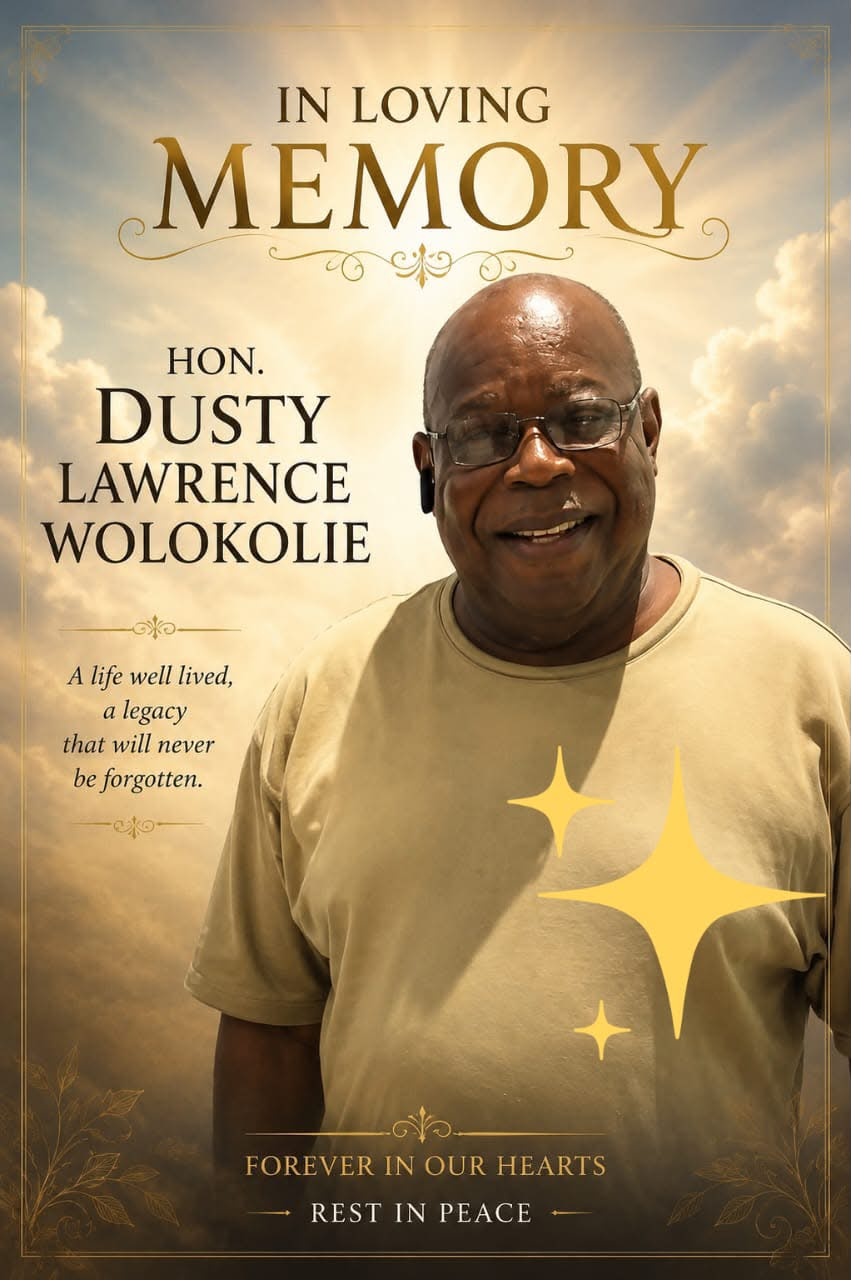
“Deeyëa, Dusty Wolokolie áh hâi!”
(The town-crier has announced that Honorable Chief Dusty Lawrence “Big Boy” Wolokolie is no more.)
He has commenced upon that final journey of herb-fetching, that ancient crossing from the village of the living to the camp of the ancestors. He has gone down the road of no return. He has started upon that path which chiefs, kings, emperors, sages, warriors, and prophets of the ages have all traveled. The gods have summoned him, and his delay is no more. His seat among the living is now empty, but his place among memory and the ancestors has begun.
From the turbulent days of student activism in the 1970s, through the charged political seasons of the 1980s, 1990s, and the first quarter of the new millennium, Comrade Dusty Lawrence “Big Boy” Wolokolie stood as a figure impossible to ignore. The Leopard of Keylu, later rooted in the soil of Bomi County, pressed his claws across the landscape of the Republic, compelling Liberia to strive toward the better angels of her promise.
Progressive conviction was not merely a garment he wore for political weather; it was the marrow of the man. He belonged to that generation which believed politics must remain tethered to principle, and that public life, however imperfect, was still a sacred arena for the contest of ideas, courage, and conscience.
Lofa has lost a son.
Bomi has misplaced a jewel.
But Liberia is forever bereft of a man whose devotion to integrity may yet outlive monuments of stone and brass.
Those who encountered him knew the force of his presence. He carried the rough candor of the old political generation — men who argued fiercely, laughed loudly, embraced comrades deeply, and wore conviction openly before the world. Beneath the iron of his politics lived a man capable of reflection, loyalty, and uncommon honesty.
I recall that some years ago, beneath the shade of the palm tree while consulting the door of Bacchus, I put a question to him:
“Do you still stand by all you said and did against the Tolbert regime?”
Without hesitation, he answered:
“If I knew then what I know now, I would not have been as strident as I was.”
The conversation wandered onward into the evening, but this remained my lasting takeaway.
For in that brief confession lived one of the rarest virtues granted unto men: the courage of self-examination. Many cling stubbornly to yesterday’s certainties, fearing that reflection may weaken them. But Dusty Wolokolie possessed the strength to revisit his own convictions with honesty. That is integrity. That is principle. That is accountability. And such qualities are rare among men, rarer still among those who dwell in the tempest of politics.
He has gone, but he shall not be forgotten.
The sun shall no longer rise upon the voice of Dusty Lawrence “Big Boy” Wolokolie, yet his echo shall continue to resound through the corridors of memory, across the hills of Lofa, the plains of Bomi, and the troubled soul of Liberia itself.
For men die, but character endures.
Voices fade, but example remains.
And though the leopard now sleeps among the ancestors, his tracks shall remain visible upon the earth for generations yet unborn.
May the earth of Keylu rest lightly upon him.
May the ancestors receive him with open arms.
May Liberia remember that such men once walked among her children.
Zee-ma-neen!

