

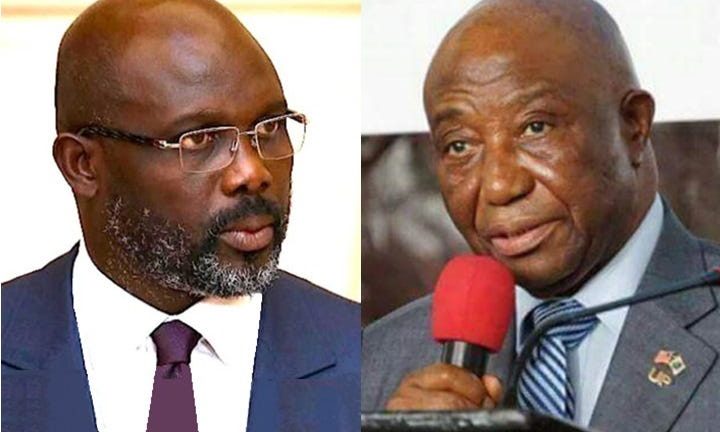
Liberia’s political leaders are trading accusations over the country’s role in the global narcotics trade as lawmakers press security chiefs for answers on a recent $19 million drug bust that has deepened concerns about enforcement and possible official complicity.
Former President George Weah, now in the opposition, said Liberia has become a “narco-state” under President Joseph Boakai, echoing language Boakai himself used in 2023 when he was opposition leader and accused the Weah administration of failing to confront drug trafficking.
“Liberia has turned into a narco-state with officials leading the drug trafficking network being shielded by the UP administration as they are themselves a part of the government,” Weah said in June.
Boakai, for his part, had warned three years earlier that the country was “gaining notoriety as a transshipment country for illicit narcotics,” citing weak law enforcement, porous borders and proximity to major trafficking routes.
“We are fast gaining notoriety as a transshipment country for illicit narcotics, with the country shamefully appearing now as a “narco-state,”
“The recent seizure of 100 million United States Dollars worth of drugs, the trial saga that ensued, and the mysterious and unexplained departure from the country of all those who stood trial and “acquitted,” is an indication of the extent to which the country has been rapidly exposed in the last few years to the narco trade, and the vulnerability of Liberian society to the impact of such large-scale assault by international criminal enterprises.
“Significantly, it reveals the failure of national leadership, a weak and criminal justice system and crucially raises suspicion about the probable complicity of some higher-ups in this affair. Clearly, it is now obvious that the Weah Administration is incapable, unwilling, complicit, and indifferent to this crisis.”
While the United Nations Office on Drugs and Crime has not designated Liberia a narco-state, the label has taken hold in the country’s political discourse as officials struggle to show progress in combating drug trafficking.
The latest tensions erupted Wednesday during a Senate hearing in Monrovia, where members of the Joint Security Committee appeared before Senators to answer questions on the ongoing probe.
Several senators said they were doubtful that the investigation would yield meaningful results, while others questioned the conduct of the security agencies themselves.
Senator Edwin Melvin Snowe of Bomi County said he had concerns about whether members of the security apparatus might be linked to the trafficking network, noting that no arrests had yet been made.
“Mr. IG, maybe we will talk behind closed doors, but I have more doubts,” Snowe said.
Lawmakers also pressed officials on why Michael Brown, Paul King, Rabin Bah and others allegedly tied to the case had not been arrested, why airport CCTV footage had not been reviewed and why British authorities had not been contacted about Usman Ali, identified as the consignee in the UK side of the shipment.
Senator Samuel G. Kogar called on Boakai to suspend the current team handling the probe and appoint a new one, warning that the president would be blamed if the inquiry faltered.
“If the president does not take a decision on this matter, the blame will be on him,” Kogar said.
Responding for the security team, Police Inspector General Gregory O.W. Coleman said investigators were making progress but needed time and resources to complete the case without jeopardizing it.
“There are things that we’re still working on together that are not yet declassified,” Coleman said.
“We have made significant progress. We are at the stage where we have moved people from being persons of interest to potential suspects who could be charged within a few days.”
Coleman said the investigation involves documentary and forensic evidence and requires support from external partners. He also said access to CCTV footage at Roberts International Airport would require a court warrant because the airport is not fully owned by the government.
The Senate has ordered its Judiciary Committee to separately investigate the reported release of Michael Brown from Monrovia Central Prison as part of the wider case, after lawmakers raised questions about when and under what legal authority he was freed.
The Boakai administration has vowed to prosecute those responsible for the drug seizure, but the delay in arrests is fueling public skepticism and intensifying the political fight over whether Liberia’s institutions are capable of confronting the narcotics trade.
– Writes Festus Poquie

