

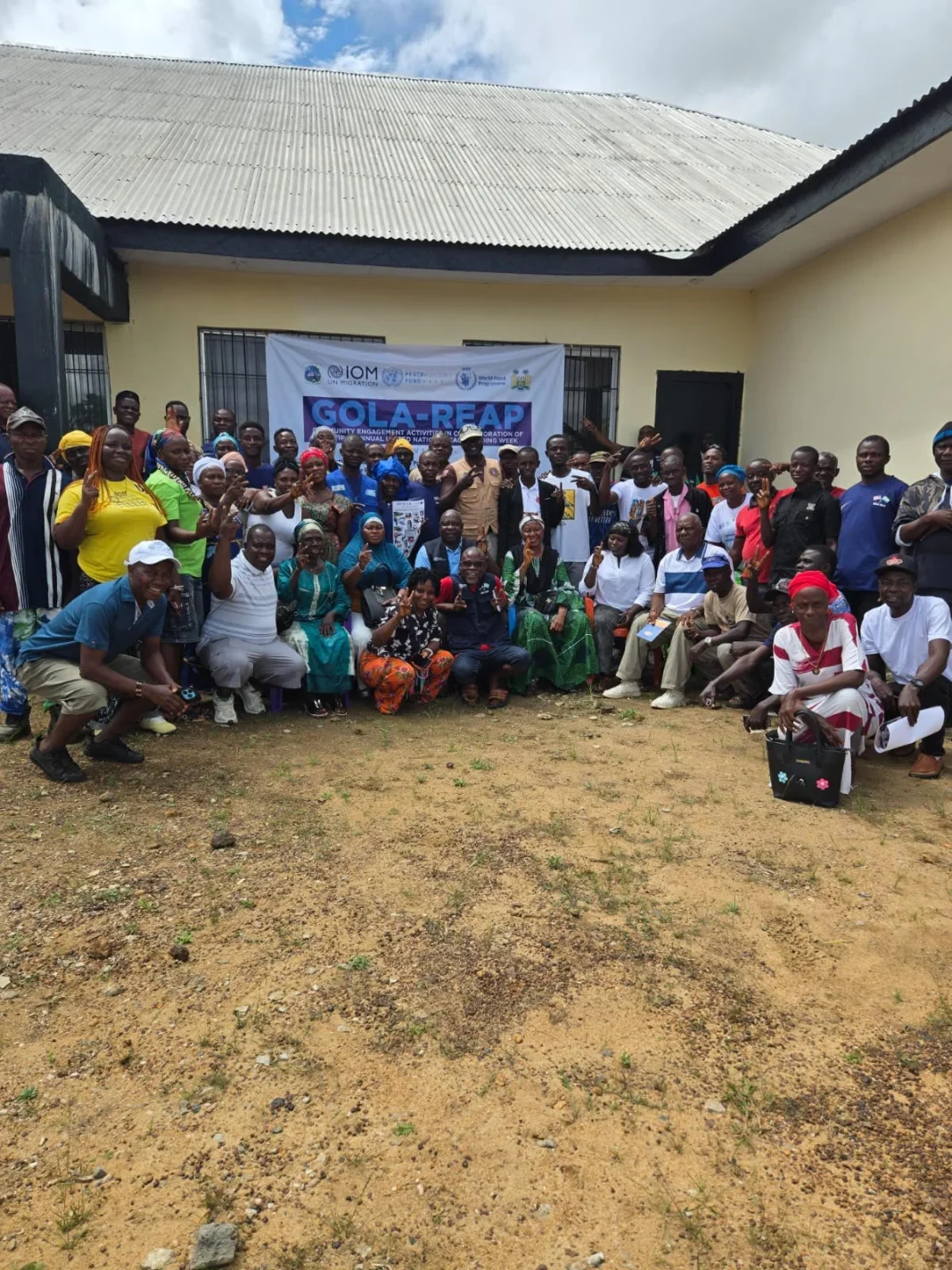
The International Organization for Migration (IOM) has started the validation and roll-out of a Community Action Plan in Porkpa District, Grand Cape Mount County, under the Gola Resilience, Empowerment, Access and Peace-building (Gola REAP) Project.
The exercise is part of efforts to support communities in Grand Cape Mount and Gbarpolu counties.
It follows a cross-border peace-building engagement held in Porkpa and Tewor districts in April 2026.
The project is supported by the UN Peace-building Fund through IOM and its partners. It is designed to help communities work together and improve development in the Gola Forest Landscape.
According to IOM, the project seeks to strengthen social cohesion, improve border management, enhance local governance, and promote climate-smart agriculture.
The organization said the goal is to reduce conflict risks and build stronger local economies for communities along the Liberia–Sierra Leone border.
As part of the validation process, residents will take part in community-government dialogue, governance and leadership training, and conflict management sessions.
These activities are expected to help communities identify their priorities and strengthen local participation.
The IOM team will continue the exercise in Tiennie, Tewor District, from July 2 to July 4, 2026.
After completing activities in Grand Cape Mount County, the team will move to Kongba District in Gbarpolu County, where the project is also being implemented.
Speaking at the opening program, Madam Jamiatu Watson, Paramount Chief of Porkpa District, praised IOM and its partners for their continued support to communities in the Gola Forest Landscape.
“I laud IOM and its partners for their continued work in the Gola Forest Landscape,” Madam Watson said, expressing appreciation for the initiative.
Also speaking, Acting District Commissioner Isatta Kamara encouraged community members to take part in the process and make their voices heard during the discussions.
She urged residents to “actively participate in the validation process, listen attentively, and provide necessary inputs to ensure community ownership of the plan,” stressing that local participation is important to the success of the Community Action Plan.
By Jenneh S. Kemokai /Rural Reporters News Network

