

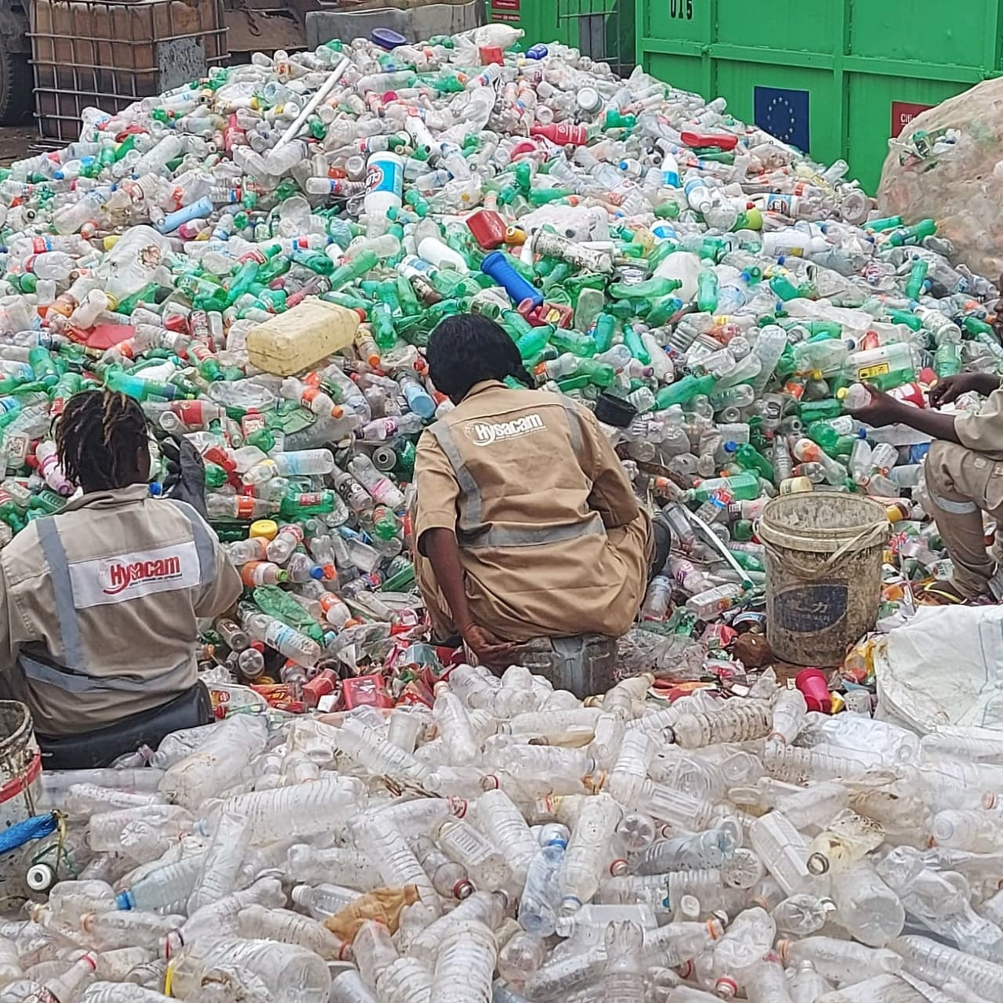
A community-based recycling model developed by GIVO Africa is demonstrating how technology, gender inclusion and decentralized infrastructure can strengthen circular economy systems in West Africa, as Nigeria and Liberia seek practical solutions to mounting plastic pollution and growing urban waste management pressures.
Supported by the Sustainable Manufacturing and Environmental Pollution Programme (SMEP) and the University of Warwick, the initiative has collected more than 343 metric tons of plastic waste since 2022 while creating employment opportunities, expanding financial inclusion and reducing carbon emissions across participating communities.
The program arrives at a critical moment for West Africa, where rapid urbanization, rising plastic consumption and inadequate waste infrastructure are increasing environmental and economic risks.
According to the World Bank’s West African Coastal Areas Programme, the region generated approximately 6.93 million tonnes of plastic waste in 2018, with Nigeria alone accounting for an estimated 4.7 million tonnes annually.
Around 80 percent of plastic waste across the coastal region is mismanaged, while only about 10 percent enters formal recycling systems, leaving cities increasingly vulnerable to blocked drainage networks, flooding, marine pollution and escalating public health challenges.
Plastic consumption has continued to rise alongside economic growth and urban expansion. Regional demand reached an estimated 7.9 million tonnes in 2021 and is projected to increase to around 12 million tonnes by 2026 if current trends continue. This widening gap between consumption and waste recovery presents both an environmental liability and an opportunity to develop domestic recycling industries capable of generating employment, supporting manufacturing and reducing dependence on imported raw materials.
GIVO Africa, whose name stands for Garbage In, Value Out, has sought to address this challenge by combining digital technology with community-based waste collection.
The company operates a network of solar-powered recycling centres linked through a digital platform that tracks material flows, operational performance and financial incentives. Households, schools and businesses can arrange free waste collection or deliver recyclable plastics directly to collection centres, where materials are sorted before entering recycling and upcycling value chains.
The model incorporates electric tricycles operating within short collection radiuses of between two and five kilometres, reducing transport costs while limiting dependence on fossil fuels and unreliable electricity supplies. In cities where volatile fuel prices and ageing infrastructure frequently disrupt municipal waste collection, decentralised operations improve service reliability while lowering operational emissions.
According to SMEP, the program has engaged 3,325 depositors across seven operational centres in Nigeria and Liberia while distributing approximately ₦58 million (US$42,377) in recycling incentives. The initiative has also facilitated 53 partnerships across the recycling value chain and prevented an estimated 578 metric tonnes of carbon dioxide emissions through waste diversion and improved resource recovery.
The project has distinguished itself by placing gender inclusion at the centre of its operating strategy rather than treating it as a secondary social objective.
Women now account for approximately 53 percent of GIVO’s workforce, significantly above participation levels typically observed within informal waste management sectors across much of Africa, where women often face barriers related to safety, finance, caregiving responsibilities and limited access to formal employment.
The company’s workforce composition extends beyond recruitment. Women currently occupy 44 percent of lower management positions and 29 percent of middle management roles, indicating progress in expanding leadership opportunities alongside operational employment.
Flexible working arrangements and targeted financial support have further strengthened workforce retention. One employee received a long-term interest-free loan to secure housing closer to her workplace, illustrating how practical interventions can improve both productivity and social outcomes.
These labour market outcomes carry broader economic significance. Across Africa, women remain disproportionately represented within informal employment, where income security, workplace protections and career progression opportunities are limited.
Formalizing segments of the recycling economy while expanding women’s participation contributes not only to improved livelihoods but also to stronger local economic resilience.
The company’s expansion into Liberia demonstrates the scalability of the model beyond Nigeria’s larger urban markets.
Working with Harbel Recycling Centre Ltd, owned by Firestone Tire & Rubber Company, GIVO piloted its approach before assuming operational responsibility for the facility in December 2024.
During the pilot phase, approximately 40 tonnes of plastic waste were diverted from landfill, around 30 jobs were created and more than US$4,000 in recycling incentives were distributed among approximately 300 community participants.
The transition from pilot project to permanent operation reflects growing confidence that decentralised recycling systems can strengthen waste management while creating commercially viable circular economy enterprises. It also aligns with broader efforts by African governments to encourage private-sector participation in environmental service delivery as fiscal pressures constrain public investment in waste infrastructure.
Trust has emerged as another critical component of the programme’s success. In Lagos’ Apapa district, GIVO used baseline surveys involving approximately 1,400 residents to refine community engagement strategies. The company introduced simple verification measures, including publicly displaying central contact numbers that allowed residents to confirm the legitimacy of collection services. Active depositors subsequently increased from around 50 to approximately 320, while schools and community organisations that had accumulated recyclable materials began participating after confidence in the programme improved.
This experience illustrates a wider lesson for circular economy development across Africa. Technology alone cannot transform waste management without sustained community participation, institutional credibility and accessible service delivery. Digital platforms can improve operational efficiency, but public confidence remains essential to increasing collection volumes and maintaining long-term engagement.
The program also reflects increasing international interest in supporting circular economy models that combine environmental outcomes with industrial development and inclusive employment.
Development partners are increasingly recognising waste management as an economic sector capable of generating formal jobs, reducing greenhouse gas emissions and supplying recycled materials to domestic manufacturing industries, thereby reducing pressure on virgin resource extraction.
For Africa, the implications extend well beyond waste collection. Plastic recycling remains significantly underdeveloped despite rapidly expanding consumer markets. Strengthening domestic recycling capacity could reduce import dependence for industrial feedstock, improve municipal resilience against flooding, create opportunities for small and medium-sized enterprises and contribute to national climate commitments through lower emissions and improved resource efficiency.
As governments across the continent seek practical pathways towards sustainable industrialisation, GIVO’s experience suggests that decentralised, technology-enabled recycling systems can support environmental management while strengthening local economies.
The challenge now lies in scaling such models through supportive regulation, investment in recycling infrastructure, expanded producer responsibility frameworks and stronger integration between informal waste collectors and formal circular economy value chains.
The success of these initiatives will increasingly determine whether Africa transforms its growing waste stream into an economic asset or continues to absorb the mounting environmental and fiscal costs associated with unmanaged urbanization.
For rapidly expanding cities across West Africa, the transition from waste disposal to resource recovery is becoming not only an environmental necessity but an industrial and development priority.

